

Don't Say We Didn't Warn You: Keep This Houseplant Indoors During Summer For Better Health
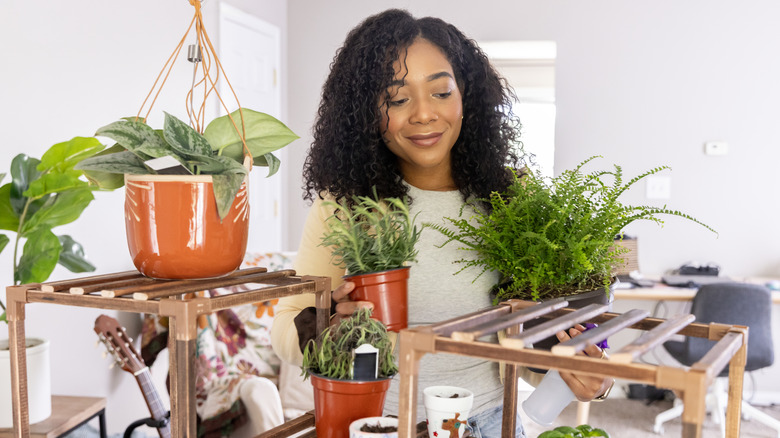
Summer brings warmer weather and brighter days, which means that it can be tempting to place your favorite houseplants outdoors for a little time in the sun. However, while moving your houseplants outdoors during summer can help in some circumstances, it may also lead to some problems, especially if you change your plant's environment too quickly or set out a plant that's better suited for permanent life indoors. That risk often extends to one eye-catching houseplant that can deteriorate when placed outside.
Commonly known as prayer plants, calatheas (Calathea spp.) are tropical plants often grown as houseplants. They're known for their show-stopping patterned foliage, which keeps them visually appealing even without flowering. However, one thing to know about caring for calatheas is that they don't hold up well under direct lighting, which is why moving them outdoors during the summer — when sunlight is often its most intense — may cause more harm than good. Calathea plants also need temperatures no higher than 85 degrees Fahrenheit to thrive.
Because of these constraints, while you're moving your other plants outdoors for the summer, you may wish to leave calathea inside to protect its leaves from crispy, brown edges or even death. Don't worry about your favorite plant missing out, however — learning the proper way to care for calatheas indoors helps ensure that these plants are always in tip-top shape.
How to care for calatheas indoors
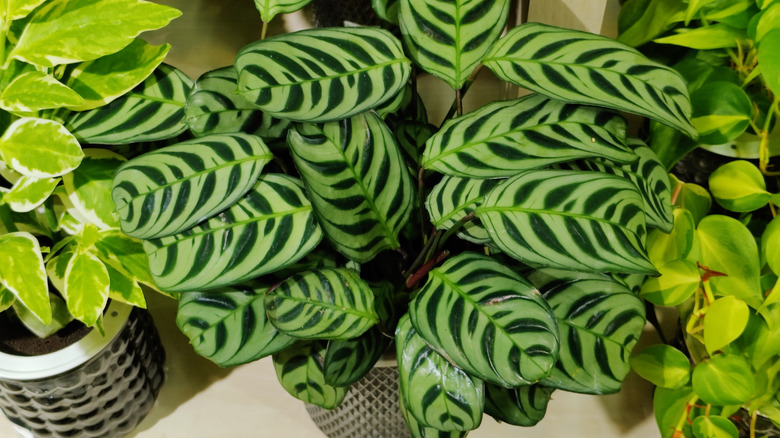
Temperature and direct sunlight are two notable reasons to keep this houseplant indoors during summer for better health. When left in direct sunlight, you may notice that the plant's leaves get scorched. Likewise, outdoor temperatures can surge beyond the acceptable threshold during particularly hot days. To ensure the plant's health, the goal should be to instead provide it with bright but indirect light versus direct light. This way, the plant will receive enough light for photosynthesis without risking light- or heat-related damage. An east- or west-facing window that offers shade during at least a portion of the day often does a good job at creating this balance.
Calatheas also have specific moisture requirements. They prefer their soil to be kept moist but not soggy. During the summer, when extreme heat leads to high levels of evaporation, keeping your calathea outside could expose it to excessively dry conditions. As topical plants, calatheas also thrive with high levels of relative humidity. Using suitable strategies for increasing humidity for your plants, such as running a humidifier or keeping the pot in a water-filled saucer with pebbles, can help this plant thrive indoors year-round.