

Skip Basil And Thyme: There's Another Herb Pollinators Are Thrilled To Find In The Garden
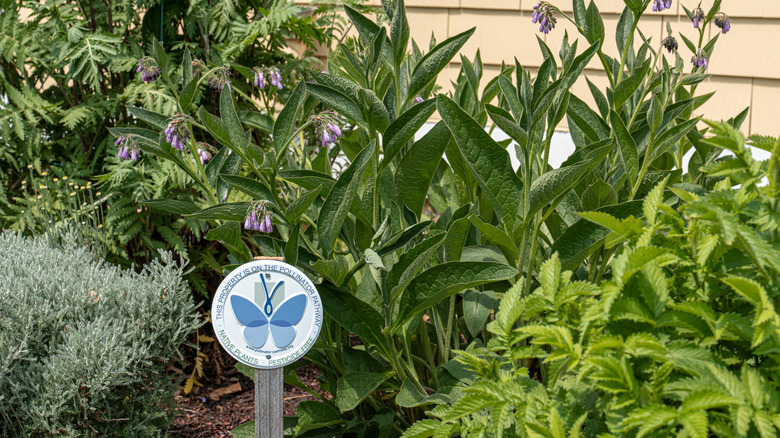
For many people, the first herbs that spring to mind when first learning about how to start a pollinator garden are basil and thyme — creeping thyme, in particular. These strongly scented plants are popular because they pull double-duty in the garden: their abundant blooms attract bees and butterflies while their foliage is great for flavoring dishes and scenting drawers. If, however, you're a seasoned gardener, you're probably looking for something beyond the ordinary to bring more pollinators to your yard and garden. Consider planting lemon balm (Melissa officinalis) instead of the tried-and-true basil or thyme. It's a fragrant herb that attracts numerous insect pollinators and, occasionally, even hummingbirds.
Also known as common balm or balm mint, lemon balm is a mint family perennial that pollinators are thrilled to come across in any garden when it's flowering — as are many humans. It blooms throughout the summer, from June to August, showing off dainty white or yellow flowers on tall stems. When crushed, the leaves have a lemon-like aroma, which is why us humans like it. Outside of being great in a pollinator garden, it's a lovely addition to sensory yards. Lemon balm is also quite hardy, holding its own against common garden pests, dry and damp weather, high temperatures, and poor soil. Like many plants in the mint family, it can grow aggressively and become weedy. You need to keep a close eye on it to keep it from spreading.
Let your lemon balm to flower abundantly to attract pollinators
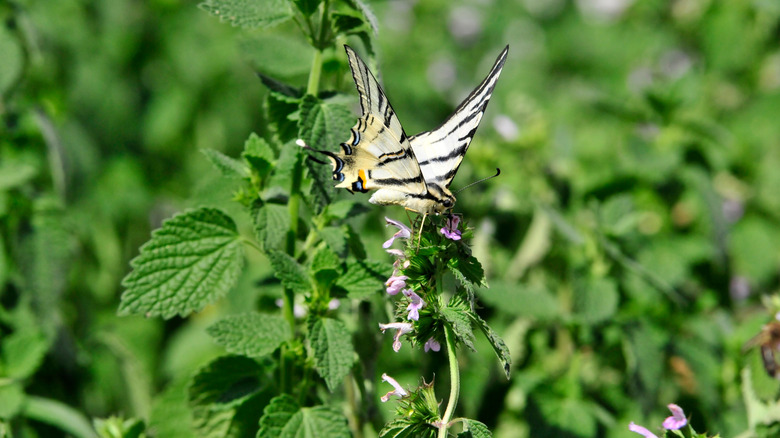
There are mistakes to avoid if you're trying to attract pollinators to your garden rather than cultivating lemon balm in a kitchen garden. First, the selling point of lemon balm for pollinators — namely bees, butterflies, and beneficial wasps — is the plant's abundant, nectar- and pollen-filled blooms. The common advice for growing lemon balm is to prune the plant down by at least half its height every month or so. However, this is only useful if your goal is harvesting the plant's fragrant leaves. Instead, spread compost around the plant for a nutrient boost, let it bloom, and then cut the foliage back only once flowering has finished and before it goes to seed. In fact, lemon balm self-seeds prolifically — as well as spreading by underground rhizomes — so it's a good idea to grow it in a container.
Of course, keeping lemon balm as healthy as possible will also encourage it to produce the most possible blooms. It's hardy in Zones 3 through 7, but even in gardens where it doesn't survive the winter, it will often pop back up again in spring. Lemon balm is nothing if not persistent! The only thing that really bothers this resilient, drought-resistant herb is fungal diseases, such as powdery mildew, leaf spot, leaf blight, and gray mold, so it requires well-draining soil and light watering. You can grow lemon balm in full sun or part shade — the latter is better in warm climates. Choose an east-facing site where your plant is protected from the harsh afternoon sun. If you've taken steps to ensure your yard isn't overtaken by this fragrant, lemon-scented herb, you may just have the perfect addition to your pollinator garden.