

The Fresh-Smelling Herb Best For Growing Ground Cover In Full Sun
Traditional grass lawns have long been the gold standard for landscaping in the United States. What once was reserved for European elites in the 17th and 18th centuries has since become synonymous with suburban America. In fact, grass lawns take up roughly 40 million acres of land throughout the United States. That's the size of the state of Colorado! Suffice to say, grass lawns are the undeniable darling of modern landscaping. However, concern over rising temperatures and a desire for lower-maintenance options may make home owners curious about potential lawn alternatives. Surprisingly, the answer may lie in an herb we all know and love — oregano.
Creeping oregano (Origanum vulgare 'humile') is a mounding perennial herb. It's hardy from zones 6 to 11. As it turns out, this fragrant herb can serve as a very adaptable ground cover. Unlike traditional lawns, you can easily grow oregano in a range of conditions. It can withstand both full sun and partial shade. It's also drought-tolerant, requiring a fraction of the water necessary to maintain a traditional grass lawn. This makes it a great alternative for the sustainable, planet-conscious gardener. Believe it or not, you can actually walk on an oregano lawn. While it probably won't enjoy high traffic usage, it's perfectly suited for moderate foot traffic.
Planting a creeping oregano lawn has a host of benefits. This plant can naturally help to suppress weeds. Similar to mulch, it prevents the sun from reaching weed seeds so they never germinate. Oregano can also attract beneficial bugs and pollinators to your yard. Not to mention, this plant smells incredible and looks beautiful too. If you let it mound, it will eventually bloom delicate white flowers.
How to grow a creeping oregano lawn

To establish your own creeping oregano lawn, you'll need to prep the area first. If you're replacing an existing lawn, rid the area of any current vegetation. There are a few ways to do so. One labor intensive but effective strategy is simply rolling up your sleeves and manually shoveling out the sod. However, this may disrupt the topsoil and the beneficial microorganisms that live there. If you're working with a large area or you simply want to avoid the hassle, you can opt for the solarization method. Use clear tarp to cover the area you're prepping while the weather is hot. After about four to six weeks, the sun will scorch the soil, killing not only the grass but also any weed seeds and harmful, soil-borne pests.
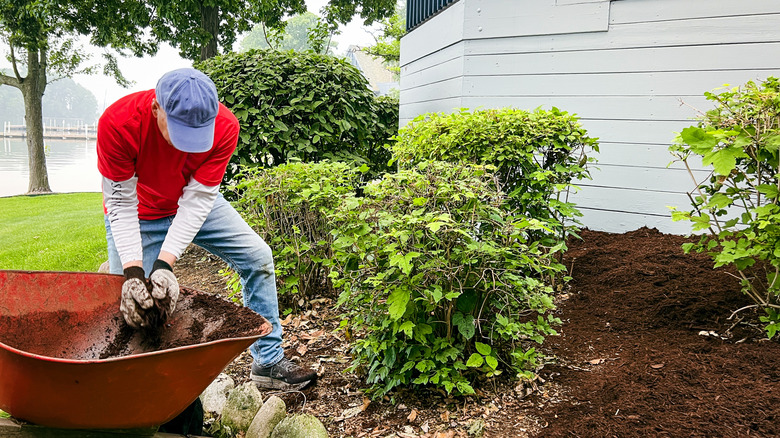
Once you get rid of the existing vegetation, mulch the area. This will help your creeping oregano establish itself more effectively as well as suppress weeds as your ground cover spreads. Next, you'll need to gather a collection of individual plants. Space your oregano plugs about 8 to 10 inches apart to encourage them to merge together faster. Over time, the plants will spread by extending their branch further out and rooting in place. One way to promote spreading is to keep not only the plant itself watered but also the surrounding soil.
Some other wonderful herbal ground covers are creeping golden marjoram (Origanum vulgare 'aureum') and mounding marjoram (Origanum marjorana). You can plant these in tandem with your creeping oregano for texture and color variation. However, this gorgeous ground cover can absolutely stand on its own as a fantastic alternative to traditional grass lawns.
Tending to your creeping oregano lawn
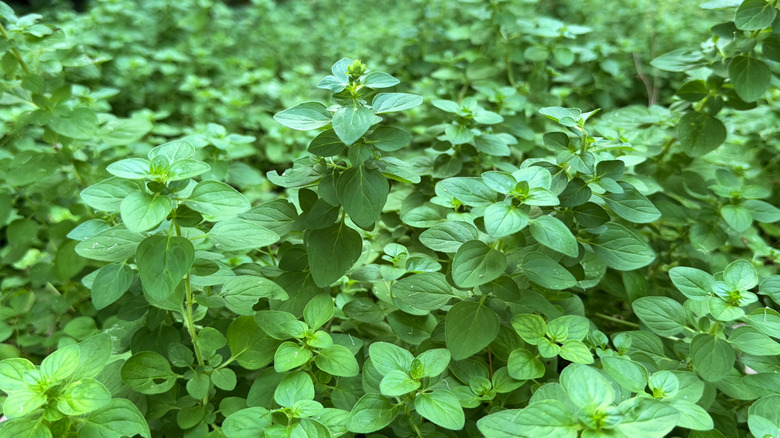
Once your creeping oregano is established, tending to it should be fairly easy. When you first plant your ground cover, you should keep it moist while it works on growing a strong, sturdy root system. After your oregano matures, you'll only need to water it about once or twice a week contingent on rainfall.
For a more traditional, tidy appearance, mow or trim your oregano ground cover every two weeks to a month. However, you can also skip this all together if you're looking for a no-mow grass alternative. Creeping oregano grows about 6 inches tall, perfect for anyone aiming for a more lush, mounding lawn.
Be sure to continue applying mulch around your oregano plants every year until they completely cover the area. Once all of the plants converge, you won't need to worry about weeds popping up around them. Your plants can benefit from compost or a balanced organic fertilizer once or twice a year. Just keep in mind that over fertilizing can hinder the plant's fresh aroma. Since oregano is also a natural pest-deterrent, you won't need to be too concerned about creepy crawlies wreaking havoc on your new lawn. If you do happen to see an excess of spider mites or aphids, release predator insects in your yard to mitigate the situation.