

The Strawberry Companion Plant That Boosts Soil And Fights Fungus
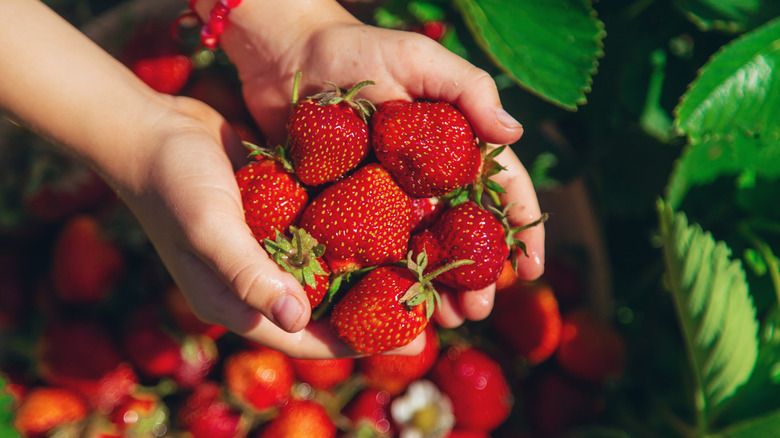
A thriving strawberry plant is a summer gift that keeps on giving. One common variety treats gardeners to an explosion of fruits in June and July, while the type known as "day-neutral" continues to produce the red, juicy crop through the fall. If you want a good yield, it helps to give strawberries consistent moisture, occasional shade, and plenty of space to send out their above-ground stems. These are some benefits that spinach can provide as a companion plant grown among your strawberry patch. Most importantly, the leafy green puts out a chemical compound that can be effective against pests.
Companion planting, a practice that originated with indigenous peoples, involves thoughtfully pairing plants that benefit each other. Most of the evidence behind it relies on anecdotes rather than formal scientific studies, but it's worth trying with spinach and strawberries, great additions to an edible garden that can be harvested together in the warm months. They both need well-draining soil, but with roots that grow at different depths, they won't compete; spinach taproots grow further below the soil's surface than the shallower roots of strawberry plants. Of course, while it's helpful to grow a companion plant that will get along with your strawberries like spinach, they still have other requirements you shouldn't neglect in order to get the best possible harvest. Strawberry plants need to be pollinated by bees to develop fruit, for example.
Why spinach works as a companion plant for strawberries
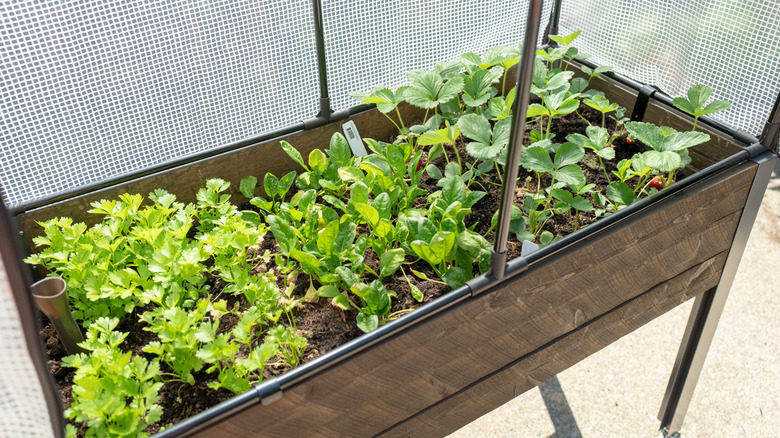
One of the ways companion plants can be helpful is to be "living mulches," that keep the soil from drying out, and gardeners have observed spinach plants helping strawberries this way. Strawberries do well when their soil is soaked from watering (or a good rain shower) at least once a week, and this leafy companion can help stretch out that moisture in dry seasons. The leaves of the spinach give some shade to strawberry plants, which helps the soil stay moist. Strawberries especially need that shade on hot summer days in arid climates. If you follow the practice of interplanting, another boon that spinach provides is preserving the 18 to 24 inches of space strawberries need between the plants. Like any good mulch, it also can prevent weeds from taking over that in-between space.
Spinach plants also pair well with strawberries in the garden due to a naturally occurring chemical they release. They contain saponins, which are known to ward off certain insects that damage strawberries (like Japanese beetle) while also guarding against fungal plant diseases. Repellents against slugs, a common strawberry pest, are sometimes made using plant saponins, so why not try introducing this helpful compound the natural way? Strawberries are also vulnerable to fungal conditions like anthracnose and botrytis gray mold, and saponins have been shown to form barriers between fungi and the plants at risk of damage.
How to plant spinach and strawberries together for harmonious results
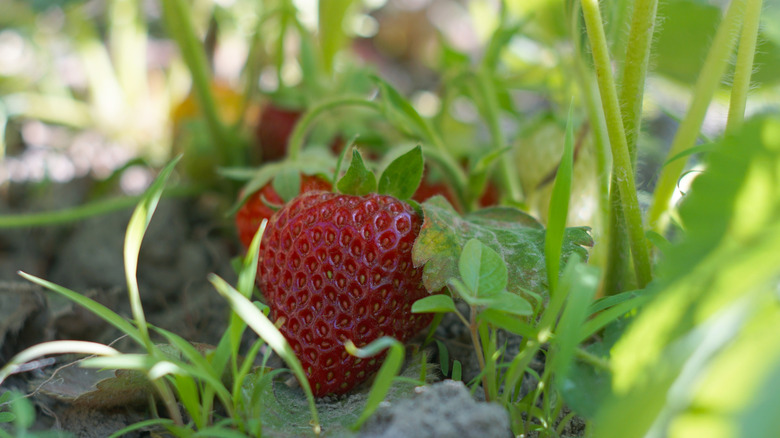
Strawberries are perennial plants that you may already have growing in your garden from previous years, while spinach plants are fast-growing annuals that love cooler weather. To harness the companion power of spinach, you can either sow spinach seeds between existing strawberry plants in the beginning of spring or plant both crops at the same time. Whatever you do, avoid waiting too long into the season to plant the spinach. That's a common gardening mistake that can hinder your spinach harvest, since they can flower too quickly and develop a bitter taste in the warmer late spring days.
Spinach and strawberries can be grown together in the ground, in raised beds, or in planters. Just make sure the plants have access to at least six hours of daily sunshine and add in some fertilizer to help kickstart the spinach growth. Spinach tends to do its best in temperatures between 50 and 60 degrees Fahrenheit. During the spring, you can keep planting and harvesting the crop every few weeks, but as summer arrives the strawberry plants will need more sun, just in time for the last of the spinach (which was providing shade) to be harvested so it doesn't bolt. You can cut the plants at their bases when they've fully matured and try growing another batch of spinach between the strawberries in the fall.