

14 Summer Flowers To Sprout From Seed For A Last-Minute Garden

No matter how careful and attentive you are, one late frost, an extended period of very wet weather, or unexpectedly dry or hot weather during spring can set your garden back or kill off plants that were coming on beautifully for the summer. You could also realize that actually, now that your peonies are finishing, you didn't quite plan your garden right, and now you've got a whole border with nothing in it for midsummer blooms.
All of these things happen to all of us at some point. There are, however, plenty of summer bloomers that you can get in the ground now that will grow fast enough from seed to flower that you still get a wonderful colorful late summer show. As a master gardener, I affectionately refer to these flowers as the rescue annuals. They will quickly fill gaps in your borders, help bring color and fragrance, and encourage pollinators this year. The perfect annuals to plant in your garden for a late start are fast and easy to grow, and most can be directly sown so you don't even have to worry about nursery trays. Some, like nasturtiums and sunflowers, do double duty and they are edible as well as lovely to look at.
Zinnia
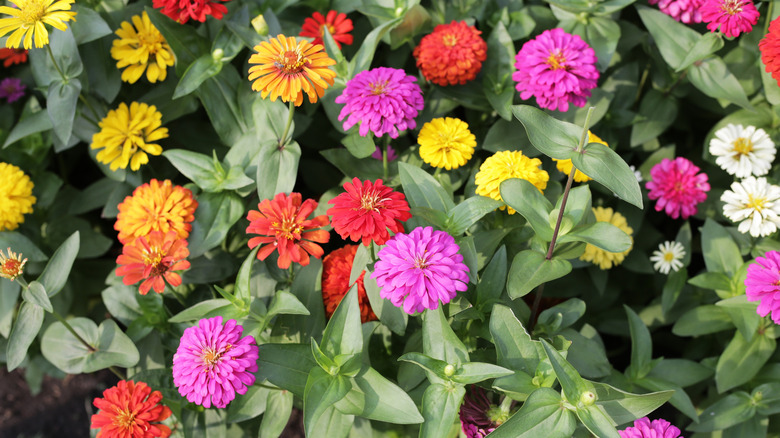
I adore the bright, bold, colorful look of zinnias. Their stiff, ruffled petals surrounding the cute little star-shaped golden florets and central cone remind me of an Elizabethan ruff, but in flower form. And there's so many zinnias to choose from, including specialty types, from the compact tight-stemmed 'Profusion' series, barely 12 inches tall, to the enormous 4-inch blooms of 'Benary's Giant' that reach almost 4 feet. While I love the bright and bold zinnias, they are also available in a range of whites and pastels and pretty much every color apart from true blue.
They take around a week to germinate under warm conditions. In ideal conditions they can sprout in as little as 4 days. Around 60 to 80 days after you sow them, you'll get an abundance of blooms, so they are a great choice for a late start. Sow them about a quarter inch deep into warm soil and then thin them to 9 to 12 inches between plants. Zinnias are part of the daisy family and are very useful for drawing in pollinators. However, they are prone to grey mold or botrytis, especially in cool, wet conditions. These plants prefer to be started directly in the ground rather than in trays or cells as they are vulnerable to transplant shock. Interestingly, transplant shock is so disruptive to zinnias that it can cause double flowering varieties to revert to producing single blooms until they recover.
Cosmos
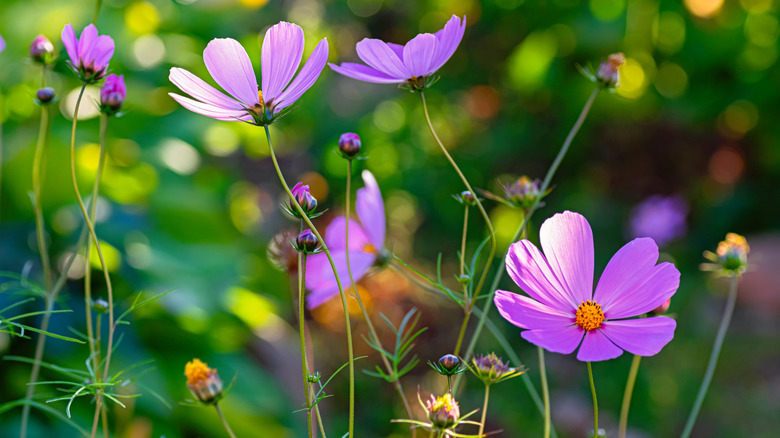
Drifts of cosmos during late summer and into fall look softly and romantically fabulous. The plants have soft, feathery leaves and single, open-faced flowers on flexible wiry stems, ranging in color from white and yellow through to pinks and dark reds. The flowers are 2 to 3 inches across, with a yellow disc center, and they will go from seed to bloom in as little as 45 days. I'm particularly fond of chocolate cosmos (Cosmos atrosanguineus), with its deep red flowers that smell like chocolate, even though it is technically a tender perennial, not an annual.
Cosmos are easy to grow, even for beginners, and don't like too much fuss. They prefer thin but well-draining soil, and do not generally need or like fertilizer. If you try and give them a nitrogen boost, you'll get a lot of floppy foliage and few flowers. They will grow even in poor, sandy soil where many other plants struggle. To get them growing, all you need to do is scatter the seeds on loosened ground and then thin them out once they're up and growing. Their propensity for growing just about anywhere is why some types of cosmos are considered invasive in some parts of the U.S., so make sure you check locally before you plant. To keep them blooming for as long as possible, make sure you deadhead them once a week or so to encourage them to keep producing new flower heads.
French marigold
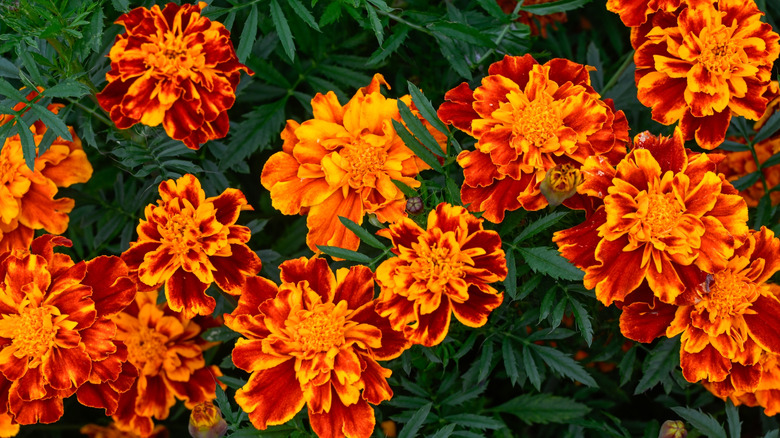
The scent of French marigold (Tagetes patula) is divisive. I find it pleasantly complex, if pungent, while many others dislike it. However, I grow French marigolds largely for their ability to deter pests such as aphids and whitefly, particularly in my vegetable gardens. It's the volatile compounds in the foliage that you can smell when you're near the plant that do the work. They are incredibly useful companion plants as a natural way to control pests. As such, they are frequently included in my interplanting and permaculture plans.
The flowers of the French marigold are a little chrysanthemum-like, and they range in color from bright yellow to deep mahogany red. Most cultivars are between 6 and 12 inches tall and take around 50 to 60 days to bloom. Sow them in a fairly dense row along the front of vegetable beds or near other plants that you're trying to keep free of pests. French Marigolds are also easy to grow in containers on your patio, so they're a good choice for small space and urban gardening.
Nasturtium
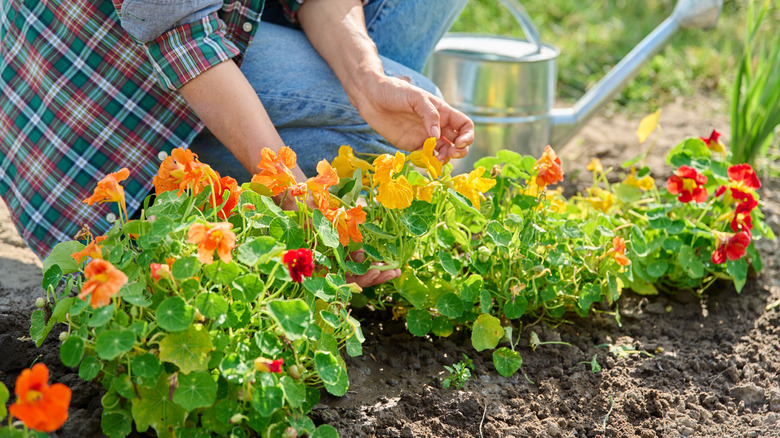
Nasturtiums (Tropaeolum spp.) are among my favorite flowers to grow as they mature rapidly, are edible, and they can act as trap crops for pests like aphids. The slightly concave leaves look a bit like tiny lily pads. The trumpet-shaped blooms come in bright orange, red, and yellows. There are also some cream-colored cultivars. Both leaves and flowers of the nasturtium are edible and they have a spicy, peppery taste, a bit like watercress. I generally add them to my summer salads.
Like cosmos, nasturtiums do best in poor, thin, low-nitrogen soil and can go from seed to bloom in 50 to 65 days. Trailing varieties will run several feet and look lovely spilling over the front of raised beds. The more compact bushier varieties do well in containers or as edging. Aphids also cannot resist nasturtiums so you can plant these as trap crops to draw aphids away from your more vulnerable plants or the veggies that you really don't want the aphids to eat. However, if you're using them as trap crops, understand that you are growing them purely to sacrifice them, so you won't get a fabulous show of blooms.
Sunflower

The gloriously big blooms of sunflowers (Helianthus annuus) are remarkable, and they are probably my favorite multi-purpose flower. They draw in pollinators and predatory insects, while the seed heads provide food for people, birds, and mammals. This plant can even draw up and sequester pollutants from the soil. They are hyperaccumulators, which means, through a process called phytoremediation, sunflowers can pull heavy metals from the earth and water and store it in their tissues. Nature is truly remarkable, but if you are growing sunflowers to slowly decontaminate the ground, then you must not eat the seeds. You'll also need to harvest and remove the plant before it breaks down and releases the contaminants back into the environment.
Most people think that sunflowers are yellow, and while many cultivars are, many striking sunflower varieties in different colors, ranging from the soft cream of 'Vanilla Ice' to the deep burgundy of 'Moulin Rouge', or the warm mahogany brown of 'Chocolate Cherry'. They grow quickly, and some smaller single-stem varieties can bloom in as few as 60 days, but you may want to avoid larger slower-growing varieties like Russian Giant if you're getting off to a late start. Don't overfertilize sunflowers, as too much nitrogen can cause weak stems that are prone to breaking. Instead, you are much better off working in some compost when you sow the seeds.
Borage
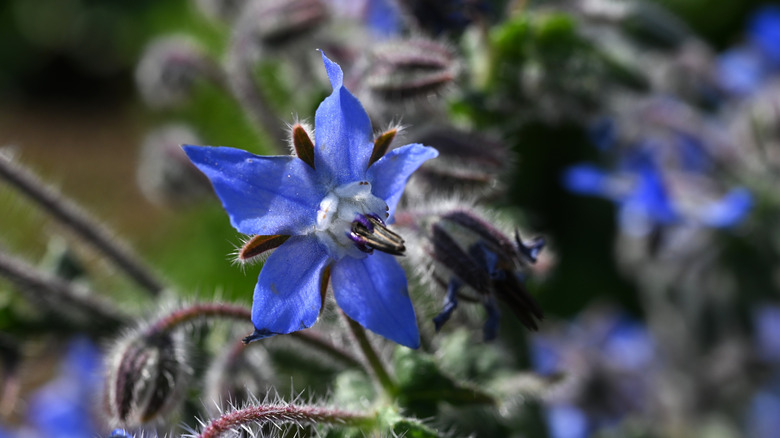
Borage (Borago officinalis) is super easy to grow and is one of the few annuals with truly blue flowers. Its blooms are star-shaped and a beautiful blue, and they draw in droves of pollinators. The foliage is slightly hairy or bristly and the plant gives an interesting, slightly wild cottage garden feel to a border. However, it self seeds aggressively, and if you grow it once, it's highly unlikely you'll ever need to sow it again. It will self-seed and reappear the following season. Borage is useful, too, as it deters rabbits. It takes about 60 days to get flowers from direct sown seeds and the flowers will keep appearing until the first frost.
Direct sow them in full sun in well-drained soil as borage does not like being transplanted. Remember that because it will self seed, plant borage in a location where that won't be a problem. It's also a good idea to remove at least a third of the stems before they go to seed so it doesn't take over your garden.
Sweet alyssum
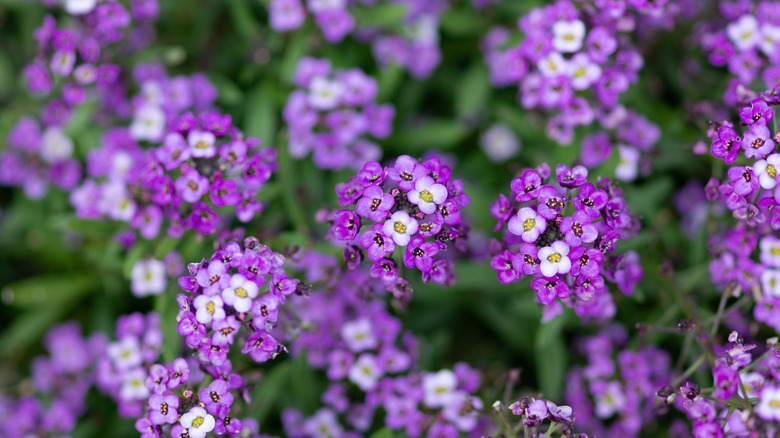
If you want a hardy, low-growing annual that attracts droves of bees, sweet alyssum (Lobularia maritima) is a great choice. It has a sweet honey-like fragrance and produces huge numbers of tiny flowers that pollinators love. Most cultivars stay between 4 and 6 inches, and they spread to form soft carpets of surprisingly hardy flowers in hues of white, pink, and lavender. Sweet alyssum is a great ground cover. I grow lots of purples and bright colors in my flower beds, so I really like the 'Carpet of Snow' cultivar that produces these massive drifts of small, white flowers that are always crawling with bees and other pollinators.
Interestingly, the leaves and flowers of sweet alyssum are edible and taste a bit like kale, so this is another plant that you can add to summer salads for a pop of color and flavor. You'll get flowers around 55 days from sowing the seed. Sweet alyssum requires light to germinate, so when you sow the seeds, scatter them on the soil but don't cover them. Just lightly press them into the soil surface. Note that sweet alyssum is considered invasive in some areas, so check locally before planting.
Portulaca (moss rose)
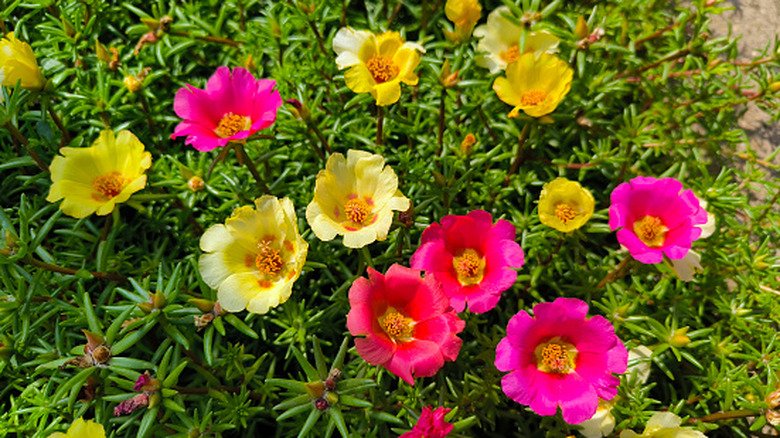
Portulaca, or moss rose, has fleshy, succulent-like leaves and an abundance of cup-shaped flowers in colors ranging from brilliant white to hot red. This is a low-growing, tough, heat-loving annual that is very easy to grow. It will even grow in sidewalk cracks and stone walkways in full, blazing sun. This colorful, low-growing annual can cope with most conditions apart from shade and excessively wet soil.
If you plant it in well-draining soil in full sun and then leave it alone, you'll get flowers around six weeks from sowing. Like sweet alyssum, portulaca requires light to germinate, so scatter the seeds on the soil surface and press them lightly without covering them. This is another plant that does not like being fussed with, so don't attempt to improve the soil or fertilize, and don't give too much water, even in very dry spells.
Celosia
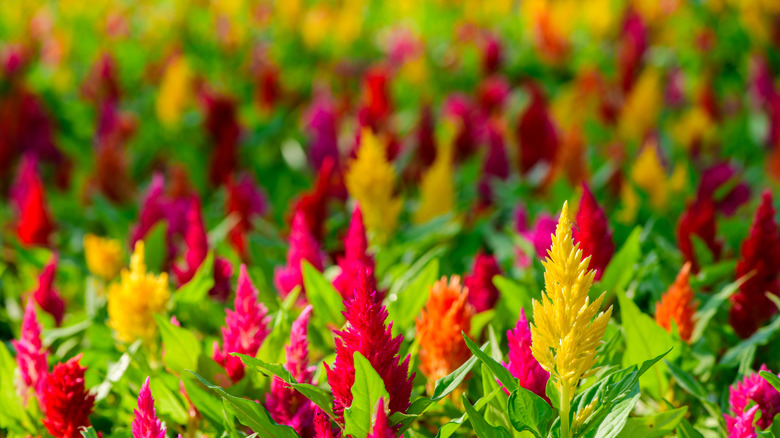
Dramatic and showy, celosia is a fantastic choice for adding both color and texture to your beds. There are three different types to choose from. Cristata has dense, velvety, complex inflorescences that look a bit like coral. Plumosa has long, soft feathery plumes, and Spicata produces narrow, wheat-like spikes. All three types come in an intense color palette of magenta, blood red, deep gold, and electric coral.
One thing to note about celosia is that it does not do well when exposed to temperatures below 60 degrees Fahrenheit. It will trigger premature flowering and stunt foliage growth, so you'll end up with short-stemmed, undersized heads. Because celosia is a heat-loving annual, direct sowing them in June is your best chance to get a full flush of flowers. They do need planting in fine, nutrient-rich compost, and you need to keep on top of weeding so that the seedlings don't get smothered by weeds.
Tithonia (Mexican sunflower)
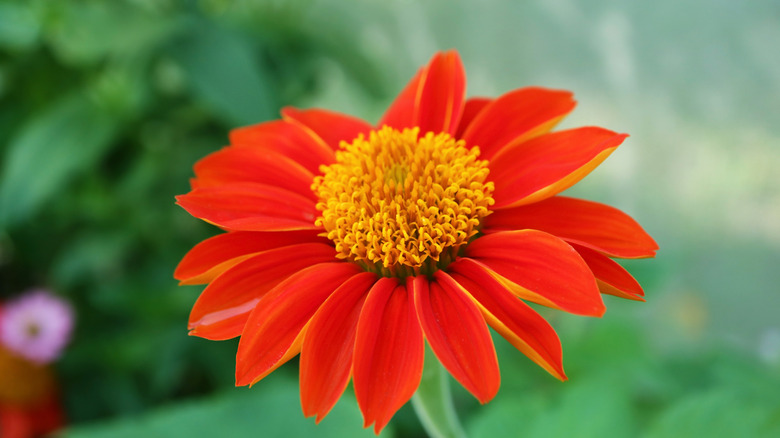
Tithonia takes around 60 to 70 days after sowing to produce flowers and will continue to flower until it gets hit by frost. Also known as Mexican sunflower, it reaches up to 5 feet tall by mid-summer and gives you vivid red-orange, 3-inch, flat-faced blooms. The leaves are ovate, large, and dark green. Insects, including butterflies, adore this plant and monarch butterflies have been observed nectaring on Tithonia during their migration to Mexico. Aside from being a great choice if you're creating a pollinator garden, tithonia is deer-resistant and can cope with drought.
This is another plant that requires some light to germinate. Sow them thinly and then give them a very light covering of good quality compost to get them started. Once they germinate you can thin them out to 18 to 24 in. You'll be surprised at how rapidly they grow if you give them enough space.
Morning glory
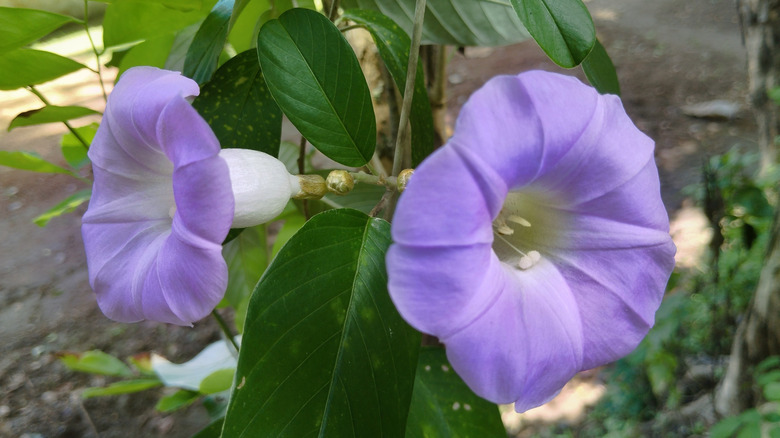
There are over 1,000 varieties of morning glory (Ipomoea purpurea), and they come in colors from almost translucent white to deep magenta and purple. The color of 'Heavenly Blue' morning glory, for example, is an extraordinary sky blue that seems to almost glow in the morning light. Whatever variety you choose, you'll get beautiful, funnel-shaped flowers that are 3 to 4 inches across, continuously for many weeks. Morning glory vines can reach 10 feet or more and you can expect to see blooms from around 60 days after sowing if you choose faster maturing varieties, like the fabulous 'Black Kniolas', which is actually a deep purple, 'Heavenly Blue', or 'Scarlet O'Hara'.
To grow morning glory from seed, you'll need to nick the seed coat lightly, soak them overnight, and then direct sow them in full sun. Make sure you install a trellis or some kind of frame for them to climb over at the same time. You should also be mindful of planting morning glory if you have kids or pets, as the seeds contain alkaloids that are toxic to humans and animals. While the flowers are harmless, the seed pods and the seeds inside are dangerous if eaten. Additionally, in some states, some morning glory cultivars are considered invasive or a noxious weed, so make sure you check before planting.
Annual phlox
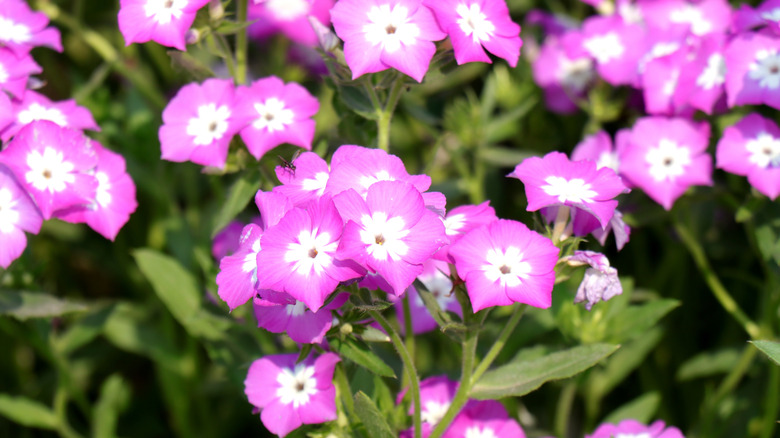
Annual phlox (Phlox drummondii) produces dense, cushion-like clusters of very small flowers in colors from crimson and coral to white and lavender. This is a tight and compact plant with an interesting clumping habit that works well along a path or on the edge of a patio or seating area. It grows to around 6 to 12 inches tall, depending on the cultivar, and will bloom from around 60 days after sowing. This is another plant that doesn't like being transplanted, so direct sow in fine soil and give the seeds a very light sprinkling of soil over the top.
Annual phlox copes well with summer heat and drought but dislikes being excessively wet. The blooms will likely slow down in the heat of mid-summer, but as the temperatures ease, you'll get a beautiful second flush. Keep deadheading it throughout the season to extend the bloom window as long as possible.
Cleome (spider flower)
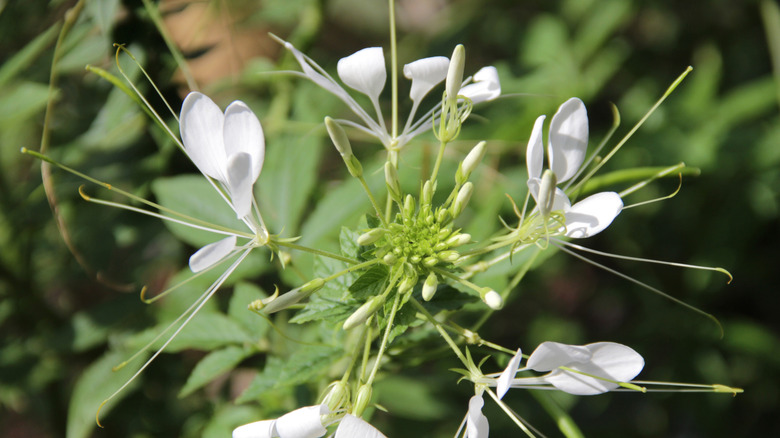
Also known as the spider flower, cleome has clusters of pink, purple, or white blooms at the top of its long stems. The stamens are so long and protrude so far that the whole flower head looks as if it's whiskered or spider legged, hence the common name. What's so interesting about cleome is that it flowers and sets seed at the same time on the same stem — you get the flower at the top with its striking open blooms and then below, seed pods form from earlier flowers on the same stem. It's a little strange and very interesting to look at.
Cleome grows to around five feet depending on the cultivar and takes between 70 and 80 days to bloom. If you're getting off to a late start with this one, sow it as soon as possible in June. It freely self-seeds, so once you grow it, it will reseed and become self-sustaining year after year. Because it self-seeds so readily, you do need to keep on top of it and cut back a portion of the plants before they finish setting seed each year, otherwise they will quickly overtake any garden bed you plant them in. Cleome needs full sun or part shade but cannot tolerate very wet conditions or deep shade. You'll find that hummingbirds cannot resist spider flowers, and they'll flock to the plant once it's in bloom, so it brings a great deal of energy and excitement to your garden.
Globe amaranth
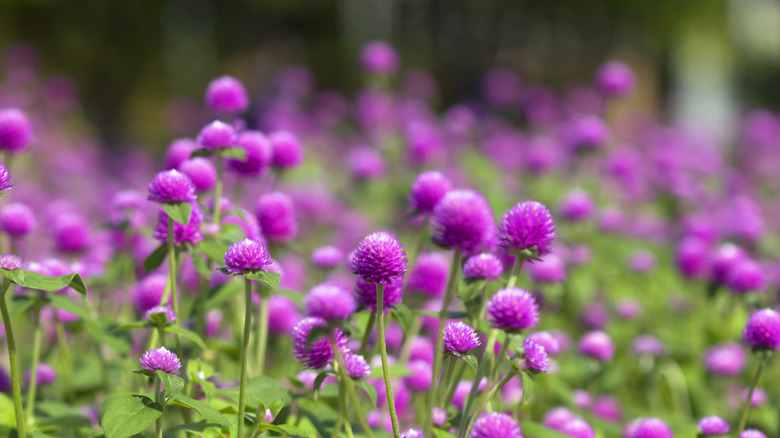
The flower heads of the globe amaranth look like small, perfectly-formed paper pom-poms, about an inch across. They are dense and slightly papery, even when fresh, and they bring an almost sculptural texture to your garden. They come in bright bold colors from pristine white to magenta or purple. I like globe amaranth for a late start in warmer climates because it takes them 10 to 14 weeks to start to bloom, which, if you're planting in June, takes you into August and September. This period is when lots of gardens start looking sad as many plants have already finished at this point or are struggling in the late heat.
They will keep blooming until the first frost and, once established, are drought tolerant, don't suffer from pest problems, and cope very well with heat. Globe amaranth is also great for supporting butterflies and other pollinators. It's pretty easy to start from seed in warm soil at least 50 degrees Fahrenheit. Soak the seeds for 48 hours to soften the fairly thick coating and speed up germination. Dig a shallow trench no more than a half inch deep and space your seeds about 6 to 8 inches apart so you don't need to worry about thinning. If you plan on using them for cut flowers, stick to a spacing of around 6 inches as this encourages the stems to grow tall and upright because of the slightly reduced space. Lightly cover them and water them in.