

Not Time Of Day Or Season: The Pruning Mistake That's Holding Your Plant Growth Back
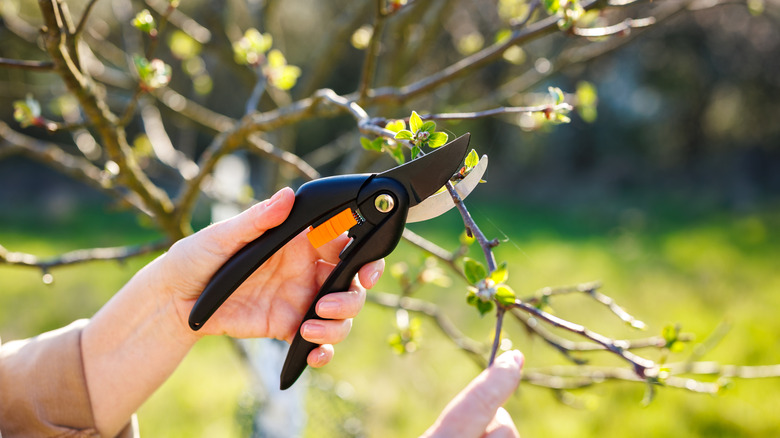
Pruning is a key gardening chore for many plants, as removing leaves, stems, or branches will help boost their health, promote better growth, and keep them from becoming a safety hazard. When it comes to pruning your plants, shrubs, and trees, there are a few myths you should stop believing. Chances are, you've probably seen various pruning "hacks" online. One common "hack" is applying pruning paint or filler over the cuts you've made. This act, which is often called "dressing the wounds" of a plant, should be avoided at all costs. While covering the cuts you've made from pruning may be tempting, as it can help the appearance of your plant, it encourage the growth of pathogens, trap moisture, and prevent the wound from healing naturally. No matter what you may hear about this "hack" online, it is one of many mistakes to avoid when pruning your plants.
Many companies will claim that dressing the wounds left by pruning with their product can help keep a plant from decay, pest invasion, fungi, and other unwanted scenarios. While this may sound like a helpful idea, it can actually do more harm than good. Plants have a natural ability to deal with wounds, and gardeners should avoid complicating this process by adding foreign substances to these areas. When pruned properly with clean cuts, they are more than capable of closing the gaps. Some trees even specifically undergo a process called compartmentalization, which is their defense mechanism at work, building barriers against decay. When you apply a dressing product over pruning wounds, you are obstructing those natural processes from occurring. If you are worried about an insect, pest, or fungi infestation, you can apply a pesticide or fungicide to the wounds. What you want to avoid is covering and sealing the wound.
Important tips to remember when pruning
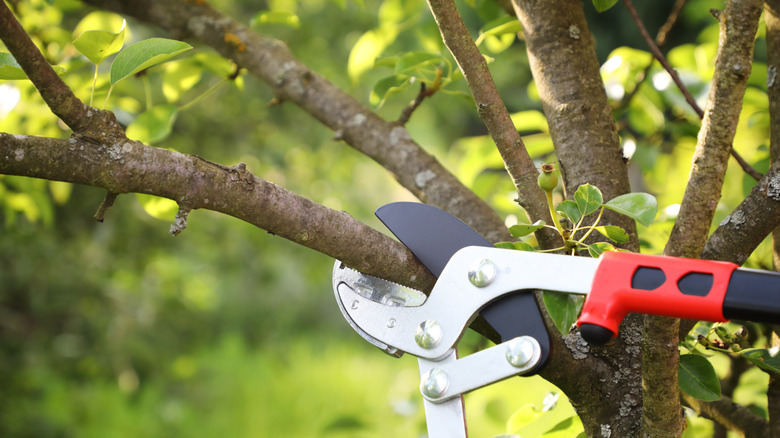
The overall goal of pruning many types of plants is to stimulate growth, as cutting a stem or branch will often push the plant to grow more. Pruning also helps to maintain a plant's specific size or shape, which is particularly important for trees and shrubs.
When pruning your plants, shrubs, or trees, there are a few basic conditions to remember. While this can vary depending on the specific species of plant, it is typically recommended to prune your plants while they are dormant or before new growth, and to avoid pruning your garden in the summer heat. These cooler, dormant periods should also have lower insect risk, which reduces the need for a sealant that advertises pest control.
Another common mistake is over-pruning your plant. If you cut too much from your plant, shrub, or tree, this can cause it stress. The general rule of thumb is to only remove up to a third of the foliage from your plant. You also want to avoid cutting your plant too close to a node, as this can keep your plant from producing healthy growth. When pruning, always use sharp, sterilized tools and make sure to cut just above a node at an angle. And, avoid the temptation to cover or dress the cuts; your plants are more than capable of healing on their own.