

Not Coffee Grounds: The Kitchen Scrap You Can Use As A Natural Wood Stain
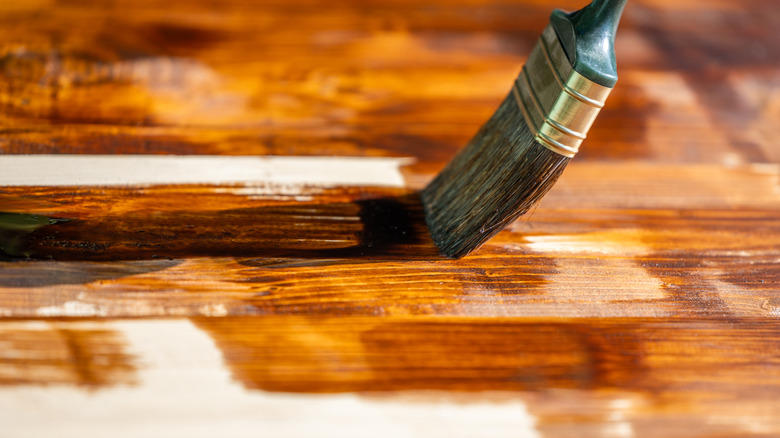
If you're looking into natural ways to stain wood, coffee grounds might be the first option you stumble upon. But there's another kitchen scrap that you can use to give wood a rich and warm tint, and there's a high chance you already have it in your kitchen. The ingredient? Onion skins.
The point of a stain is to change the color of wood. It's not like paint, because it penetrates inside to material to change its appearance instead of covering it. It's partially transparent instead of opaque, allowing the wood grain and veins to show through. While you can buy commercial stains at the store, there are tons of ingredients you can use to naturally stain wood at home. Where coffee grounds might give it a deep and dark brown color, onion skins can get you something much lighter. It will result in a warm hue, but it won't completely transform the color, giving you something really subtle. You can use yellow onions for an amber tint, or red onions for a pink color.
DIYing your own wood stain out of onion skins is eco-friendly, affordable, and non-toxic. Plus, it saves you a trip to the hardware store. All you need to make the natural stain are onions and water. To make and apply it, you'll also want a pot, a paintbrush or sponge, and some sandpaper. Because onion skin stains are water based, not oil based, you can apply natural oils on top of them to condition and seal the material — an essential maintenance task for long-lasting wooden furniture. For example, tung, linseed, or walnut oil can all be used to seal the colored wood.
How to make wood stain out of onion skins
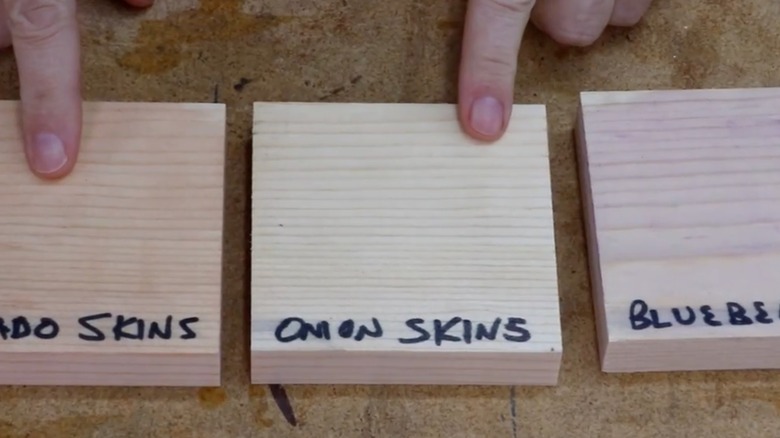
The only part of the onion that you need is the skin. Therefore, the first step of this DIY is to peel your onions carefully, only keeping the outer layer to make the stain. Of course, it's a waste to throw the rest out; keep it for your next recipe try out some unusual ways you can use onions in and around your home, like cleaning your grill.
There are two ways to make onion dye. The easy route is to soak the onion skins in warm water for a few hours. Another option is to follow the process used to make the dye for easter eggs or fabric, which requires you to boil the water and onion skins. Once the water boils, lower the stove temperature to a simmer for an hour. You can check the color and simmer longer if needed. Keep in mind that the best way to make a natural wood stain darker is to apply more layers, so there's no need to go overboard with the boiling.
Before you stain the wood, remember to sand it. This will remove any lacquer or sealant, and it will open up the material so that it can absorb the color. Then, use a paintbrush or sponge to apply your DIY onion skin stain to the wood, working in circular motions to make sure it penetrates fully. Wait until it's fully absorbed, and add another layer if you'd like the tint to deepen. Repeat until you're happy with the color, keeping in mind that onion skin tins are lighter by nature, so you won't manage to turn a light piece of wood into something completely dark.