

Not Holly, Not Cypress: The Evergreen Shrub That Makes A Great Privacy Hedge
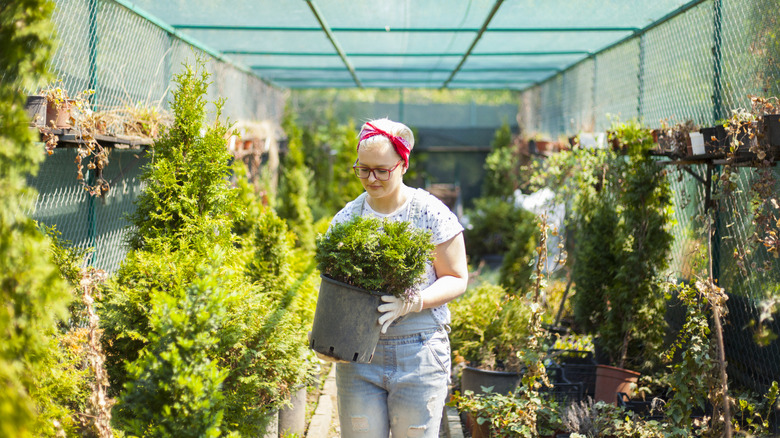
Because I'm a master gardener, somebody asks me what they should plant for a privacy hedge on a regular basis. Holly and Leyland cypress are two choices that come up a lot. Both are fine plants, and in the right location, they make fabulous privacy hedges. But for many homeowners, they don't provide the tidy, compact, manageable screen they were envisioning. The Leyland cypress can quickly become a 50-foot behemoth unless it's managed aggressively, which isn't terribly practical in standard suburban yards. I do love holly hedges, because they provide food for wildlife in the hungry months and they are prickly enough to deter pests like deer and unwanted human visitors. However, holly hedges can look pretty scraggly for the first few years, because the young plants take ages to grow enough to thicken up and fill in.
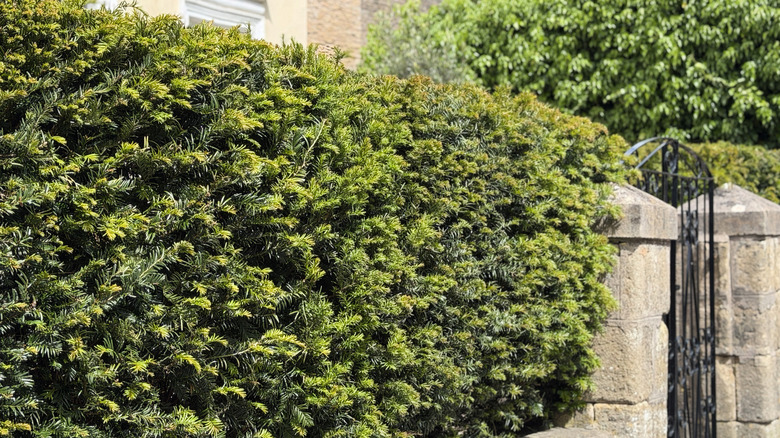
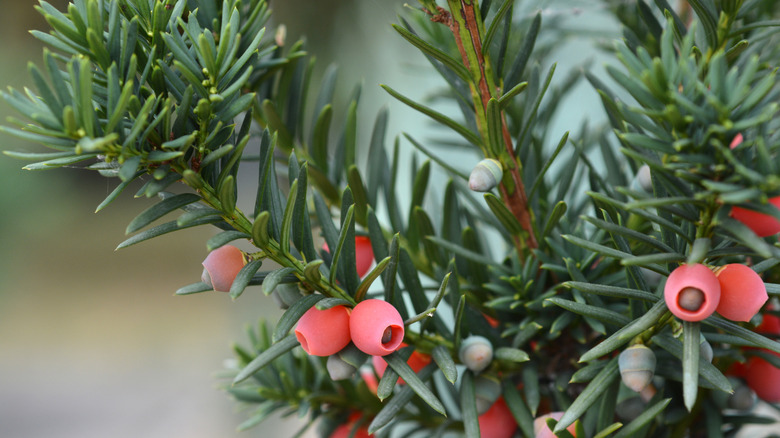
One often-overlooked choice for an evergreen privacy shrub is the Hicks yew (Taxus x media 'Hicksii'). It's a hybrid of English and Japanese yew. The name comes from the fact it was developed at Hicks Nurseries in New York around 1900, where it was bred to combine the beauty of English yew with the cold hardiness of the Japanese yew. Hicks yew is a columnar evergreen with flat, dark needles, making it an effective privacy hedge. It's also pretty hardy and tolerant of a wide range of conditions, including growing in full sun or deep shade. Female plants produce the iconic bright red arils in late summer and fall. These attract droves of birds. This plant is hardy in USDA Hardiness Zones 4 through 7 and grows to around 18 feet if you don't maintain it. However, it's also a slow grower, so it can easily be maintained at a reasonable height.
How to grow Hicks yew
Remember that yews are highly sensitive to wet or poorly drained soil, so make sure you site them in loose, well-draining soil. Avoid planting them in heavy or compacted soils that tend to get saturated or where water pools, because they'll end up getting root rot and the plants will die. Aside from disliking staying too wet, Hicks yews will tolerate pretty much any other conditions, including poor thin soils, drought once they're established, and a range of light levels. They don't need rich soil or excessive feeding to keep looking good.
Place the plants about 3 feet apart if you want to create a solid, gap-free privacy hedge, and they will eventually fill in to create an impenetrable wall. Once they are well established, the hedges should be trimmed around once a year. Some people recommend trimming in mid-summer, but I prefer to wait until fall to allow any nesting birds to fledge and leave. For a crisper, more compact formal privacy hedge, you may want to consider two cuts a year, one in late spring and one in fall.
If you're dealing with a pre-existing, very overgrown hedge of Hicks yew, you'll need to cut it back hard. Unlike many evergreens, the Hicks yew can withstand being cut back to bare wood without you ending up with permanent dead patches. They are tolerant of extreme pruning and can regenerate from bare stems, so you can tame an overgrown hedge fairly easily rather than having to rip it out and replace it.
When Hicks yew isn't the best choice
I'm a big fan of the yew because of its looks and its ability to support large numbers of birds. And, with the English yew, because of its history and heritage. This particular tree is what the infamous English longbows were made from: Think Robin Hood and his comrades, all notorious archers, with their staves and longbows made of English yew, deep in the heart of Sherwood Forest. But no yew should be planted where it may cause harm.
All parts of the plant, including the needles, bark, seeds, and twigs, are toxic to dogs, cats, horses, and humans. Technically, the red flash of the aril (the berry-like fruit) is the one bit that isn't dangerous, but it houses the very dangerous seed. The tree contains toxic alkaloids called taxines that can impact cardiac function even in small quantities. Ingesting yew can stop your heart. The clippings retain these compounds, so they're just as dangerous when cut and lying on the floor. For these reasons, yew is one of the plants I strongly recommend against putting in your garden if you have pets or kids.
You also need to consider how intense the deer pressure is in your area. While Hicks yew typically holds up pretty well to deer, if there's a large hungry deer population in the local area and food is hard to come by, they will give your hedge a severe stripping that can potentially kill it. In this case, opt for a deer-resistant privacy shrub instead.