

Don't Harvest This Herb In June — Let It Bloom For Garden Beds Full Of Happy Pollinators
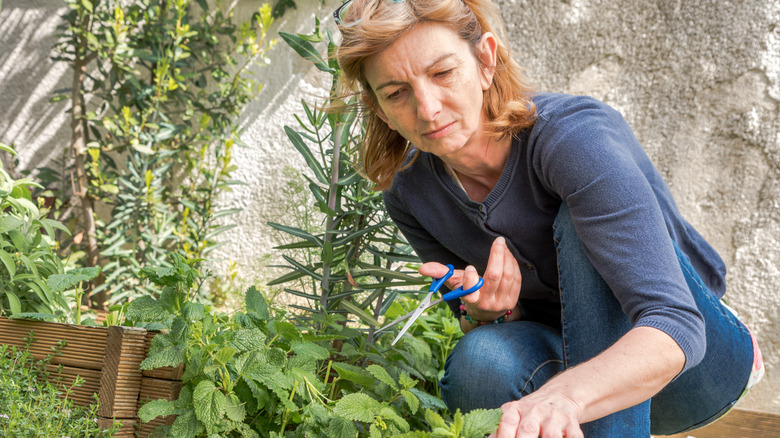
Sweet marjoram (Origanum majorana) is a popular Mediterranean garden herb with many culinary and medicinal uses. This flowering herb produces fragrant pink flower clusters in June, and these nectar-rich flowers are good pollinator food. Harvesting small amounts of fresh herbs as needed is easy and helps keep plants full and healthy by stimulating new leaves to grow. But if you hold off on harvesting your sweet marjoram and let the flowers bloom, they will attract a variety of pollinators, including butterflies.
Sometimes confused with oregano (Origanum vulgare), which it is closely related to, sweet marjoram is a similar plant, but with a milder, sweeter flavor. The two plants look very similar, with tiny triangular grey-green leaves with rounded edges. Both plants have tiny flowers that start to appear in late spring, and have a light and pleasing fragrance. This herb is one of many grown at the famed gardens of Monticello, where it's said the flowers' scent is similar to nutmeg and cardamom.
People aren't the only ones who enjoy the fragrance of fresh herbs. Bees, hummingbirds, butterflies, and moths are an important part of our food chain and our local wildlife habitats, and some gardeners allow herbs to flower or go to seed as the peak season wanes because it's an easy way to bring more biodiversity into the garden. If you allow the flowers to bloom, sweet marjoram is excellent for bringing more pollinators into your yard, especially near your vegetable beds or containers.
Let sweet marjoram produce blooms to attract more pollinators
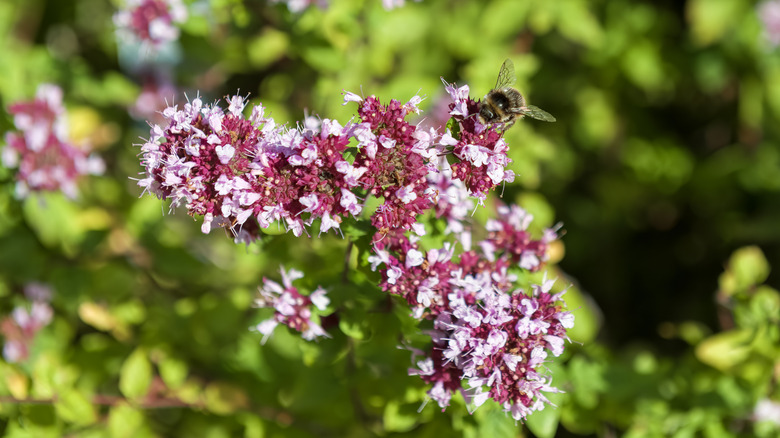
The University of California's Master Gardener website recommends not letting oregano or sweet marjoram plants flower to improve the flavor of the leaves for culinary use. But the flowers are what attract multitudes of pollinators, providing them with nutritious nectar. So, how can you keep pollinators happy while also getting the most out of your sweet marjoram crop?
One way to get the best of both worlds is to grow multiple sweet marjoram plants to let some of them flower for pollinators, while keeping some that you deadhead before flowering to harvest and use the flavorful leaves. Setting aside a group of fragrant sweet marjoram flowers will attract bees, hoverflies, moths, and butterflies, which are all beneficial insects for the garden. Once they're in the area, they'll happily visit your other garden crops, too. Plus, the flowers are actually edible for humans, too. It's a win-win!
You can also gather seeds from the plants you've allowed to flower, setting you up with more sweet marjoram next year. Start the seeds indoors about six to eight weeks before the last frost of the season, then transplant seedlings to containers or garden beds once they've developed their first true leaves. Many Mediterranean herbs grow well in containers, including sweet marjoram, which thrives in a sunny location with well-drained soil. It's drought tolerant and doesn't mind hot weather. Sweet marjoram is a tender perennial, which means that it might establish itself like a perennial in warm climates, but most growers recommend potting it and moving it indoors if you live in USDA Zones 9 or below.