

Goodbye Traditional Garden Hoses: There's A More Eco-Friendly Alternative
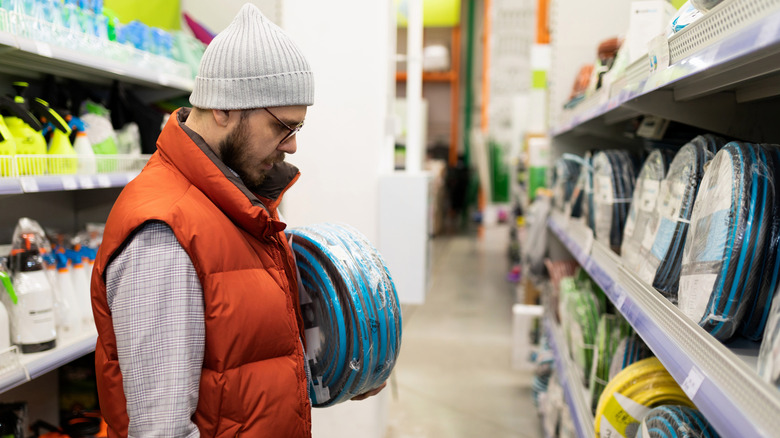
Have you noticed that certain types of garden equipment have short lives and constantly need to be replaced? For many, standard plastic or rubber garden hoses fall into this category. They tend to get punctures easily and start leaking or cracking from hot or cold temperature extremes. You may find yourself replacing your hose more often than you'd like, and you'll also discover that hoses can't be recycled because they can get tangled up in recycling equipment. The eco-friendly solution is a more durable garden hose that you won't have to replace as often. A stainless steel garden hose could be your answer.
If you're thinking a stainless steel hose will alleviate your safety concerns about chemicals in plastic and rubber hoses, don't breathe a sigh of relief yet. Most stainless steel hoses consist of interlocking armadillo-like steel segments wrapped around rubber or plastic tubing. Certain criteria, which we'll talk about in a bit, can mitigate these safety concerns. Stainless steel hoses offer several benefits you'll want to learn about before deciding on one, especially because they are typically more expensive than traditional garden hoses.
Pros and cons of stainless steel garden hoses
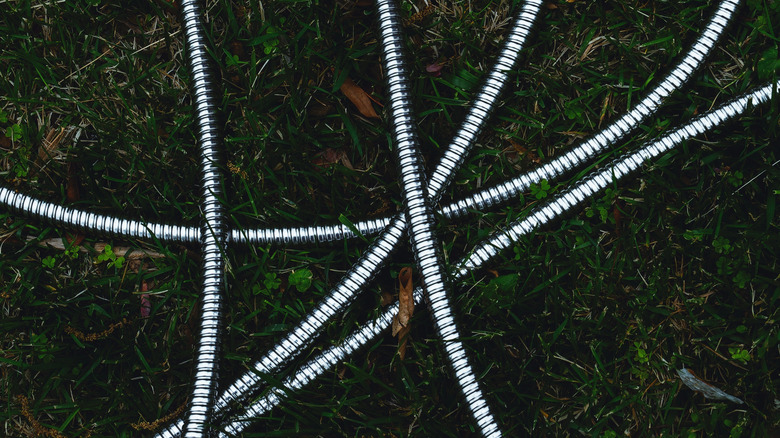
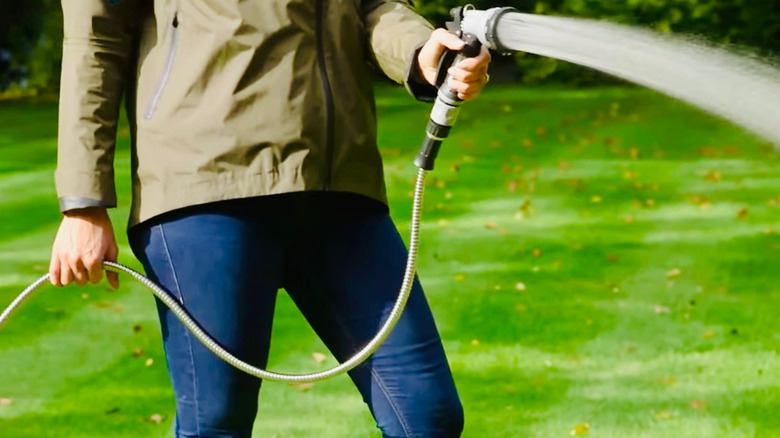
If you've ever had to interrupt your watering task to straighten out a kinked hose, you'll be interested in a stainless steel hose because it won't kink. Stainless steel garden hoses are surprisingly lightweight. There are, however, a few precautions to follow, when using and searching for a stainless steel hose.
Leaving any hose in the hot sun is a big storage mistake that is making your hose's lifespan shorter. More importantly, while stainless steel hoses are more weather-resistant than standard hoses, the water within can get hot enough to cause burns when left in the sun. An essential tip you'll want to know before watering plants on hot summer days is that hot water also damages roots and leaves. (Simply run the water for a minute to flush out the scalding water before touching it or watering your plants). The tendency for stainless steel to conduct heat is also a good reminder to keep your garden hose tucked away in storage when not in use.
Although budget options are available among stainless steel hoses, you will, as noted, probably pay more for one than you would for a traditional garden hose. Given that the expected life span of a stainless steel model is 20 years or more, compared to 5 to 10 years for a traditional hose, the extra cost is likely worthwhile. Still, you'll want to consider safety factors, which could add to the cost, before deciding.
How to ensure you buy a safe stainless steel garden hose
Three aspects of a stainless steel hose need safety consideration — the liner material it uses, the steel itself, and the fittings used to connect the hose to a faucet. The liner, which is probably plastic or rubber, should be disclosed by the manufacturer and needs the same safety scrutiny as traditional hoses do. A 2016 study by the Ecology Center revealed hoses made of polyvinyl chloride (PVC) had high levels of lead, bromine, antimony, and phthalates, which leached into the water contained in some hoses. Thus, it's important to know the liner material. One vendor makes the clear (albeit fine-print) disclaimer that its stainless steel hose is not intended to be used for drinking water and that the hose liner is made from PVC. The safety goal for the liner is that it is not PVC, but ideally food-grade polyurethane (PU).
Quality 304 commercial-grade stainless steel, the main ingredient in stainless steel garden hoses, makes them durable and corrosion resistant. The ideal safety assurance to look for is a NSF/ANSI 61 certification. The metal in the fittings, though, could be an issue. The Ecology Center study showed that 15% of hose fittings had elevated levels of lead. Look for stainless steel or verified lead-free fittings instead of the standard brass, which usually contains lead. Options meeting these safety criteria are available at most major home improvement retailers, and the pay offs may be worth it in the long run.