

16 Best Flowers To Start Planting In Pots In June
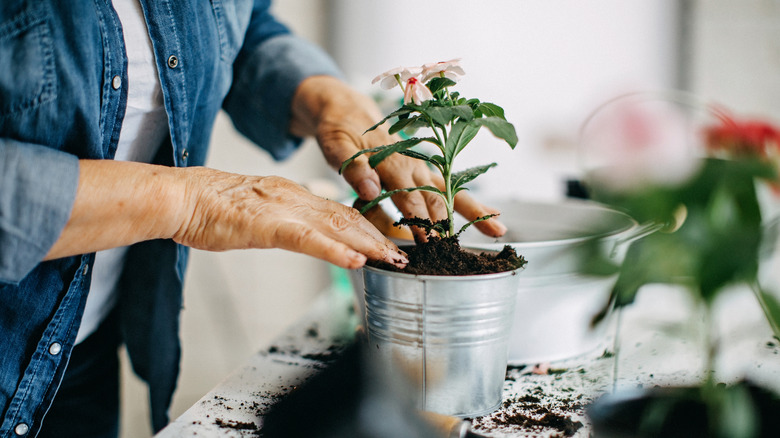
Once spring comes, gardening gets busy quickly. If you're working on planting all of your vegetables and filling out your eye-catching beds, you may miss out on some of your favorite flowers. If you have, don't fret quite yet. Though summer is in full swing for many in June, there are still plenty of flowers that you can pop into containers to get thriving plants and beautiful blooms during the rest of the season, including annuals like marigolds, biennials such as foxgloves, and perennial balloon flowers.
In fact, for many tropicals and a few other plants that absolutely cannot stand the cold, planting in June in cooler zones may be the better option. For many areas, it's still possible to get cold nights or chilly days in May. An unexpected freeze after you plant can decimate your flowers, especially those in pots, as they can drop temperatures faster than plants in the ground.
However, there's a bit of a catch. Since many flowers tend to bloom in June, you can miss out on some of their beauty by planting them later. To get the most out of your blooms, look at annuals that can be succession-planted several times over the summer season or flowers with long bloom periods. You can also look at planting perennials and biennials that are a little slow to grow and need a year before they usually start blooming.
Marigolds
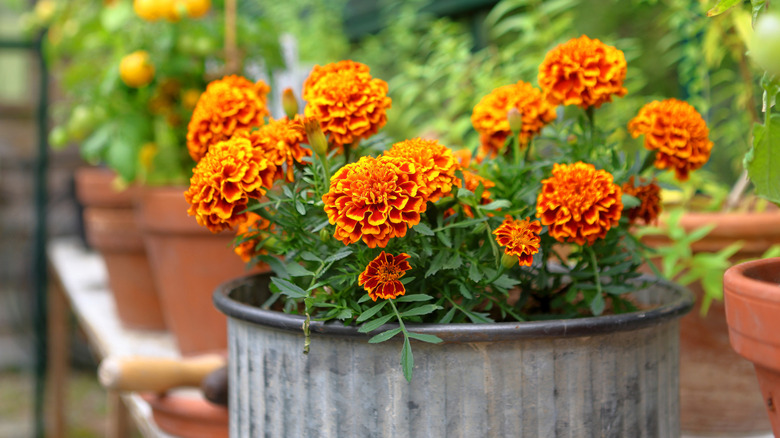
By planting marigolds (Tagetes spp.) in June, you will have bright blooms of flowers by the end of summer or early fall. These are already fast-growing, but dwarf varieties can take just 50 days to reach maturity. In fact, because they grow so quickly, you can plant these annuals once in the spring and again in the summer to get two rounds of flowers out of them. Since they do so well in the heat, a June planting isn't going to damage them in the slightest. They also look wonderful in pots, especially if there's enough drainage.
Gladiolus
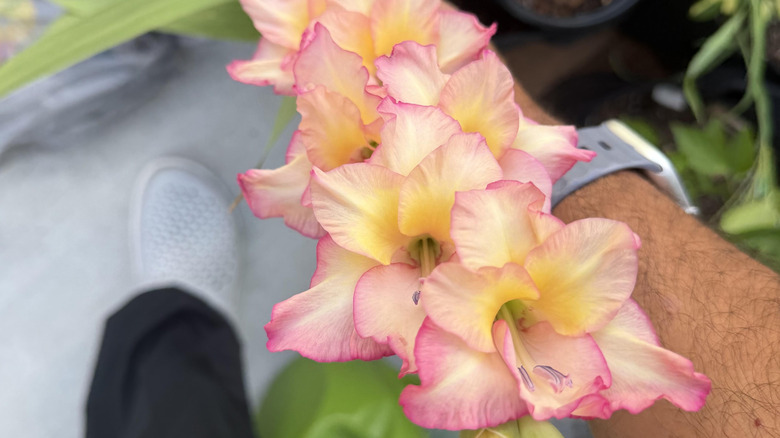
Gladioli (Gladiolus spp.) enjoy warm soil, which is why planting them in a well-draining container in June is ideal. Just make sure you avoid the mistakes that are killing your gladioli, such as overcrowding them in a container. They usually reach somewhere between 2 and 5 feet tall. If you have smaller varieties, you can leave them as-is, but larger gladioli may need a bit of support in the pot, like a stake. Most varieties can overwinter in USDA Hardiness Zones 7 to 10, but may need to be pulled inside during the cooler weather.
Dahlias
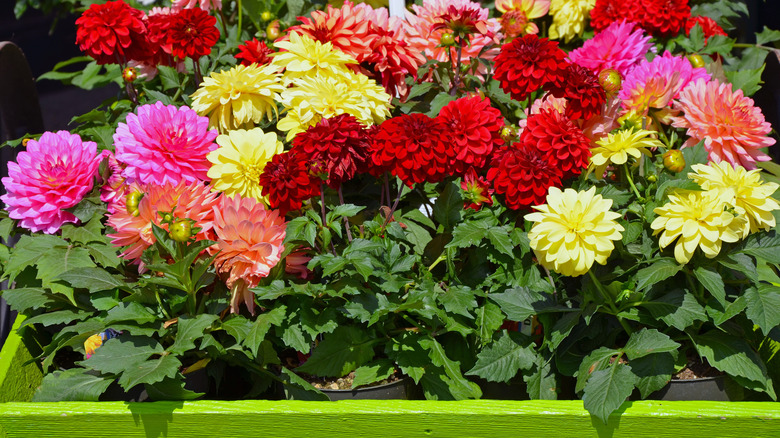
If you're looking for a fast-growing flower that you can plant in containers in June, consider dahlias (Dahlia spp.). While many people start them in May, they love the sun and the heat. Planting them in June leads to faster growth, meaning they can pop up and start blooming just a little bit later than the ones you plant in May. Depending on your zone, it doesn't shorten your blooming time much, either — it just shifts more towards late summer and fall. They are hardy in Zones 8 to 10, but can be brought indoors when the cold comes.
Globe thistle
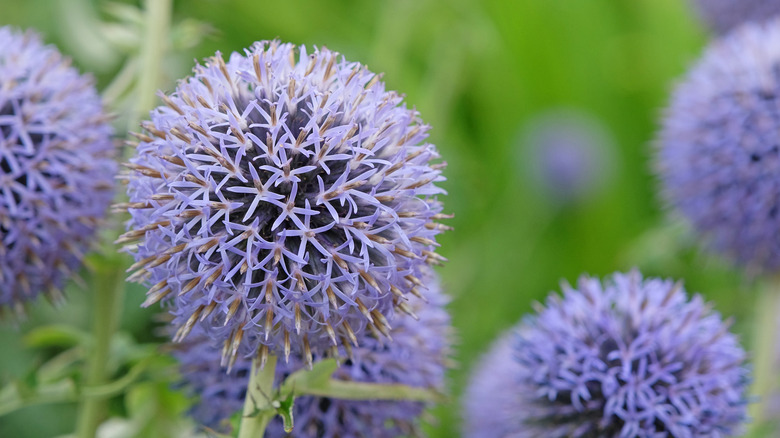
You can plant globe thistle (Echinops spp.) either in May or June. They can grow in containers, but need a pretty big pot and a lot of well-draining soil. It's a fast-growing perennial that attracts bees and butterflies and deters deer, rabbits, and other pests. It is easy to care for and grow. These plants thrive in Zones 3 to 8. Their flowers bloom for several months, and if you cut them for use inside your home, they will quickly regrow new ones for your use all season.
Wallflowers
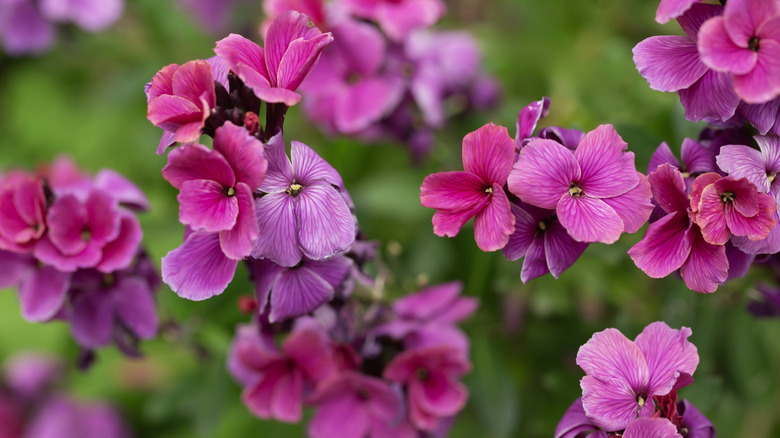
As biennials, wallflowers (Erysimum cheiri) are perfect to plant in June so they will be ready to bloom come next spring. They grow well in containers, as long as they have good drainage. These flowers are hardy in Zones 6 to 10, and can even be grown as evergreens in Zones 8 to 10. They are known for their abundance of blooms in red, pink, purple, and orange. They are also attractive to butterflies and hummingbirds. Since they bloom the following spring after planting and then die, you can start a new round every year for continuous flowers.
Canna lilies
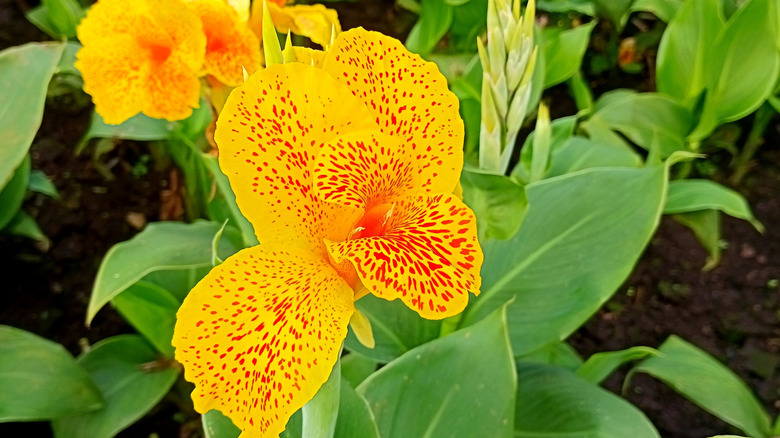
Canna lilies (Canna spp.) should be planted when soil temperatures are at or above 65 degrees Fahrenheit, which is why it's a flowering perennial you should never plant in the fall. Planting it in June, though, is perfect. When growing in a container, make sure you use a big one, as it needs room for its roots to develop. These flowers are hardy in Zones 7 to 11. If you live somewhere cooler, you either need to bring them inside when it gets cold or pull out the rhizome and replant next year.
Cosmos
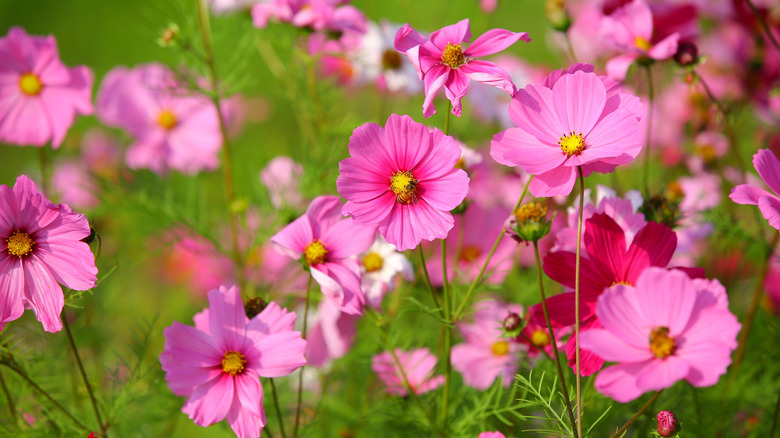
Cosmos (Cosmos bipinnatus) bloom until frost, so even if you plant them in June, you'll have bold flowers up to the moment the cold arrives. On top of that, these are self-seeding annuals. If you let them flower and die then leave the pot they grew in alone, they will regrow on their own the next year. For smaller pots, you may want to consider a dwarf or a compact variety, like chocolate cosmos, as some varieties can grow up to 6 feet tall. They come in pretty much every color you can imagine.
Canterbury bells
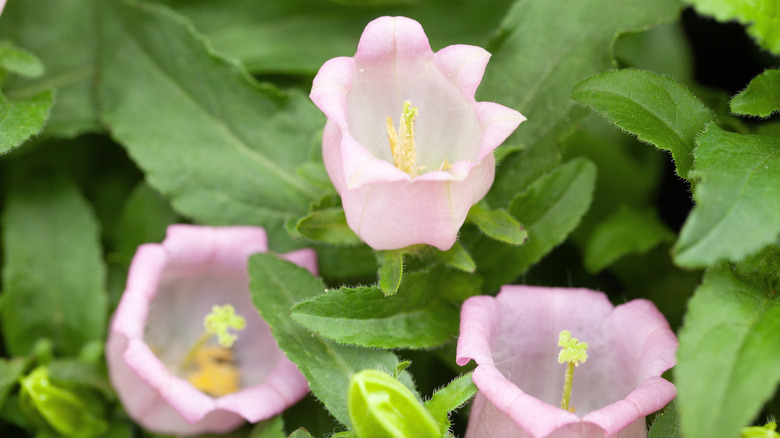
If you're looking for a rare biennial flower that brings unexpected beauty to your garden and works with gardeners late to the planting party, consider Canterbury bells (Campanula medium). They do best when sown outside in early summer, especially if they're in containers you can bring inside as the temperature drops if you live outside of Zones 5 to 8. These are biennial, but can start producing their bell-like flowers once the days get long. Some varieties, such as 'Dwarf Bella Mix,' can produce blooms just four weeks after they are planted in the ground.
Verbena
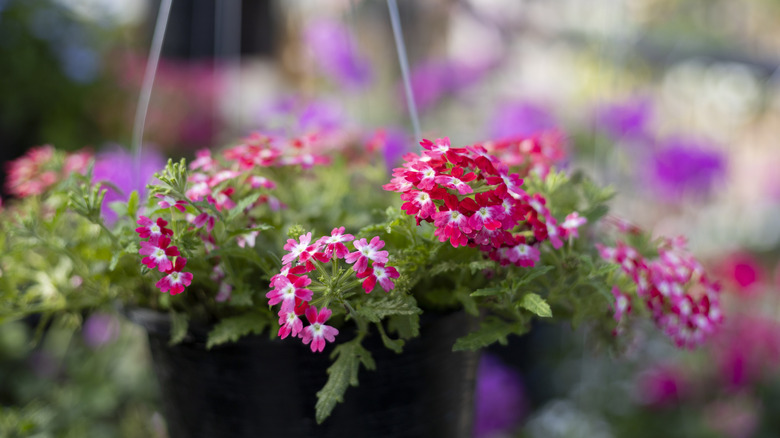
Verbenas (Verbena spp.) should be planted any time between the middle of spring and the beginning of summer. They look beautiful in hanging pots or other containers, and the bold flowers make an excellent addition to patios and porches. Most are treated as annuals, but they can be perennials in Zones 7 to 11, depending on the variety. These low-maintenance plants are perfect for the gardener who's already a little bit overwhelmed dealing with the rest of their garden. They like heat and don't mind if you forget to water them for a day or two.
Foxgloves
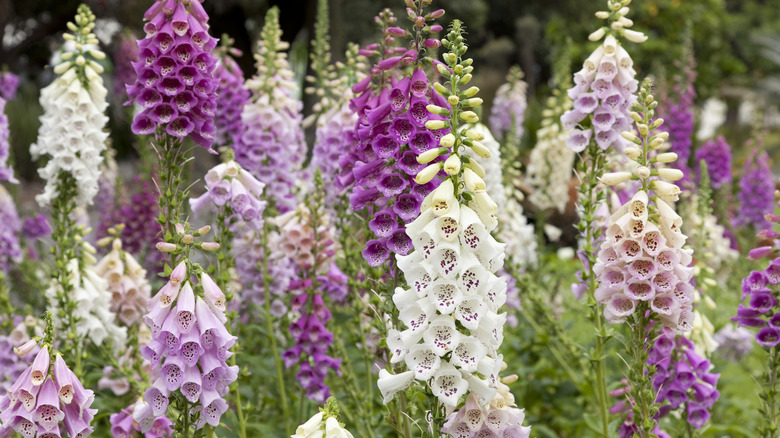
Another biennial plant to start in June is foxgloves (Digitalis spp.). Like the others, they don't bloom until their second year, so planting them in the summer is fine and won't add more to your already hectic growing schedule. Any type of foxglove can be grown in a container as well, and you can leave them outside all year long if you live in Zones 4 to 9. However, growing this beautiful tubular flower has a toxic downside, since all parts of the plant are poisonous to ingest and may be dangerous around pets and children.
Spider flowers
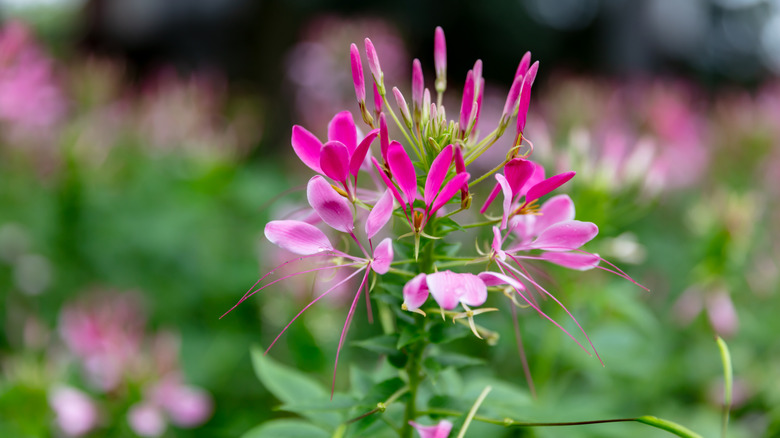
Spider flowers (Cleome hassleriana) are self-seeding annuals that only take about two weeks to sprout in the warm June days. Usually, you want to avoid growing this low-maintenance flower because it can take over your yard. When you grow it in containers, though, it's a little easier to manage. Just make sure you remove the flowers before they start seeding. You may want to avoid some of the older varieties, as they are known for having thorns and an unpleasant smell. Ones with the names 'Sparkler' and 'Spirit' are a few examples of improved cultivars.
Zinnias
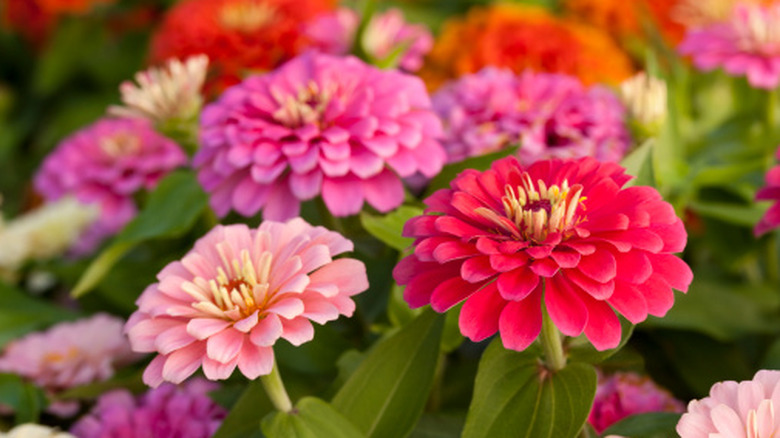
You can generally plant zinnias (Zinnia elegans) until the end of June. These annuals do well in containers, creating a colorful burst of flowers wherever you plant them. They are generally true annuals, though, which means you will need to replant them every year. While some people have reported seeing self-seeding on occasion, it's very rare. Like with marigolds, they grow fast. This means you can easily succession plant a new batch every few weeks until the end of the month to get stunning blooms all summer long.
Balloon flowers
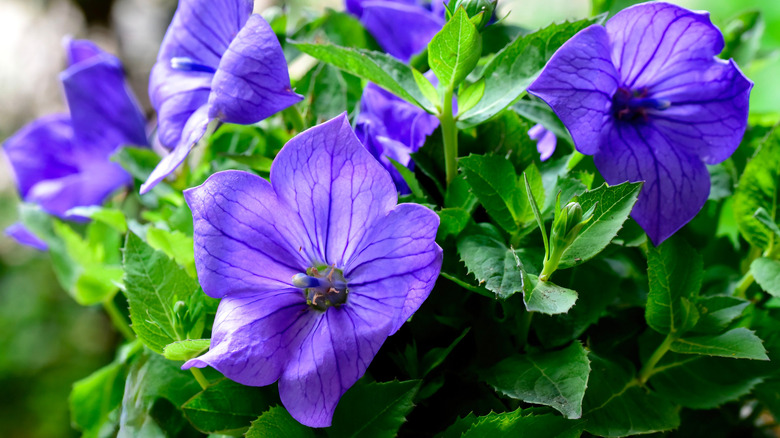
Balloon flowers (Platycodon grandiflorus) can be planted in June in containers at least 10 inches deep. They germinate in less than two weeks. However, keep in mind that while they can bloom in their first year, this perennial usually will take until the second to produce amazing flowers. Still, planting them in June gives them time to grow and let their roots establish before it gets cold in the fall. They are hardy in Zones 4 to 9, meaning you don't have to bring them indoors for the winter in most of the States.
Milkweed
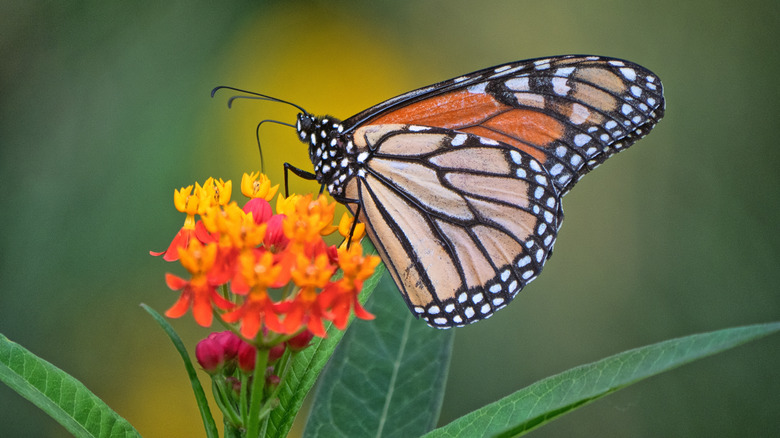
As long as the container is deep enough and has plenty of soil, you can grow milkweed (Asclepias spp.) in containers. They are fine to direct plant outdoors in June, as they are native to much of the United States and are easily able to handle growing from seed. They don't do well with transplanting, however, so it's a good idea to plant them directly into a big enough pot for their mature size. They are perennials in Zones 3 to 9 and can be left outside in pots all year long in these areas.
Red hot pokers
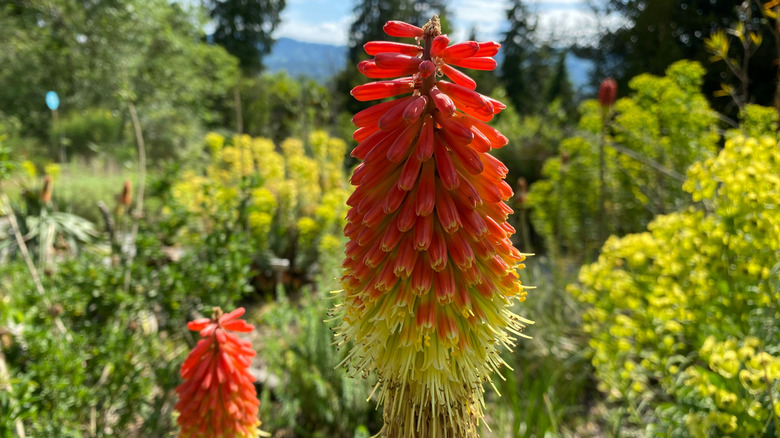
Like balloon flowers, red hot pokers (Kniphofia spp.) tend to need a year or so before they start blooming, but it is worth the wait. They are a unique flower that will have your neighbors staring with their tall stalks and bold blooms. These perennials come back for years. They are hardy in Zones 5 to 9, but if you live outside this range, you can always bring the container inside when the temperatures start dropping. Red hot pokers can get pretty big, so if you want a good one for your container, consider a dwarf variety.
Roses
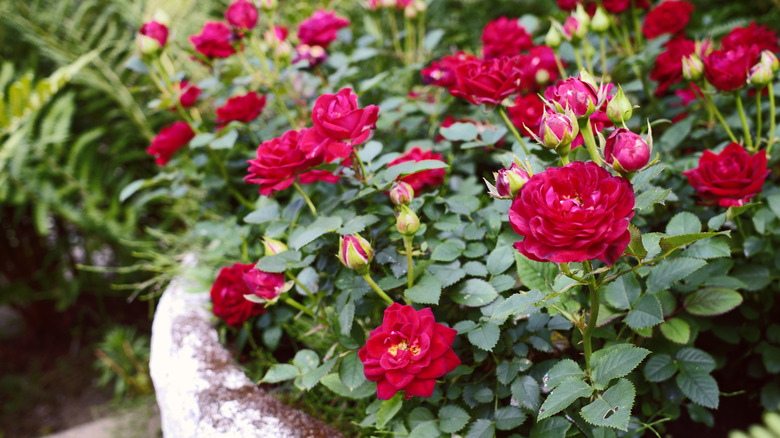
Summer isn't necessarily the best season to plant roses (Rosa spp.), but as long as you give them a bit of attention, they can grow just fine. If you're looking for something to keep in a container, regular roses might get out of control quickly. They need pots that are at least 2 feet wide and deep. However, you can look at planting patio or miniature roses instead, as they can be more compact. These flowers are perennials and traditionally thrive in Zones 7 to 10. However, you can find varieties for most other parts of the U.S., as well.