

Goodbye Bare Patches: 12 Of The Best Perennials For Full Sun Areas
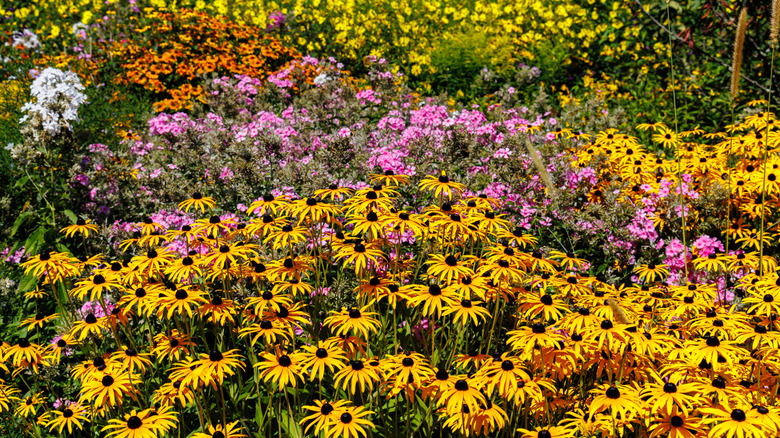
If your lawn is currently suffering from a severe case of bare patches thanks to too much sunlight, then it may be time to bring in a perennial or two that can actually thrive in this environment. Chances are you've already tried a few different types of plants, hoping to fill in those blank spots, but without much success. Perhaps the plants keep dying off due to the excessive amount of light or dehydration. You need perennials that not only love full sun, but actually require full sunlight to grow. Plus, many of these plants boast stunning textures, colors, and blooms to add interest to your property. Full-sun perennials include favorites like coneflowers (Echinacea), daylilies (Hemerocallis), and shasta daisies (Leucanthemum x superbum). Most of these options are low-maintenance and can tolerate a wide variety of soils and environments.
When you have a spot on your property that regularly receives at least 6 or more hours per day, you have a full sun property. This means you will have to make adjustments to the plants your choose for your garden. Plants requiring only partial sun or part shade will get scorched, dehydrated, and experience heat stress in these types of sunny environments. When shopping for plants to fill in your bare spots, make sure to check each individual label. If a plant label says "full sun," it will require more than 6 hours of sun a day. These flowers typically cannot bloom, or sometimes even survive, in anything less than 6 hours a day. But if you keep them in the light, they should thrive and add color to your flower beds.
Coneflower
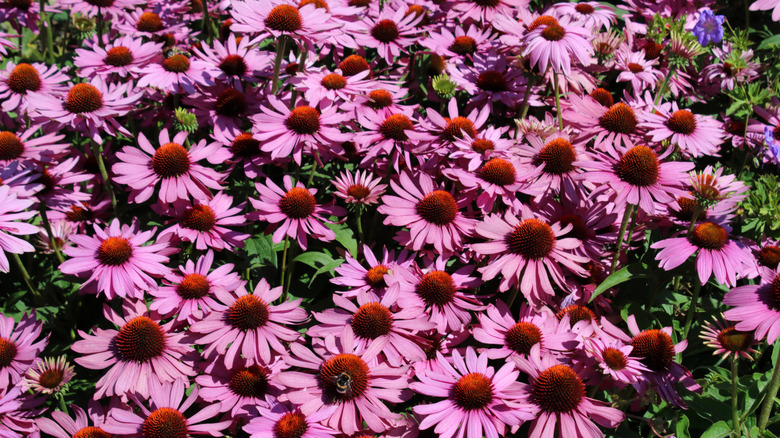
If you want to fill in the bare patches of your lawn with bright, beautiful, and heat-tolerant flowers, then coneflowers may be the choice for you. These perennials are not only low-maintenance, but they can help attract pollinators to your property. There are many stunning varieties of coneflowers to choose from, and they are hardy in USDA Hardiness Zones 4 through 9. If you live in the South and your property has a little bit of partial shade, your coneflowers won't mind. This can even help keep their blossoms bright and safe from burning. Make sure your coneflowers are planted in well-draining soil.
Daylily
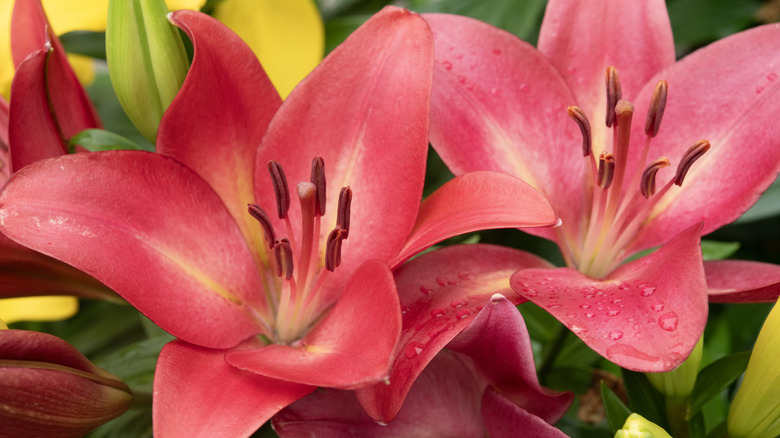
If you choose daylilies as the filler for your garden's bare patches, you will have an endless supply of varieties and colors to choose from. As you might expect from their name, a daylily flower only lasts for one day. However, since the plant is chock full of blooms, about 12 to 15 buds per stalk, and 4 to 6 stalks per flower, these beauties blossom all summer long. All these flowers require are full sun, well-draining soil, and weekly waterings. They are hardy in zones 3 through 9. Note that in many parts of the USA, certain species of daylily, including Hemerocallis fulva, are considered invasive and should not be planted.
Shasta daisy
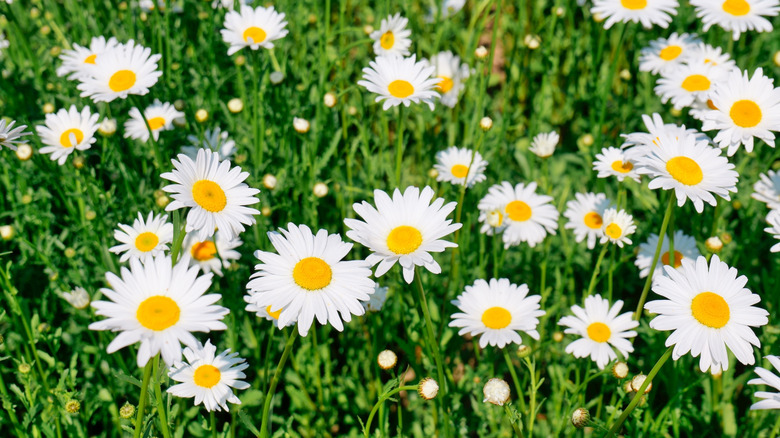
As you may expect from a hybrid flower developed in California, the Shasta daisy is a huge lover of sunshine. This perennial is hardy in zones 4 through 9, and can produce stunning white and yellow daisy flowers that contrast beautifully with the plant's dark green leaves. It's imperative that these flowers receive at least 6 hours of full sun each day, as well as well-draining soil, as they can tend to experience root rot from too much water. There are many varieties to choose from, including 'Becky' and 'Alaska.'
Black-eyed Susan
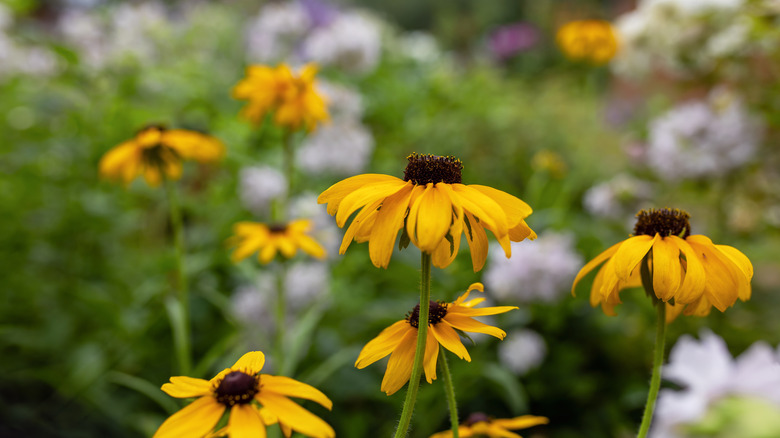
One of the most easily recognizable perennials, the black-eyed Susan is a popular planting choice for gardeners thanks to its bold blooms and easy maintenance. Like the other sun-loving perennials on this list, black-eyed Susans are capable of growing in partial shade, but their blooms will not be as vibrant. Instead, make sure this flower is planted in a full sun spot, and it should quickly cover any bare areas. You can find a wide variety of color in black-eyed Susans, from gold to red to orange. This short-lived perennial is typically hardy in zones 3 through 9.
Bellflower
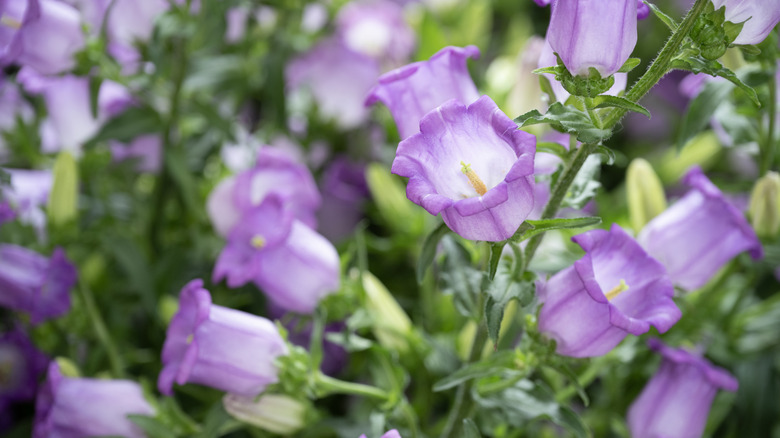
Bellflowers (Campanula) can easily transform the bare patches in your garden to blooms of colorful and stunning bell-shaped flowers. While you may see purple as a popular bellflower shade, you can also find options that come in blues, whites, and pinks. There are over 300 species of bellflowers. These perennials are hardy in zones 3 through 9, and come in different varieties like upright or ground covering. This flower prefers full sun, however, if you live in a high temperature climate, you can opt for a mix of partial sun and shade, especially in the afternoon.
Russian sage
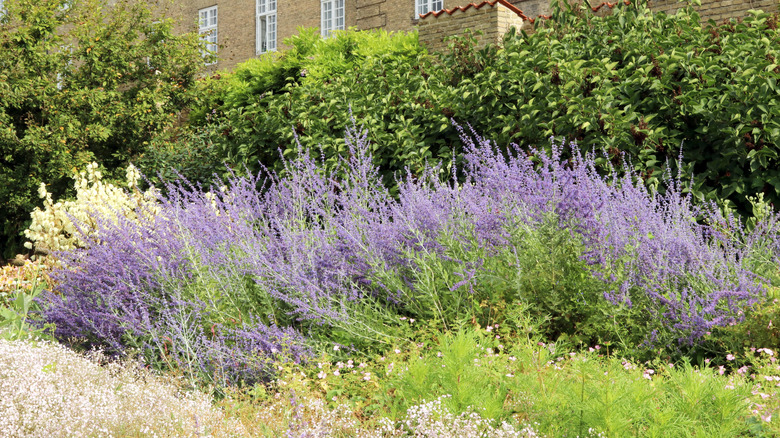
A drought-hardy woody perennial that loves the sun, Russian sage (Salvia yangii) is an excellent option for any gardener struggling to fill the gaps on their full-sun property. This cluster of tall purple blue flowers is hardy in zones 4 through 9 and can serve as an easy filler for a bare flower bed. Russian sage requires an area with 6 to 8 hours of full sun as well as well-draining soil. Once this plant has been fully established, which can take 1 to 2 years, it is officially considered tolerant to drought.
Anise hyssop
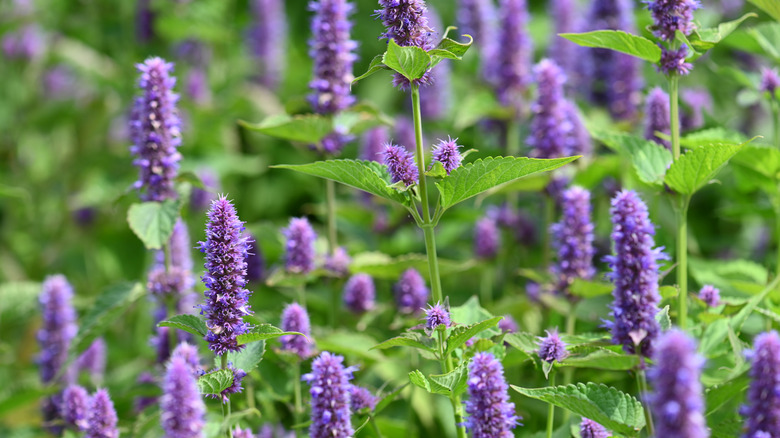
Though it may have a similar look to Russian sage, anise hyssop (Agastache foeniculum) is a separate tall and purple-blue flower that actually belongs to the mint family. This is the perfect perennial for a bare, sunny garden that is in desperate need of a tall and flowering plant to fill the gaps. Besides its gorgeous lavender appearance, anise hyssop can also appeal to your other senses with its delicious licorice smell. Plus, pollinators love it. Note that this perennial is hardy in zones 4 through 8 and thrives best in full sun and well-draining soil.
Milkweed
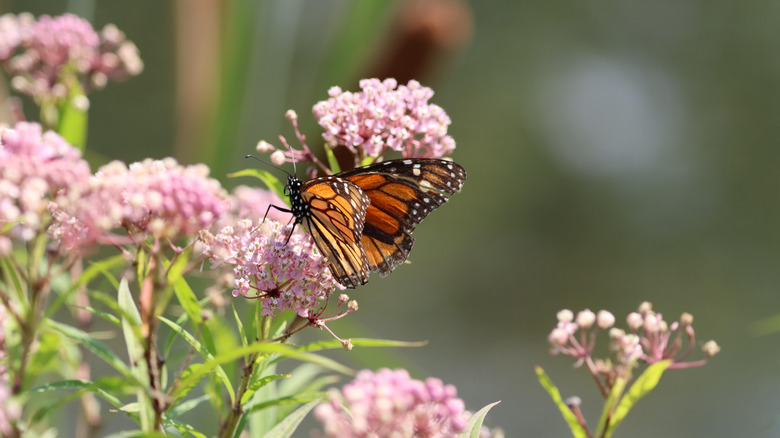
If you want to fill in the bare spots of your garden while simultaneously attracting some beneficial pollinators, then you may want to consider adding milkweed (Asclepias) to your property. Monarch butterflies, in particular, seek out milkweed as their growing habitat. There are many varieties of milkweed to choose from, varying in factors such as color, height, and soil preference, including butterfly milkweed (A. tuberosa) and whorled milkweed (A. verticillata). Since it is drought tolerant, this perennial can thrive in long days in the sun and is hardy in zones 3 through 9.
Bee balm
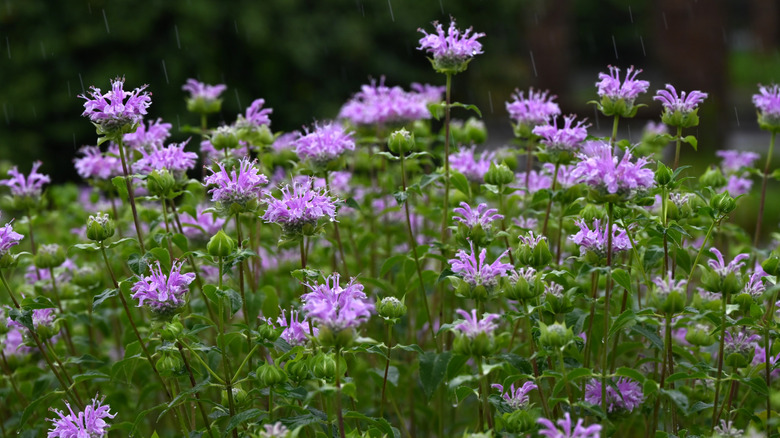
As you might expect from its appropriate title, bee balm (Monarda) is a top-choice perennial for any gardener who wishes to bring pollinators to their property. Not only does it bring beneficial critters to your garden, but bee balm thrives in full sun and can easily upgrade a bare bed to a healthy, flowering clump. You can choose from several species, including the red scarlet bee balm or the purple lemon bee balm. These perennials are hardy in zones 3 through 9, though some varieties are hardy in zones 4 through 9. Make sure they are planted in a space that receives at least 6 hours of sun.
Lavender
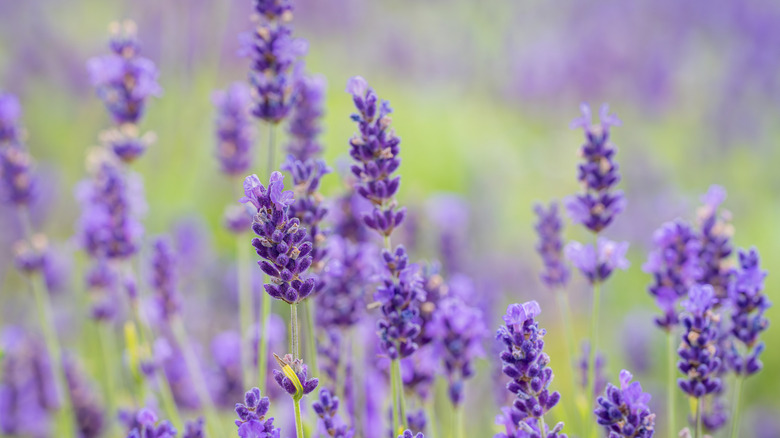
Why not add a stunning and fragrant herb to help boost the aesthetic of your sunny garden? Lavender (Lavandula) is a bushy perennial that will thrive in that bright, sunny corner of your lawn, while also attracting helpful pollinators. Depending on the specific variety you choose, lavender is typically hardy in zones 5 through 11, depending on variety. This herb loves hot environments and has one main condition: well-draining soil. Lavender can be prone to root rot when overwatered. Since it can be difficult to grow from seed, it's typically recommended to begin with starter plants.
Peonies
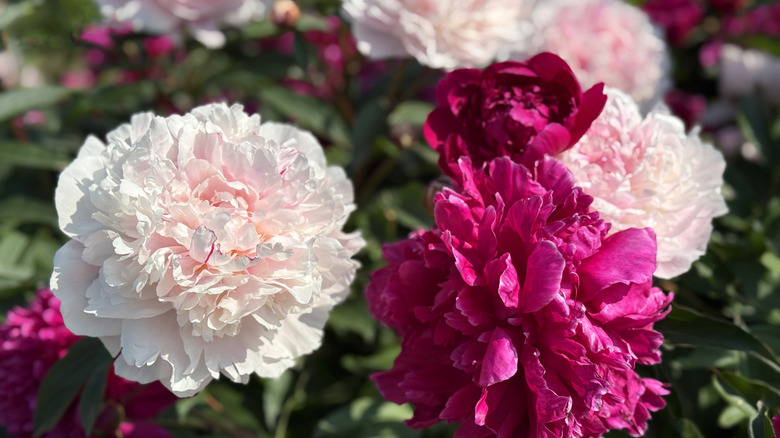
Invite big, beautiful blooms into your garden with a selection of peonies (Paeonia). Since these perennials thrive in full sun, or 6 to 8 hours of sun per day, they can transform any bare patches of soil into a stunning flower show. Overtime, peonies become more and more drought tolerant. Hardy in zones 3 through 9, depending on variety, peonies have countless variety options for you to choose from, including double-flowered, semi-double, and single flowered. Some popular options include the bubblegum pink 'Sarah Bernhardt,' the fluffy white 'Festiva Maxima,' and the buttery yellow 'Bowl of Beauty.'
Catmint
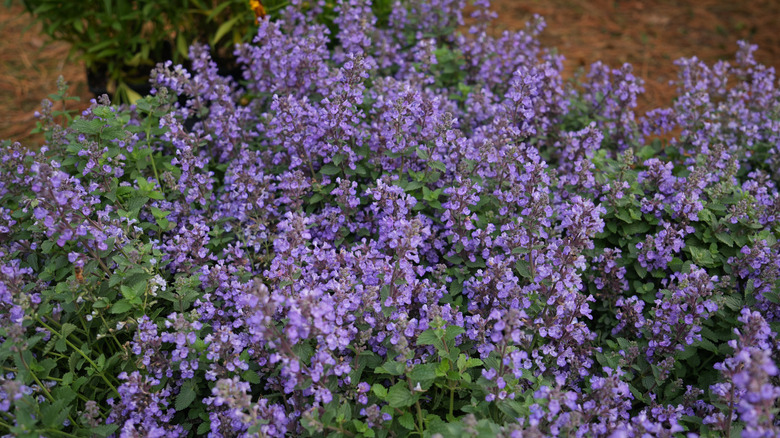
Catmint (Nepeta) doesn't just provide a cluster of lavender-colored flower spikes for your garden; it even offers a delicious fragrant scent. This perennial, which is hardy in zones 3 through 9, depending on variety, thrives on full sun and even neglect. It's a perfect selection for that bare, sunny spot in your garden that gets lots of heat and not much attention. If you live in an area with super hot temperatures, it can enjoy partial shade in the afternoons. If you plan on adding multiple catmint to your garden, make sure to keep the plants 1 to 3 feet apart.