

Why There's Simply No Need For Plastic Ice Cube Trays Anymore
We may receive a commission on purchases made from links.
Just a few centuries ago, ice was a luxury reserved for the world's richest people. It wasn't until the early 1900s, and the onset of modern-day refrigeration, that it became more widely accessible. This coincided with the patenting of the first ice tray in 1949, and suddenly, gone were the days of room-temperature water and warm cocktails: cubes were here to stay. The initial ice tray designs were aluminum, but manufacturers soon switched over to plastic, which is still commonly used today. Although they're affordable and easy to stack in a freezer, the drawback to these trays is that they can expose you to harmful microplastics. That's why it's time to ditch your plastic items (like ice cube trays) for safer alternatives.
The term "microplastic" dates back to 2004 and is generally attributed to marine biologist Richard Thomas, who first raised concerns about the potential dangers posed by plastics leaching into the global water supply. The term has evolved slightly over the last few decades, and now describes tiny fragments up to five millimeters long that have either been manufactured in individual units (like industrial resin) or have worn off larger debris. Ultimately, every plastic item — including ice cube trays — has the potential to degrade into hundreds of thousands, if not millions, of minuscule pieces.
If consumed, studies indicate that microplastics could be related to cancer or heart issues. Not to mention the issues they present for our environment. Before you toss your old plastic trays in the trash, however, keep in mind these brilliant ways to repurpose ice cube trays around the house and garden.
The dangers of microplastics and safer alternatives to plastic ice trays
Fortunately, it's not too late to reduce the number of microplastics in our ecosystem. While it's government organizations like the Environmental Protection Agency, not individuals, that control the regulation of plastics, we do have the power to limit their use in our own homes. Ice cube trays are a good place to start.
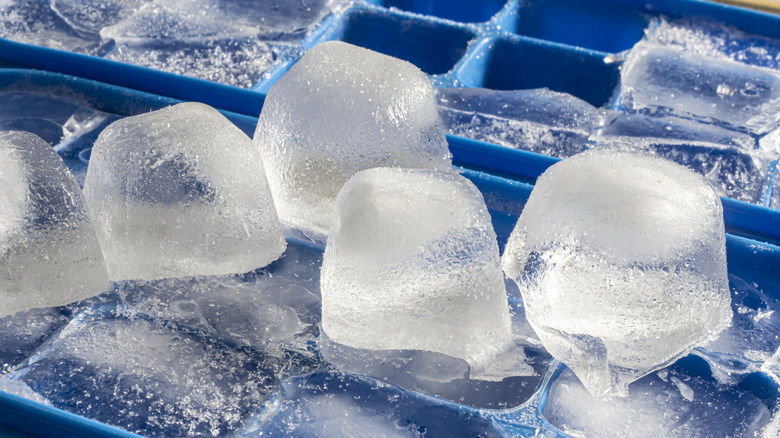
Researchers have found that sudden temperature changes can cause plastics to break down more quickly. People often think about microwavable Tupperware in that context, but the freezer can also make your plastic tray brittle. What's more, when most folks try to dislodge ice cubes, they often twist their trays, which can cause microscopic bits of plastic to break off and later end up in the cubes.
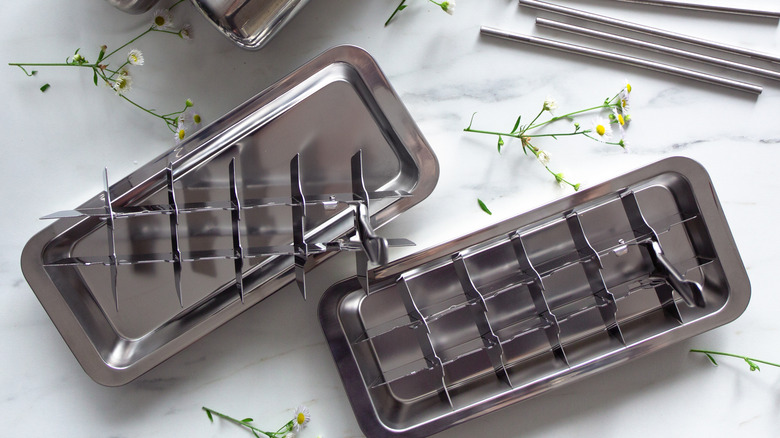
There are several alternatives to the rigid polypropylene ice trays most of us grew up using. You can consider the Dreiklang Stainless Steel Polished Ice Cube Tray for $20, or try silicone instead. While silicone isn't a foolproof option, current scientific consensus suggests that these products present a far lower risk of leaching microplastics — plus, these trays are far more flexible. The Tvmania Ice Cube Trays Set sells for $15 and comes in various pastel colors. If you prefer to get creative with your drink-mixing, Firetreesilverflower offers trays with molds shaped like flowers, starfish, hearts, and more. Finally, you can store your ice in this household hosting staple from the 1960s that's now a thrift store diamond in the rough.