

Forget Bleach: Use Gentler Ways To Eliminate Mold From Your Dishwasher
We may receive a commission on purchases made from links.
Bleach has been a mainstay of keeping house since the early 20th century. There's no denying how useful it can be for taking on tough messes and disinfecting alike. However, there are a host of reasons why you might want to stop using bleach in your home. For starters, it can be irritating to your skin, eyes, and lungs. Bleach also produces a toxic gas when combined with certain other chemicals and cleaners you might have in your home, like ammonia or vinegar.
But what is one to do when they find a particularly nasty mess that bleach can definitely handle? Mold certainly seems like one issue that you could reach for bleach to resolve — especially if you find it in a place like your dishwasher. But when you're tempted to use bleach to solve this issue, remember the hazards. Do you really want to use it somewhere your dinnerware will be? Even if you find mold here, it's wise to think twice before using bleach except as a last resort. In fact, the U.S. Environmental Protection Agency recommends against using bleach for cleaning.
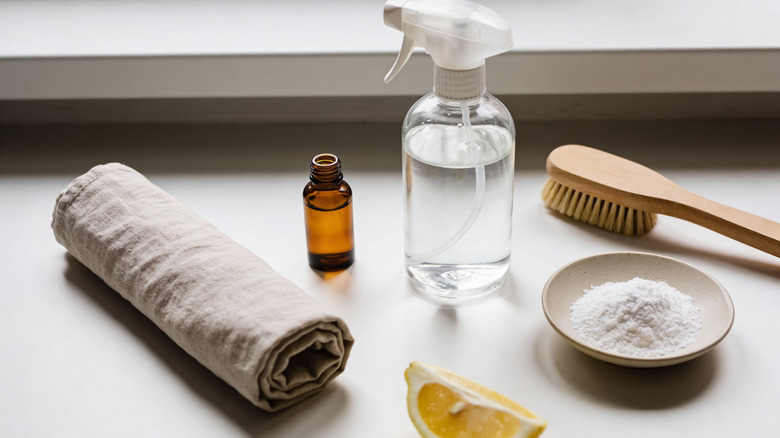
Luckily, there are plenty of handy bleach alternatives to explore. You probably even have a slew of gentler options in your home already. Common household items — including hydrogen peroxide, lemon juice, and distilled vinegar — all work wonders on a variety of different messes, including mold. The key is knowing how to combine them for the best effects. There are a few recipes to try. One combination involves 2 cups of water, ½ cup of hydrogen peroxide, and ¼ cup lemon juice. You could also opt for 2 cups water, ¼ cup lemon juice, and ½ cup distilled vinegar. If you have only vinegar, combine 1 cup of white vinegar and 4 cups of water.
Getting rid of dishwasher mold and keeping it away
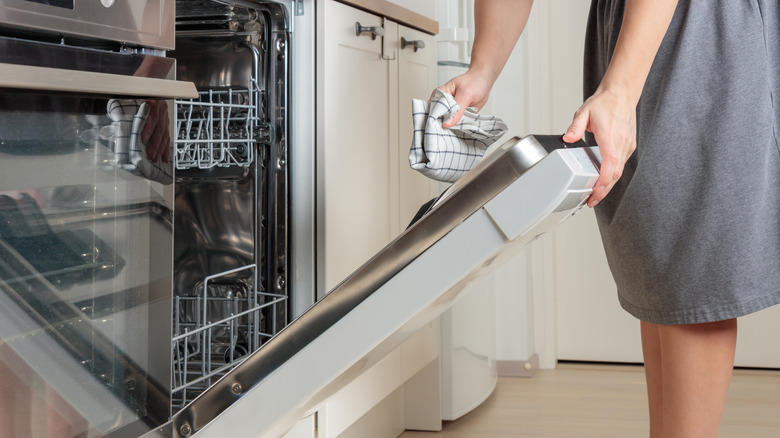
The mold you find in your dishwasher — particularly the black slimy stuff that builds up in nooks and crannies — is more than likely actually one of several strains of yeast. It's usually caused by gaps in the door's seal, affecting the efficiency of your dishwasher. This grimy substance can grow on the spray arm, seal, and just about any other crevice within the device. To clean this fungus, first combine your preferred natural cleaning ingredients to create your yeast-killing solution. Lemon, white vinegar, and hydrogen peroxide are all great at tackling these kinds of messes. Once your solution is ready, take apart the machine as much as it allows, removing the components such as racks, spray bars, and filters, the way you would during a deep clean.
Use a dry microfiber cloth to wipe away any debris. Lift up the door seal to capture any spores that might be hiding underneath. Now soak a sponge in your cleaning solution and thoroughly scrub down the entire machine and all its components. Once you're done, put the machine back together and run it on a cleaning cycle at high heat.
To prevent any fungi from growing back, address any issues with the door seal, and clean your dishwasher regularly. Every month or so, you can run your dishwasher with a mold-repelling tablet, like Renuv heavy duty deep cleaning tablets. Finally, be sure to clean your dishwasher filter and sanitize all the components regularly to keep your dishwasher mold-free.