

No Need For A Microwave: The Space Above Your Stove Is Begging For A Proper Range Hood
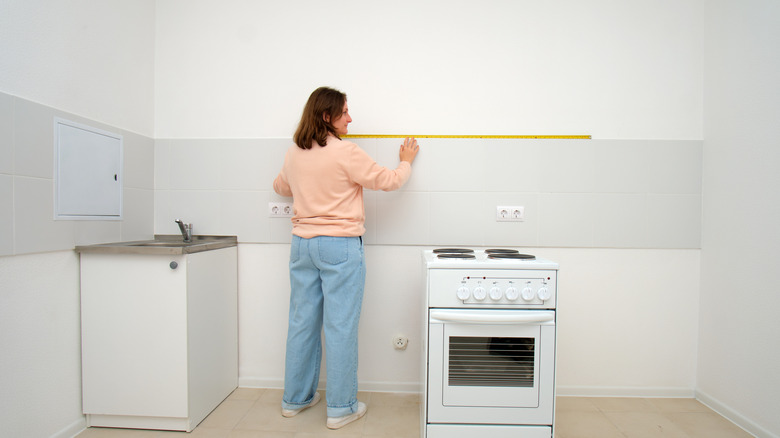
Over-the-range microwaves are a standard feature in many kitchens, due in large part to their convenience. Situated above a stove, you have all your major cooking appliances in one place, making it easy to move food — and yourself — between them and your countertop, pantry, and fridge-freezer. If you keep a microwave on the counter, it takes up valuable space in a room that's likely already a bit cramped. Plus, the microwave provides all-in-one cooking and ventilation for both itself and your stovetop. However, if you're a serious home cook, don't use your microwave much, prefer a lean approach to cooking appliances, or are planning a remodel, pairing a quality range hood with a top gas range or stove will give your kitchen a professional upgrade. Arguably, giving up a multi-use over-the-range microwave may just be worth it for the power and good looks of a sleek, efficient range hood.
Every part of a range hood is designed to improve ventilation in kitchens, making it far more effective at removing smoke, grease, odors, and heat than dual-purpose over-the-range microwaves. The suction power of these appliances is indicated by their CFM motor class rating, which measures how many cubic feet of air is ventilated by the appliance each minute. (In case it wasn't clear, CFM stands for cubic feet per minute.) Most over-the-range microwaves max out at 500 CFM, while dedicated range hoods can reach 600 CFM, with some commercial-style models exceeding 1,000 CFM. The additional airflow power of range hoods can make a noticeable difference when you're cooking, especially if you're frying or sautéing — methods that generate a lot of airborne grease. A good range hood is a kitchen essential that can eliminate fried food odors after you cook.
Range hoods can handle serious cooking
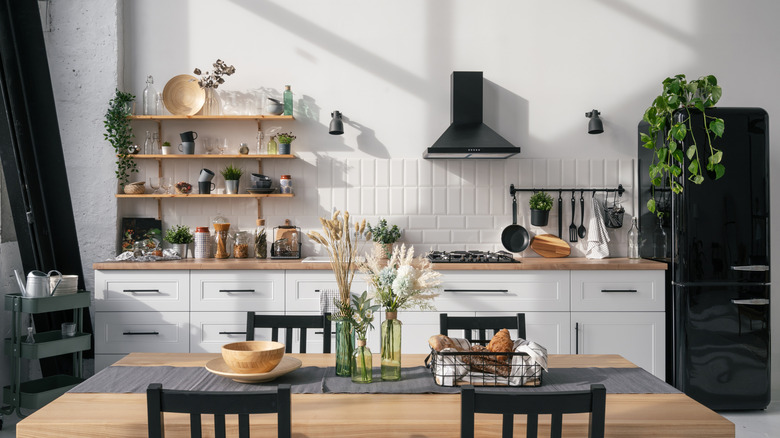
There are other practical factors that might push you toward investing in a range hood over an over-the-range microwave. Unlike microwave-vent combo appliances, which recycle air into the home, range hoods are connected to an air duct that exits the home. The filtered air is redistributed outdoors, ensuring grease and smoke particles don't get redeposited on your kitchen surfaces. Range hoods also suck up the heat — or, more aptly, hot, humid air — created while cooking, making your kitchen a cooler, more comfortable place to spend time in. Similarly, these purpose-designed appliances tolerate exposure to high heat better than ventilating microwaves. Range hoods may last longer than their multi-use counterparts, especially if you do a lot of high-temperature cooking.
Aside from all of the practical benefits of range hoods, another not-to-be-sniffed-at reason to invest in a range hood is aesthetics. These nifty appliances come in so many styles and finishes — from sleek black under-the-cabinet hoods to hammered copper farmhouse hoods with decorative borders — that you're sure to find a model in a colorway that fits your kitchen's existing decor or your planned remodel. For example, a classic, canopy-shaped, stainless steel hood is an understated feature in a boho kitchen with a dramatic backsplash or colorful cabinetry. Got a small kitchen? Go for a matte black or wood-finish range hood that you can tuck unobtrusively into a corner above your stovetop. If you're not sure how this appliance will look in your kitchen or where's the best spot for one, cardboard is your secret weapon when designing a DIY range hood. Model one up and affix it in different spots before taking the plunge and buying one.