

28 Best Perennials You Should Be Growing Near Your Pool
We may receive a commission on purchases made from links.
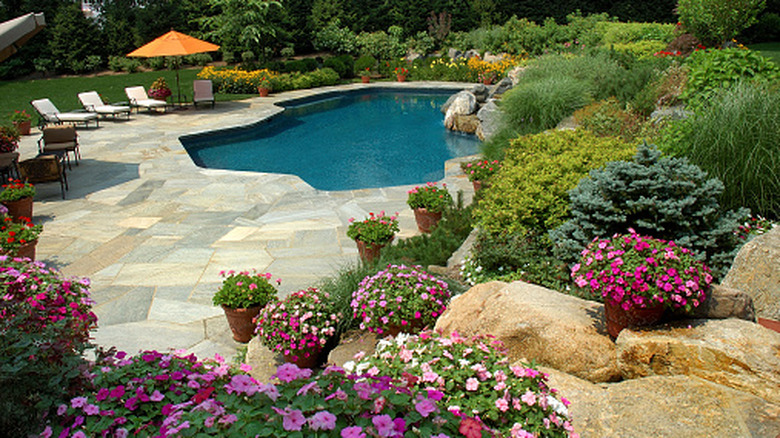
Tube floats, water blasters, banana loungers, a moisture-resistant Bluetooth speaker playing your favorite tunes... There are many ways to turn time a fairly ordinary backyard swimming pool area into a vacation-like experience. Probably the best option, however, is to cultivate a poolside garden. Imagine it now — you're floating calmly on the surface of the water, surrounded by gorgeous greenery, while hummingbirds and butterflies flutter about, sipping nectar from all the flowering plants you so lovingly tend. To fulfil this dream, it's best to fill the garden beds bordering your pool area with perennials like bird of paradise, variegated shell ginger, stonecrop, hardy ice plant, canna lilies, pink muhly grass, and more. These plants return year after year, making them less work than annuals.
You don't want to spend all your precious poolside time scooping leaves, petals, twigs, and dead wildlife from your pool — unless you're lucky enough to have an automatic pool skimmer. You also need to find plants that will tolerate splashes from chlorinated or salty water and all the heat reflected from the pool's surface and deck. Species that grow aggressively are out of the question — you don't want to risk their roots penetrating the pool liner or worm their way into the filter. To top it all off, you need to find plants that grow well in your USDA Plant Hardiness Zone and soil conditions. Frankly, that's a lot to ask of natural plantings, though some perform better than others. Broadly speaking, ornamental grasses, sedges, and succulents are relatively mess-free, while flowers and foliage plants provide color and interest.
Bird of paradise
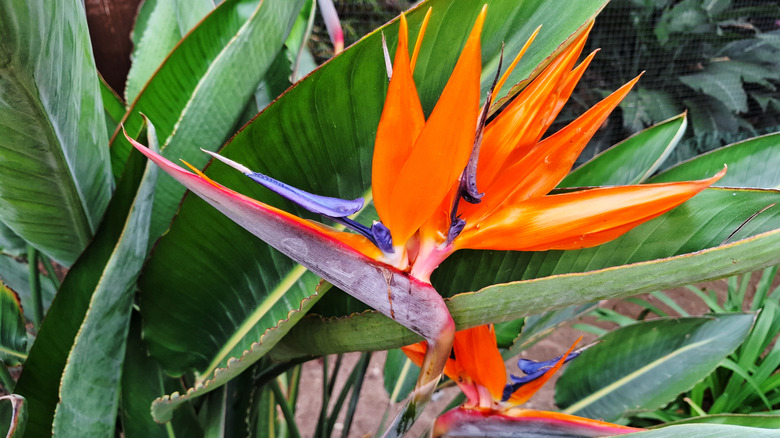
Tropical bird of paradise (Strelitzia reginae) is only hardy in Zones 10 to 12. Still, it's a staple plant for pool areas, where it strikes an imposing figure with its arching, bluish-green leaves similar to those of banana trees. In the summer and fall, when the orange and blue flowers unfurl, it can appear as though your swimming pool garden is permanently populated by a flock of exotic birds. It barely drops any foliage, and it can withstand drought and salt spray relatively well. For a shorter, foliage-focused plant, grow bird of paradise in partial shade.
Variegated shell ginger
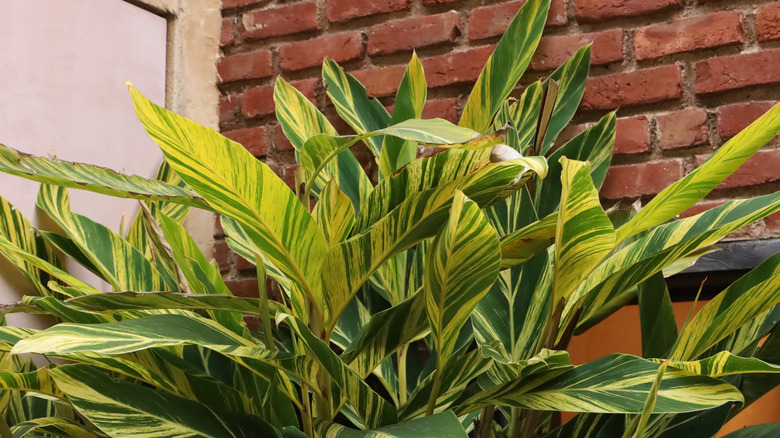
Plant variegated shell ginger (Alpinia zerumbet 'Variegata') to transform your boring pool area into a holiday oasis. This pretty plant produces a flurry of yellow-green streaked leaves year-round in Zones 8 to 10 — it may also survive in Zone 7 with cold protection. The pink-tinged white or yellow blooms are strongly scented and resemble seashells. They are sometimes followed by red lollipop-like fruit that add a pop of bright color to the garden. Shell ginger grows best in shady, moist (but not soggy) beds, and is mildly drought hardy.
Orange-flowered hyssop
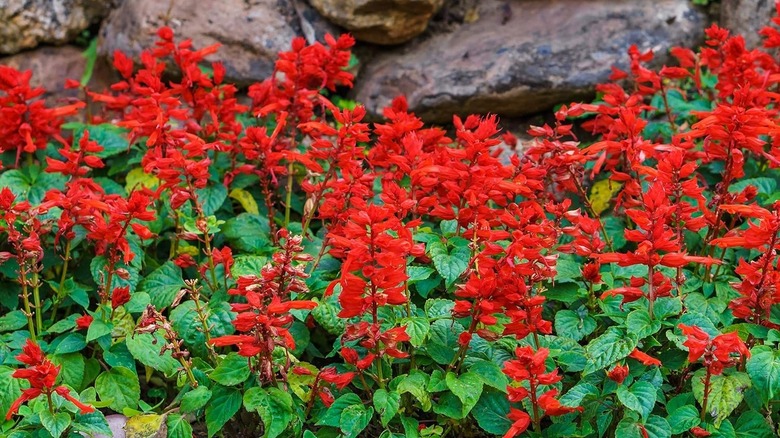
The main reason orange-flowered anise hyssop (Agastache coccinea) is an excellent perennial for poolside plantings is its fragrance. If you graze the leaves of this plant while walking past it, you'll notice a sweet licorice smell that will transport you to an exotic locale. Other than that, orange-flowered anise hyssop provides a summer buffet for hummingbirds and butterflies who fall head-over-heels for the plant's nectar-laden, tubular blooms. Deadhead the plant to keep the blooms coming. This pretty perennial thrives in Zones 6 to 9, but don't forget to mulch the roots in winter for cold protection.
Daylilies
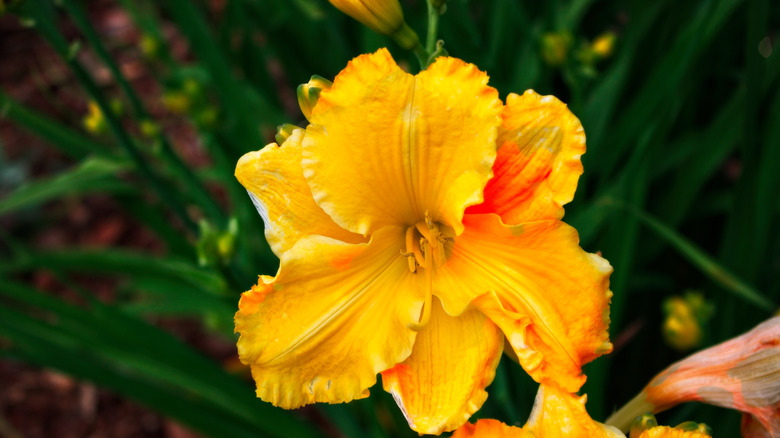
Surround your garden-side pool with beds of daylilies (Hemerocallis spp.). Choose varieties that flower in a similar color or go full rainbow — after all, the genus boasts blooms in shades of gold, orange, pink, purple, red, and white. Daylilies do well in all light conditions outside of deep shade. Plus, they're highly salt-tolerant. For perennials that thrive in damp, soggy soil, consider 'Bahama Butterscotch,' 'Blushing Summer Valentine,' or 'Frankly Scarlett.' Alternatively, you could adorn your small pool deck with dwarf cultivars, like 'Little Grapette,' in containers. Most daylilies grow well in Zones 3 to 9.
Leopard plant
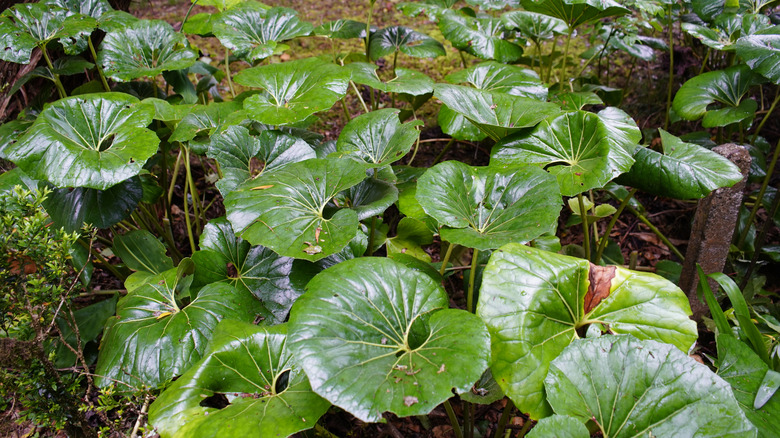
For an almost litter-less poolside addition with tropical vibes, try the leopard plant (Farfugium japonicum). The large, glossy leaves resemble lily pads, and late in the growing season, the plant produces sprays of daisy-like flowers. You can choose to snip them off to keep the attention on the foliage. Unfortunately, leopard plants hate the sun unless you water them constantly, so find a shady spot for them in your garden. If you want leopard-spot leaves, go for cultivars like 'Aureomaculatum' or 'Kagami Jishi.' Grow them in Zones 7 to 9 in the ground or in containers.
'Halcyon' hosta
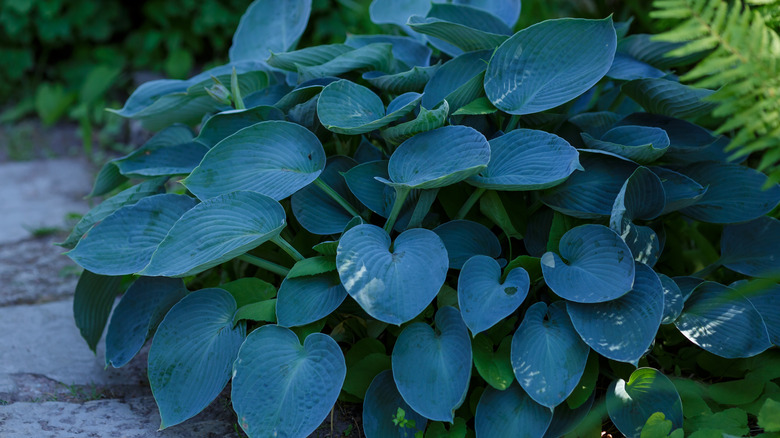
If you're going classic with boulders and ferns around your shady pool, add a Tardiana group 'Halcyon' hosta (Hosta 'Halcyon') into the mix. Touted as one of the best blue-foliage hostas, the spear-shaped leaves of this pretty perennial retain their gorgeous hues through the summer until, eventually, they're covered by the silver-mauve stalks of the cultivar's blue-purple flowers. The 'Halcyon' hosta is highly versatile in Zones 3 through 9. Plant it in dark corners or under a tree to add texture and color to a bed. The blooms also attract hummingbirds, while the leaves resist slug attacks.
Coral bells (Northern Exposure series)
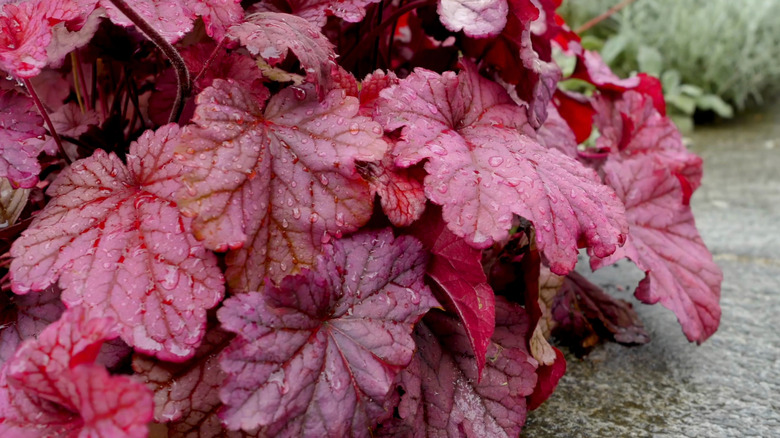
All kinds of coral bells (Heuchera spp.) look great beside pools, but cultivars in the Northern Exposure group work particularly well. They're hardy in Zones 3 to 9 and heat-, humidity-, and disease-resistant. If you prefer moody foliage colors, like black, purple, and deep red, these coral bells have you covered. There are also summery leaves in shades of amber and lime. You're sure to find one of these flowering perennials to fit your poolside garden design palette. Grow them in-ground or in containers in a semi-shaded location to avoid leaf burn or wilt.
'Daniel Weeks' ginger lily
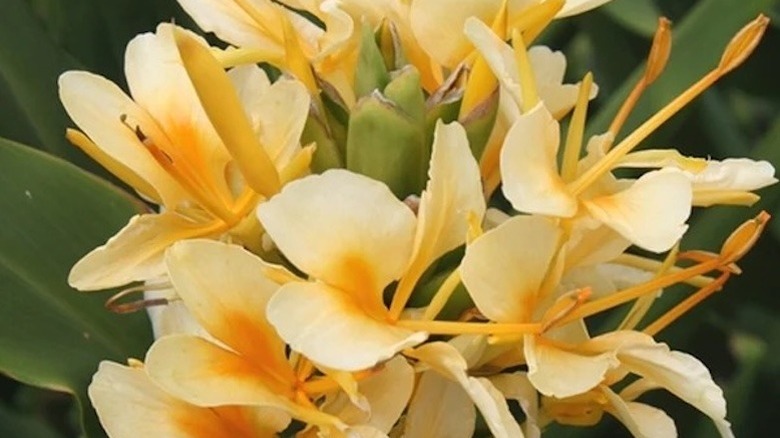
Do you like going for an evening swim after a long day? Mass plant or pot up 'Daniel Weeks' ginger lily (Hedychium 'Daniel Weeks'). This long-blooming perennial, which flowers from July until first frost, boasts tall stalks of golden flowers with a pleasant, honeysuckle-like fragrance in the evening. With mulch, they can survive winters down to -7 degrees Fahrenheit (Zone 6), though they officially thrive in USDA Plant Hardiness Zones 7 to 10. These tough plants require at least four hours of direct sunlight a day, ideally with shelter from the midday sun.
Stonecrop
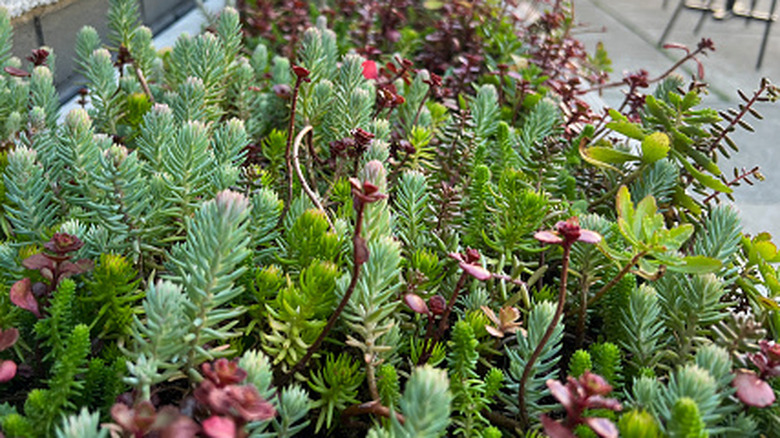
Stonecrops (Sedum spp.) probably require little introduction. These perennial succulents grow in almost every zone — Zones 3 to 9, specifically, depending on species — and look gorgeous in pool hardscapes with their velvety, fleshy leaves and often dramatic blooms. Bees, butterflies, and songbirds find the flowers and seed attractive, which can appear in spring to fall. Stonecrop can handle every soil type and grow well in full sun to partial shade. Provide good drainage and don't water too much, or the roots may rot. They drop little-to-no leaf litter, making them popular with pool owners.
Hardy ice plant
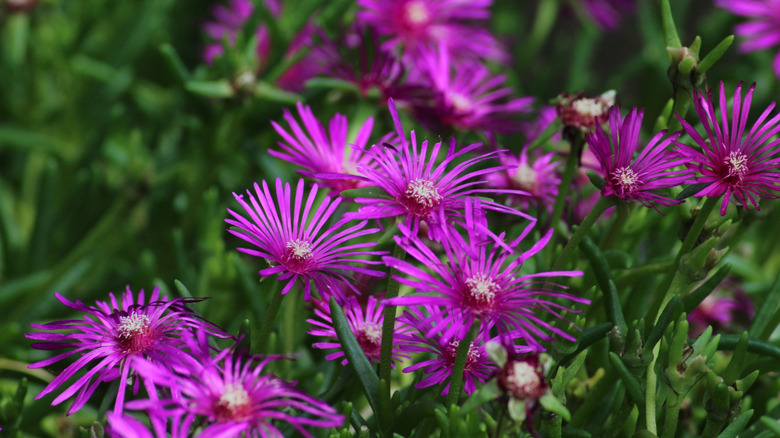
If you're looking for a low-growing perennial for a poolside border garden in Zones 6 to 10, consider hardy ice plant (Delosperma cooperi). From spring through to first frost, this groundcover is laden with red-violet flowers that thrive in hot, dry weather. They'll even forgive you if you forget to give them a drink. Salt spray doesn't bother them, but they may struggle to remain green through winter in colder regions. If they die down to their roots, they should pop up again once the weather warms. Provide them with good drainage or grow them in containers.
'Moonbeam' threadleaf tickseed
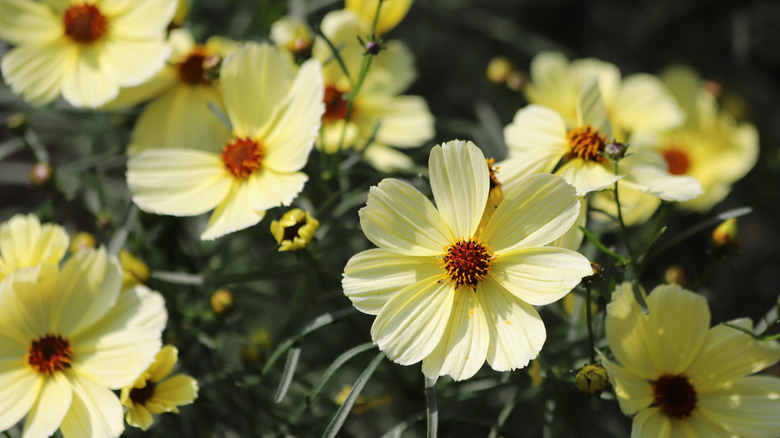
As a poolside planting, 'Moonbeam' threadleaf tickseed (Anacis verticillata 'Moonbeam') offers a plethora of positive attributes. It can deal with salt, summer heat, and humidity without additional watering. It kicks off the growing season in summer, producing swathes of gold-yellow, daisy-like flowers. Deadhead the plant every time you visit your pool for a swim and they'll put on a show through fall. Otherwise, give the plants a single light trim mid-season. 'Moonbeam' threadleaf tickseed grows about 2 feet tall in Zones 3 to 9. These stunning plants will thrive in containers in full sun.
Garden canna
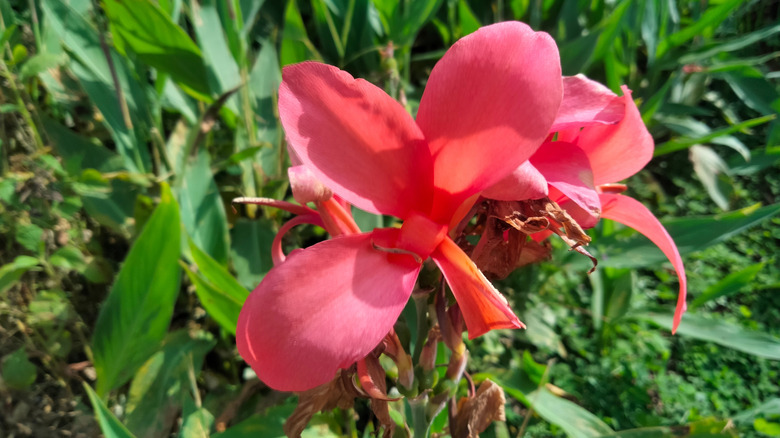
Garden canna (Canna x generalis) is another good option for creating an oh-so-tropical aesthetic around a backyard swimming pool. While all canna cultivars have dramatic foliage, variegated varieties, like 'Black Knight' and 'Bengal Tiger,' take it up a notch with their beautiful leaf patterns. If that wasn't enough, these perennials flower dramatically in the summer, boasting salmon, coral, yellow, or ivory white blooms. They love the heat and tolerate occasional flooding (good for poolside plantings), but they spread fast. Plant them about 3 to 4 feet away from your pool liner or in pots.
Elephant ear
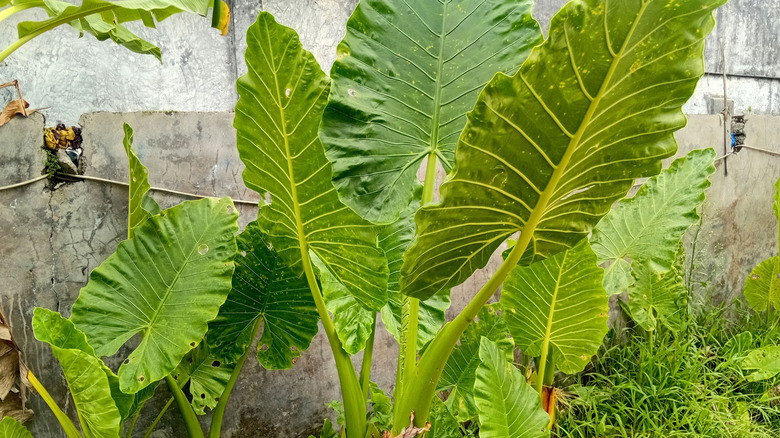
Looking for a statement-making plant that will make your pool look positively primordial? Consider elephant ears (Zones 8 to 12). This common name refers to species with huge, arrow-shaped, waxy leaves in the Colocasia, Alocasia, and Xanthosoma genera. While you may feel spoiled for choice, be sure to look for plants that don't spread through runners, unless you're willing to prune the roots diligently or plant them in pots. Also, avoid wild taro (Colocasia esculenta) if you live on the Gulf Coast, where it's invasive. For cooler conditions, 'Pink China' may overwinter down to Zone 5.
Japanese banana
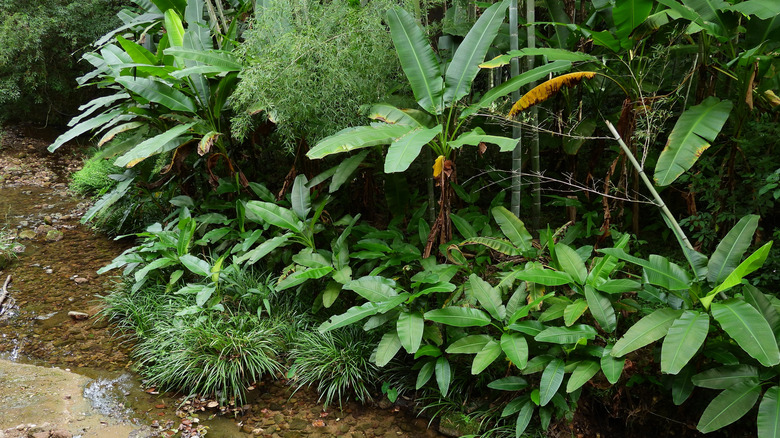
Japanese banana (Musa basjoo) doesn't produce edible fruit, but it has such attractive foliage — paddle-shaped leaves over 6 feet long — that it's a pool deck must-have. This perennial is hardy in Zones 5 to 10, but below Zone 9, the foliage dies back in winter. If you live somewhere cool, trim the stems to 2 feet above the ground after the leaves die. Then wrap the trunk in burlap or bring your container plant inside. If you fail to do so, you risk a dead Japanese banana come spring. These plants grow fast and require consistent watering and fertilizing.
Calla lily
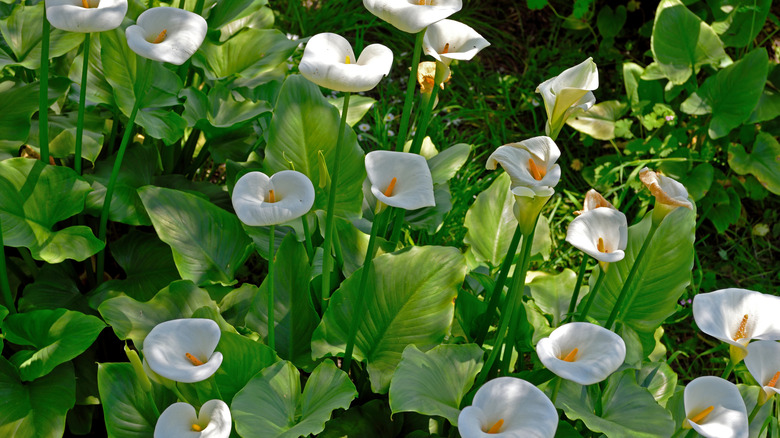
When planted en masse around swimming pools, calla lilies (Zantedeschia spp.) look riveting. Their spotted, arrow-like leaves and flamboyant flower spathes steal the show. Seriously, have you seen Proven Winners' Be My series? Calla lilies can tolerate sun to partial shade and don't mind wet soil. They can grow aggressively, so are best planted in containers. These perennials thrive in Zones 7 to 10, but if you live in California, don't bother looking for them. They're classified as invasive in the state. Also, avoid planting them if you have pets or small children — accidental consumption can be fatal.
Montbretia
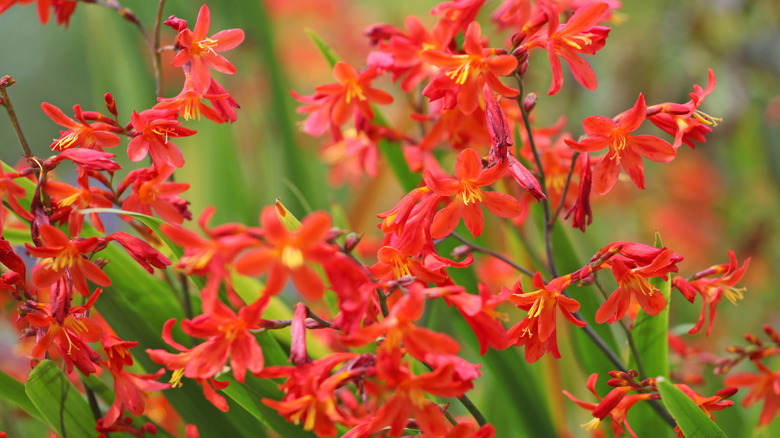
Both the leaves and flowers give montbretia (Crocosmia spp.) an exotic look. From midsummer onward, a plethora of colorful, trumpet-shaped flowers will infuse your pool area with a pleasant fragrance, attracting lots of hummingbirds and butterflies to boot. Once blooming has ended, the plant draws attention to itself with its attractively ribbed, lance-like leaves. If you're planting montbretia in the ground, avoid species and cultivars that spread aggressively through rhizomes, or grow them in decorative planters. This pretty perennial thrives in Zones 6 to 9. For a truly tropical feel, look for 'Orange Pekoe' or 'Emberglow.'
Blue sedge
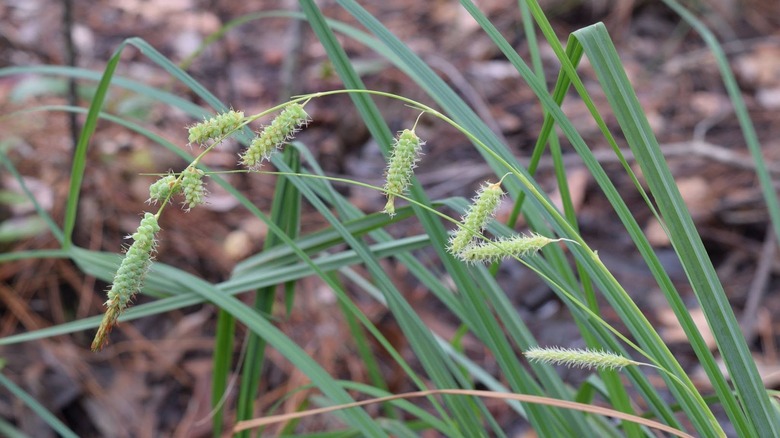
Blue sedge (Carex glaucescens) is a U.S. native that will elegantly frame any lightly shaded pool bordered by consistently moist garden beds. It produces a neat clump of bluish-green leaves, which are highlighted by green flowers and golden fruits in spring and summer. The seed heads remain on the plant through the fall, providing ornamental interest and food for wildlife. Blue sedge doesn't mind the heat or humidity if it's watered well. It's hardy in Zones 6 to 9, but in colder areas, the foliage may die back in winter. The plant will pop up again in spring.
'Morning Light' maiden grass
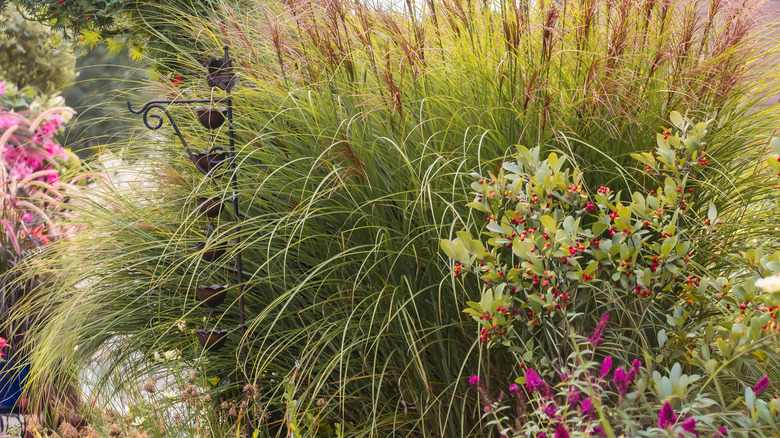
Surround your pool with this warm-season grass, with leaves that shimmer in the sunlight, red blooms, and billowy seeds. It's a great option for fall and winter, when most other plants are lackluster at best. Bushy 'Morning Light' maiden grass (Miscanthus sinensis 'Morning Light') is particularly useful for hiding unsightly water pumps beside a swimming pool. Note, however, that it's invasive in some U.S. states, so check carefully before buying it. Plus, its dry seed heads and blades can be a fire hazard. 'Morning Light' maiden grass is hardy in Zones 5 to 9.
New Zealand flax
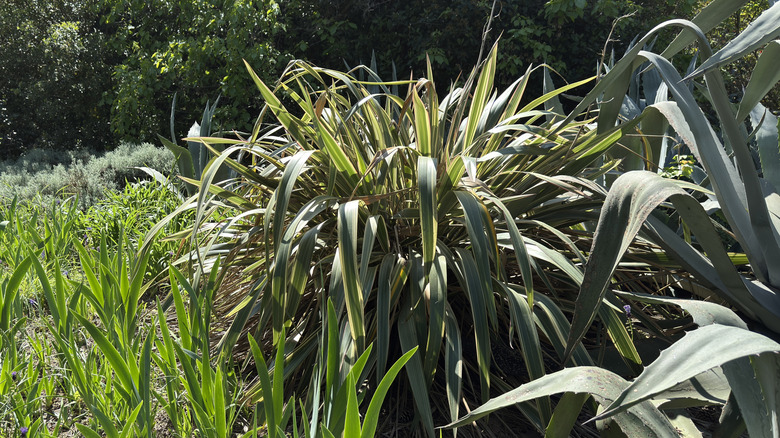
New Zealand flax (Phormium tenax) might not be the easiest plant to grow, but if your site has the right conditions or you have large planters, it's worth the hassle. This unique perennial reaches heights of 8 feet and creates a screen of sword-like leaves which, depending on the cultivar, could be lavender, pink, burgundy, or a mix. Arguably, 'Evening Glow' or 'Amazing Red' have the best colors. New Zealand flax doesn't mind splashes of salt water and its flowers attract hummingbirds. It does best in partial shade in Zones 9 to 11.
Pink muhly grass
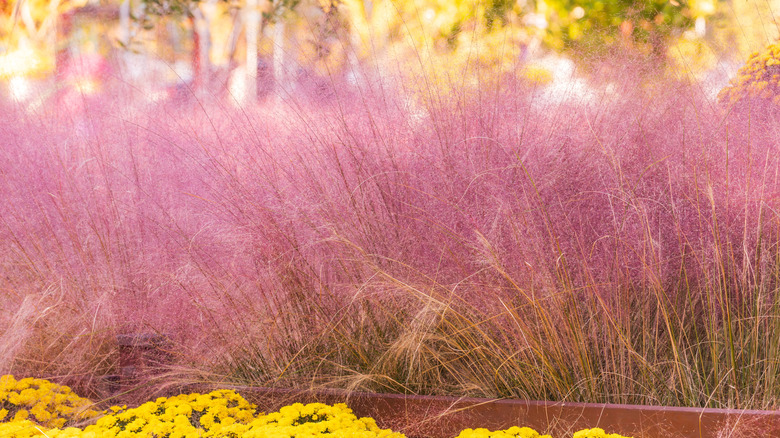
Pink muhly grass (Muhlenbergia capillaris) is a U.S. native perennial that's hardy in Zones 5 to 9. Plant it poolside to enjoy the soft pink, feathery plumes that appear when your summer flowers are winding down for the season. The flowers often persist into November, when they are succeeded by purple seed heads. It's a classic low-maintenance poolside plant; after it gets settled into a spot, it will tolerate heat, drought, and salt, and is rarely bothered by pests or diseases. Plant 'Irvine' (often sold as 'Plumetastic') or 'Regal Mist' in groups to maximize the visual impact.
Purple betony
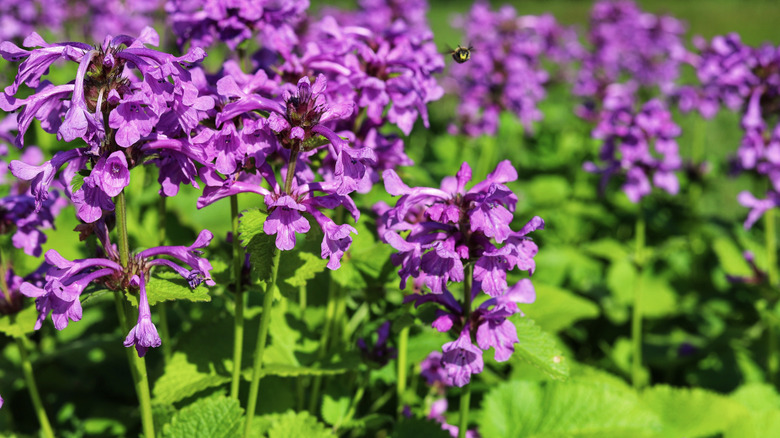
Whether planted in the ground or in containers around your swimming pool, purple betony (Betonica officinalis) puts on an eye-catching display. Throughout summer and fall, a plethora of purple-red flowers dance above the heart-shaped basal foliage. At under 2 feet tall, purple betony remains relatively compact; tuck plants in among other, larger perennials for a pop of color. Note, however, that the flowers attract a lot of bees. Plant them in garden beds on the far side of your pool deck, away from kids' play areas or lounging spots. This pretty plant overwinters in Zones 4 to 8.
'Grace Ward' lithodora
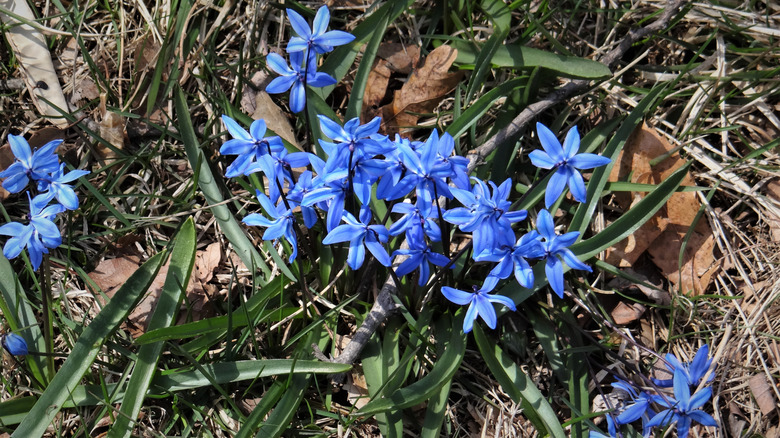
If you're not into a bright, tropical summer palette and want to embrace cooler tones in your pool area garden design, consider 'Grace Ward' lithodora (Lithodora diffusa 'Grace Ward'). This low-growing perennial produces azure-blue blooms from late spring into summer. It's a great spiller in container arrangements, where its flowering stems cascade over the edge. Or plant it in a poolside rock garden, where it will waterfall over the boulders. 'Grace Ward' lithodora likes full sun in Zones 6 to 9, though will do better in semi-shade or with protection from the afternoon sun in warmer areas.
'Midnight Blue' agapanthus
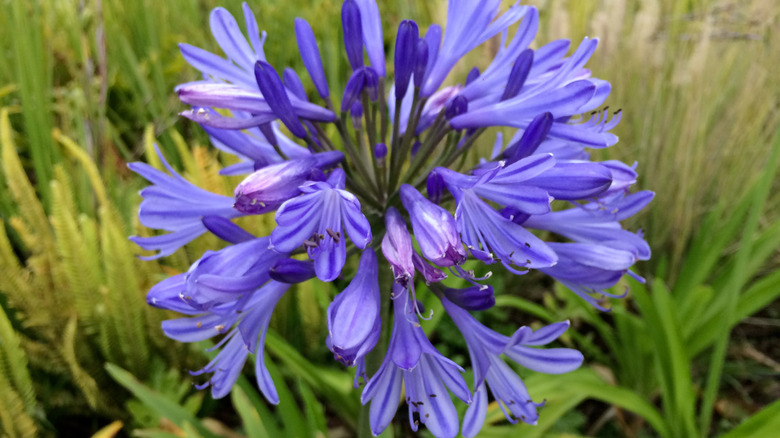
'Midnight Blue' agapanthus (Agapanthus 'Monmid') is hardy in Zones 6 through 11 and works well in poolside container arrangements. When it's not in bloom, this perennial stands about 2 feet tall. However, in mid-spring, its masses of violet flowers lure in hummingbirds and push its height to over 3 feet. Don't deadhead the flowers and you'll have seed heads for winter interest. In colder areas, where the plant is often semi-evergreen, lay down straw mulch to protect the roots against winter cold. Pair 'Midnight Blue' agapanthus with sedges, coral bells, and coneflowers.
'Ivory Tower' yucca
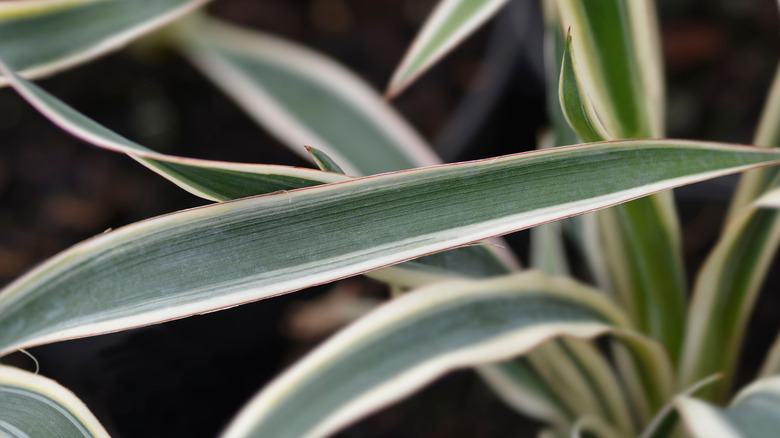
'Ivory Tower' yucca (Yucca filamentosa 'Ivory Tower') is a sun- and heat-loving perennial that can handle salt spray. It gives any pool area an architectural touch thanks to its sword-like, gray-green leaves when planted in borders or containers. Only the heaviest snowfall will cause its tough, spiky leaves to break. Although this yucca may not bloom right away, when it does, you get to enjoy its tall, dramatic spikes of pearl-white flowers throughout summer. While you wait, pair it with tickseed or bird of paradise for complementary flowers. 'Ivory Tower' yucca grows in Zones 4 to 9.
Great bougainvillea
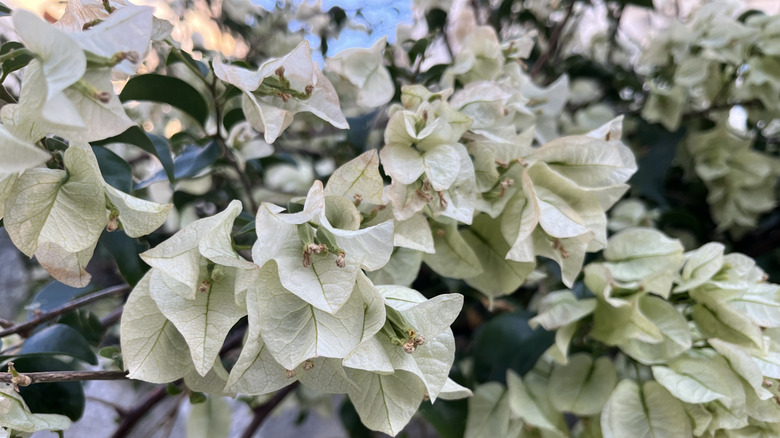
Some may argue that great bougainvillea (Bougainvillea spectabilis) shouldn't be anywhere near swimming pools because its papery bracts make quite the mess and can clog filters. However, this vibrant perennial brings an undeniably tropical flair to any garden in Zones 9 to 11; it seems like a missed opportunity not to plant one. Better yet, great bougainvillea can handle salt, heat, and drought like a trooper. Grow it in a pot over 1½ feet away from your pool or train it on a fence on the far side of the pool to reduce litter impact.
Bear's breeches
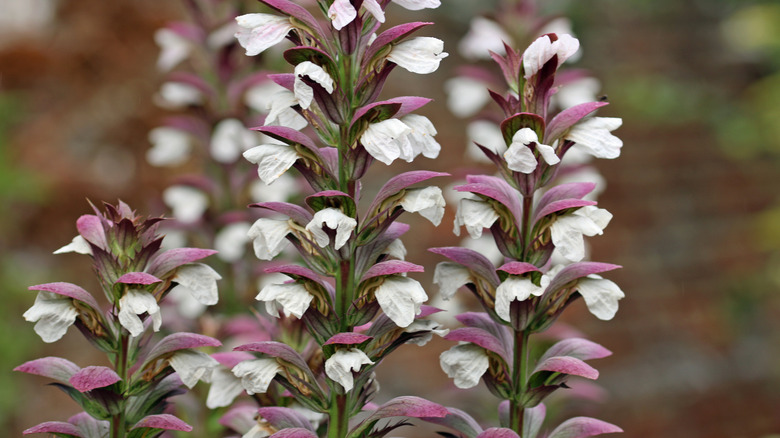
Ever wondered what inspired the leafy motifs in Greek art? It was the glossy green foliage of bear's breeches (Acanthus mollis). Besides it's attractive leaves, this herbaceous perennial will further enliven your poolside gardens with stems of lavender-white flowers in summer. Although it can handle drought, try to keep it watered during peak summer to prevent it from going dormant. It can be weedy, so it may be wise to grow it in ornamental planters rather than in the ground. You can grow it in Zones 7 to 10 — except for Oregon, where it's invasive.
Parry's agave
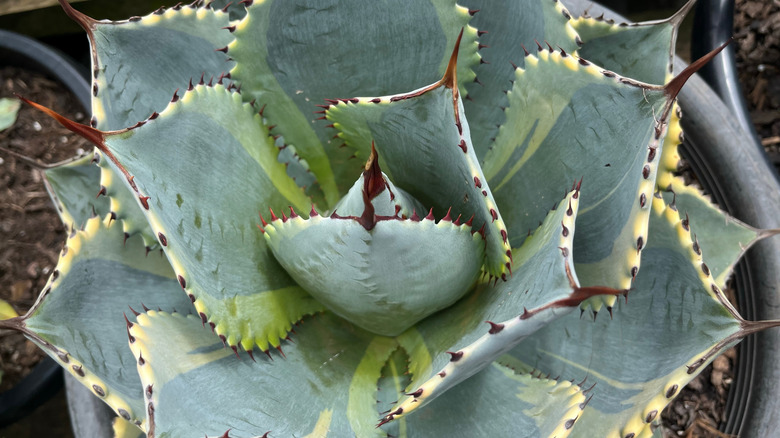
The ideal spot in your pool garden for Parry's agave (Agave parryi) is somewhere out-of-the-way, where it can add drama and tropical vibes without anyone bumping into its hard, thorn-covered leaves. Watch its silverish-green leaves slowly unfurl over the swimming season. This native perennial succulent loves dry winters in Zones 7 to 10, where it will overwinter down to -20 degrees Fahrenheit. Do note that agaves die after they produce a single flower stalk, though they won't flower for at least 10 years and you can plant the pups.
Lavandin
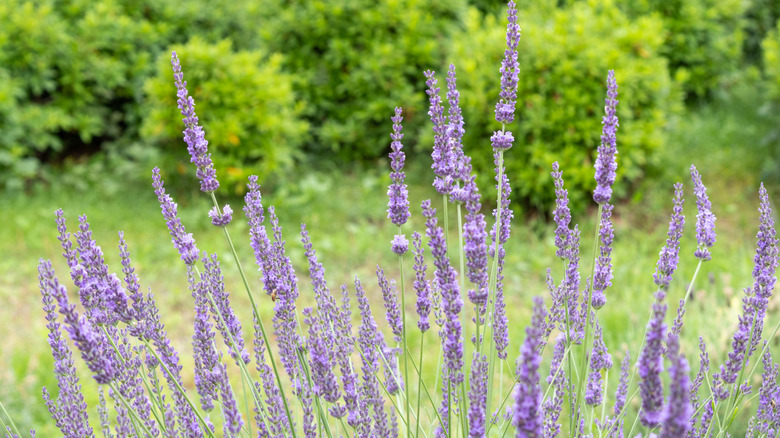
If you have alkaline soil beside your pool, give lavandin (Lavandula x intermedia) a try. It isn't as winter-hardy as other lavenders, growing year-round in Zones 5 to 8. However, with its long flower stems and heady fragrance, it really puts on a show. Mass-plant lavandin for the most dramatic effect, essentially creating a low-growing flowering hedge to border your swimming pool, or grow it in a large container. If you live in a humid area and still want to grow this lavender for an endless supply of dazzling summer purple flowers, try the lavandin cultivar 'Provence.'