

They Were Popular In The '60s, Now It's A Hosting Staple Worth Hunting For
We may receive a commission on purchases made from links.
Visually interesting and with a sense of history, retro decor is a great way to make your home more entertaining and fun for your guests. Now, you may already be aware that there is plenty of popular '60s decor you can find at the thrift store. However, some of the best decorative pieces are those that also serve a practical purpose when hosting guests.
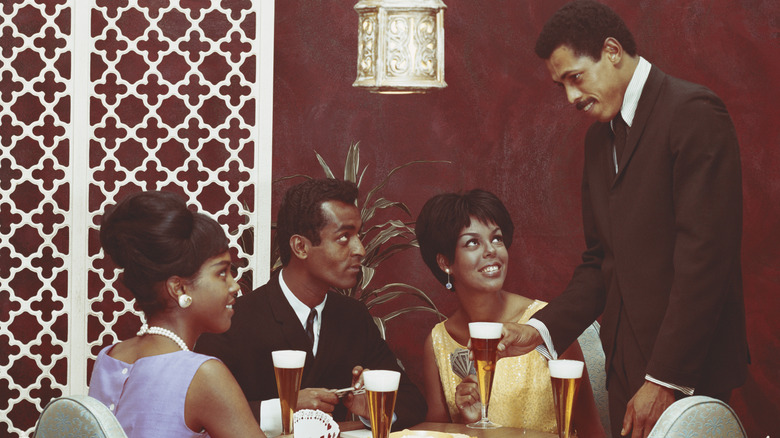
Considered the golden era for cocktail parties and finger food, the 1960s put an emphasis on being a great host and making use of all the gadgets that were available to buy at the time. A great example of this is the chip and dip set. These sets typically featured a large, open bowl for chips with a smaller dip bowl attached to the side using a bracket. They came in a variety of different shapes, styles, and colors, with avocado green and harvest gold being among the most common due to the color palettes that were popular in the '60s.
Parties today still feature plenty of chips and dips, meaning that it really is worth hunting down these mid-century hosting sets at your local thrift store, antique shop, or online marketplace for your own hosting needs. In order to succeed in designing the perfect entertainment space, however, it is important to know where to look for these charming retro food items, what they typically cost, and how to integrate your chosen piece into your existing modern decor.
Finding a retro chip and dip set for your budget
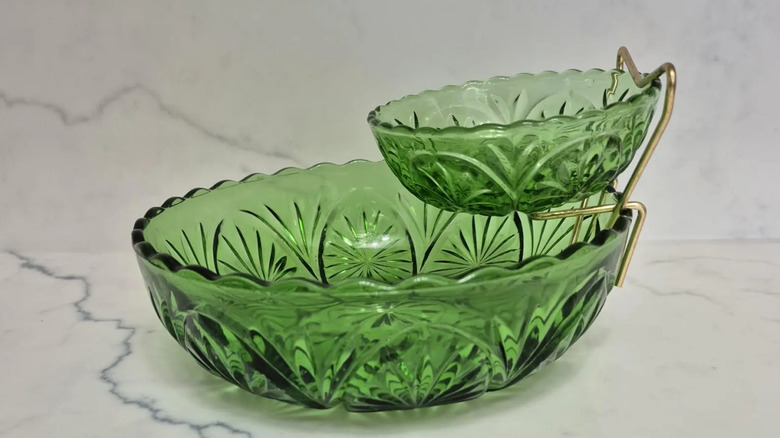
When checking out some of these fascinating 1960s pieces, you may find yourself daunted by the initial prices that you see. Some sets can be listed on online marketplaces for $200, or even more. However, if you love the idea of placing one of these on your own dining table or coffee table for your guests to admire and enjoy, don't be put off. With a few key tricks, you can still hunt out pieces that are sold at more moderate prices.
The first helpful trick is to be aware of designer pieces. While you may occasionally come across a piece from a well-known designer for a reasonable price at your local thrift store, many antique shops or online sellers will have done their research and know that brands like Pyrex andAnchor Hocking, and designers Dorothy Thorpe are often sold at higher price points. So, if you are looking for a retro chip and dip set on a budget, keep an eye out for pieces from less well-known designers or ones that were created and sold by more budget-friendly companies like K-Mart or Ace Hardware.
Another helpful tip is to check out your local thrift stores, antique shops, Facebook marketplace, or eBay — and compare their inventories. This will help you get an idea of what is on offer and, hopefully, find the most affordable piece. And, once you do manage to nab one that is within your budget, don't forget to explore how to make it fit in with your current decor.
Styling 1960s chip and dip sets
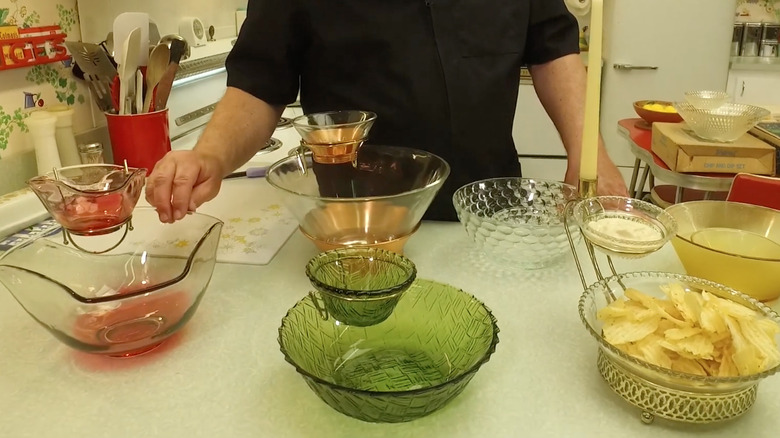
If you want to make your home more inviting through the use of fun, quirky pieces from decades past, it is important to consider how to style them. These charming chip and dip sets can naturally become the center of any party — who doesn't like hanging out near the chip bowl, after all? To help it become the star of the show, try surrounding it with unassuming modern pieces — such as sleek candle holders or a relatively plain vase — that fill out the background without stealing the spotlight from your vintage set.
Styling a thrifted piece isn't all about looks, though. To ensure that your mid-century chip set is practical for your hosting needs, consider how you can make it easy for people to use during the party. For example, you could try layering in some vintage-inspired napkins to clean up spills without clashing with the mid-century design of the chip and dip set. If your set has some minor scratches or imperfections, don't feel like you have to hide those, either. They can add charm and character to the piece by hinting at the unique history behind it. Just remember that the bowls still need to be food safe to be used for eating. Try using a DIY kit to check for lead, and avoid eating from pieces that have webbed cracking or severe chips. If your piece has been chipped or cracked, you may want to use it as decoration rather than for serving food.