

Not Clematis Or Hydrangea: The Vining Plant That Looks Good On Brick Walls
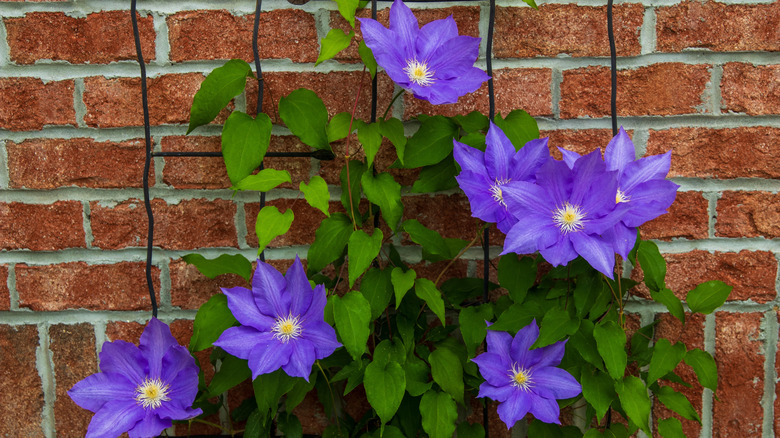
Brick walls bring a sense of history or sophistication into whatever space they adorn, but how you dress them up can really change the entire aesthetic. Clematis and climbing hydrangeas are two well-known plants that are commonly grown on brick walls, but they may not be the only options. If you're looking for the right plant to create an enchanting atmosphere, regulate your home temperature naturally, or improve air quality in your yard, Boston ivy 'Fenway Park' may be the right option for you.
Boston ivy (Parthenocissus tricuspidata) is a fast-growing ivy that creates a cozy garden feel, but certain varieties can be used for more unique applications, like for growing up brick walls. Boston Ivy 'Fenway Park' makes a great candidate for growing on a brick backdrop, without causing damage to the mortar. Instead of climbing with tendrils that spread into cracks, which can weaken a brick wall over time, Boston ivy 'Fenway Park' climbs with the use of a natural adhesive that safely and securely attaches to the brick. Before planting, check with local authorities as certain varieties may be considered invasive in some regions like West Virginia.
Planting and caring for Boston Ivy 'Fenway Park' on a brick wall
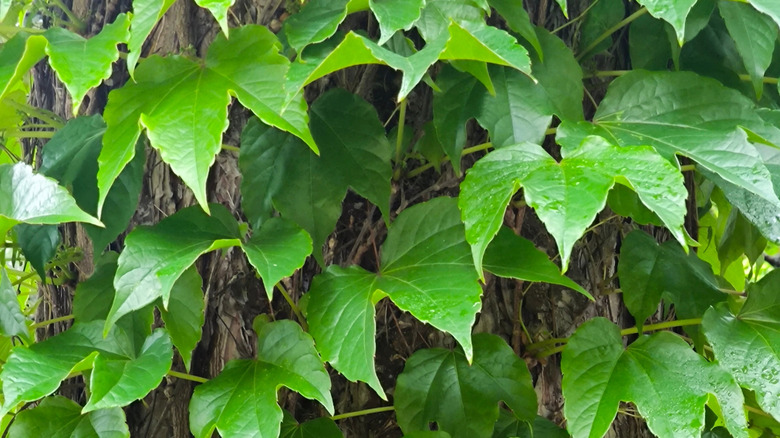
Boston ivy 'Fenway Park' is a climbing perennial in USDA hardiness zones 4 to 8. Technically, it has tendrils like other types of ivy, but instead of digging into a surface, the tendrils have disk suckers that act like an adhesive. Normally, the foliage of the Boston ivy 'Fenway Park' plant is a vibrant green color, but in the late summer, you may see small greenish white flowers with dark berries. It's best to purchase the plant as a transplant to make sure you get the right variety and avoid ivy that can be damaging to your brick walls. Boston ivy can climb between 30 and 60 feet in almost any soil type, but grows best in full sun or partial shade.
Once you've established your Boston ivy 'Fenway Park', create a pruning schedule to maintain healthy growth and prevent the vines from taking over any areas you don't want covered. It is recommended to prune heavily at least once per year, but you can trim it as often as necessary to keep the growth neat. Otherwise, Boston ivy 'Fenway Park' needs relatively little care to keep it growing strong.
Mistakes to avoid when growing vines on a brick wall
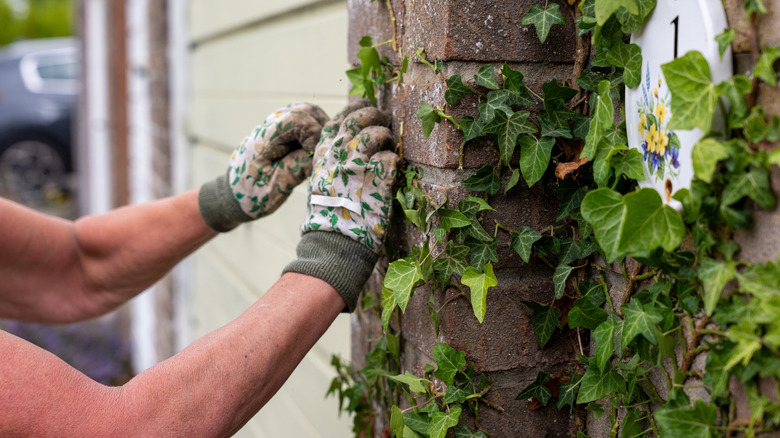
Whether you want to use climbing vines to lower your home energy bill or incorporate plants into your traditional home aesthetic, it can be easy to forget that some climbing vines may be damaging your home. Choosing Boston ivy 'Fenway Park' automatically prevents one of the most common mistakes when growing vines on brick walls, which is choosing a plant with tendrils that can expand cracks. But that's not the only mistake you should be aware of.
Another common mistake that people make is not considering color. Depending on the type of ivy you plant, deposits from the plant can leave residue on lighter colored brick. When pruning away vines, you may be left with discolored marks that are difficult to clean. Usually, discoloration isn't an issue with dark colored bricks. It is also more common with ivy that has tendrils, but excess moisture can also lead to staining. Similarly, you don't want to plant growing vines like Boston Ivy "Fenway Park" growing on painted surfaces. Climbing vines can quickly damage painted walls.
You'll also want to stay on top of regular maintenance. Most ivy plants can quickly grow to cover large surfaces. When left alone, this growth can not only take over the space, but also invite insects and birds to nest in the ivy. If you are planting Boston Ivy 'Fenway Park', it's best to keep a sustainable maintenance plan with frequent trimming to check for issues and manage growth.