

Ditch Unsightly Fabric Drawer Liners With A Simple Removal Solution
We may receive a commission on purchases made from links.
Fabric liners are often used to protect drawers, plus any delicates you may store inside, from getting damaged as items shift around. But if you're not feeling the look — and want to change it up to a more attractive drawer liner — they can be a bit tricky to remove. While some do-it-yourself-types swear by the heat method, which uses a heat gun or hair dryer on the highest setting to soften the adhesive underneath, there's another strategy that seems to carry water. Much like hot air, hot water can break down the bond between the glue and the drawer.
To dip your toe in, so to speak, remove the drawer, then pour in enough hot water to cover the entirety of the fabric-covered surfaces. Letting it sit for 2 to 3 minutes should be enough to soften up the adhesive, but you can wait up to 10. Once the felt has soaked in all of the water, it should be relatively easy to lift off of the wood. But if you're having trouble finding an end to start with, slide a putty knife under one side. Once you've scraped out all of the pieces, you can place the drawer in the sun to let it fully dry out. From there, use an adhesive remover such as Goo Gone to dissolve any remaining bits of glue, then sand down the surface to smooth things over. And if you're looking for a new option to dress up your drawers, consider one of these easy DIY liners.
What to consider when trying the water method
Before pouring yourself into this project, make sure you know what kind of wood that you're working with. Assuming everything is in good condition, "If the drawer is made of solid wood or plywood, you would not need to worry about harming the drawer or the material," Rob Johnstone, a master woodworker with decades of experience, explained in an exclusive interview with House Digest. But if you're trying this method on MDF wood — a medium-density fiberboard that's more likely to warp or swell when wet — proceed with caution, ideally testing the process on a sample piece.
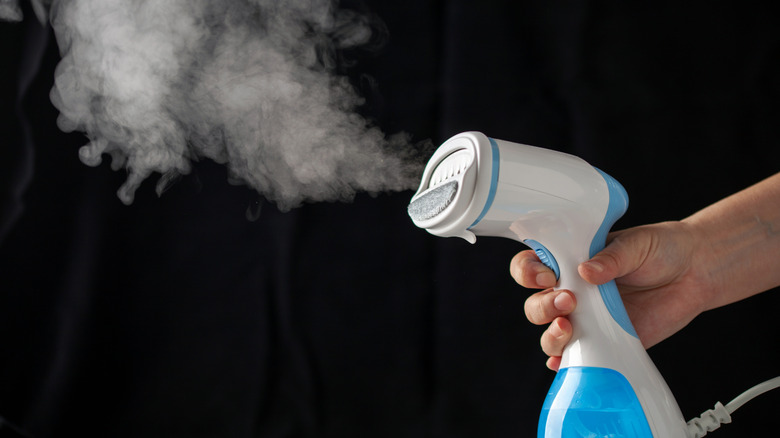
"MDF is more easily harmed by exposure to water, but would more than likely do just fine," said Johnstone, noting, "its surface may break down a bit." If you still want to take the plunge, he recommends only letting the drawer soak for a few minutes rather than the full 10. Another option would be to wet the surface using a clothes steamer, such as HiLIFE's handheld steamer. Calling it "a less dangerous technique," Johnstone explained, "It would restrict the moisture primarily to the fabric and the glue and not saturate the wood with water." And if your drawers do show signs of warping or other damage, wipe them down as soon as possible and allow them to dry fully in a well-ventilated area.