

Not Tissues: The Overlooked Scrap From Your Bedroom To Compost
We may receive a commission on purchases made from links.
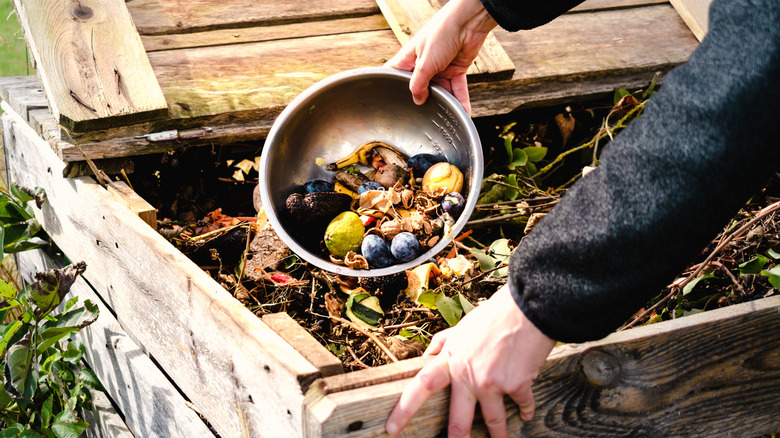
When it comes to creating the best compost for your garden, adding alternative kitchen garbage to your compost pile is a great way to repurpose your trash and save money on soil amendments. The ideal compost pile consists of the right mix of so-called green (nitrogen-rich) and brown (carbon-rich) materials. Combined, they facilitate the breakdown of organic matter into the vital nutrients your soil and plants need to thrive. People default to the kitchen and garden as the main place to source composting materials, and in doing so, they often overlook bathrooms and bedrooms. Toilet paper tubes, cotton swabs, and tissues are all unexpected bathroom items you can put in your compost bin, while bedrooms (and linen closets) house pillows and comforters full of feathers that also happen to be excellent green matter for compost piles.
Similar to hair, feathers are high in keratin, which is a protein that helps break down organic matter in a compost pile. However, keratin doesn't degrade easily in nature. Proper composting — both anaerobic (like bokashi composting) and aerobic (like your backyard compost) — may help to speed up the degradation process. Feathers take a few months to decompose in a compost, especially if you pair them with a lot of carbon-heavy (brown) material. Adding keratin-filled feathers to a compost pile may even slow down the release of nutrients into soil over time, feeding your plants for longer. Some people add ready-made feather meal to their compost, so you're saving yourself some money by repurposing the innards of that old down jacket. Note, however, that feathers from particularly old bedding or outerwear may be lower in nitrogen than fresher feathers.
How to successfully source and add feathers to your compost pile
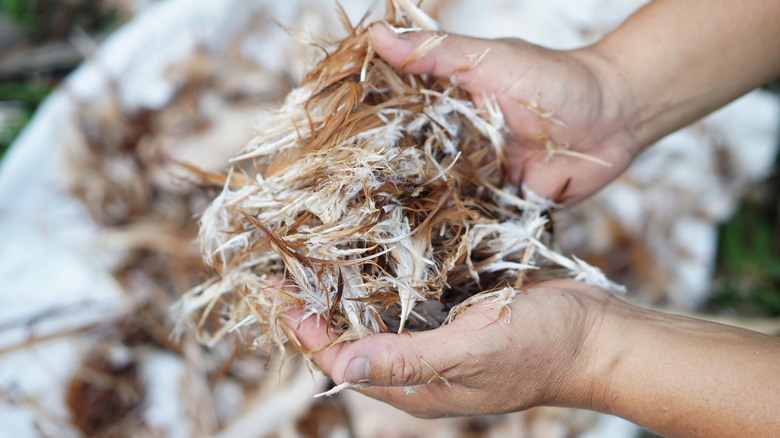
Duvets, comforters, and pillows filled with goose or duck down are all fair-game for composting. If you don't have any feather-filled bed linens destined for the trash can, there are other ways to source bird plumage for your compost pile. While it might be tempting to gather feathers from the wild, it's best practice to only use feathers from known, healthy birds. Wild birds can carry diseases that can contaminate your compost. Instead, source your plumage from local chicken farms or friends with backyard chickens or pet birds. If you're not on a first-chirp basis with any birds, some specialist pet suppliers sell washed and sterilized natural feathers as nesting material. Or, go the crafting route and get a 100-pack of non-toxic Featuman Beige Natural Goose Feathers for about $7.
However you sourced your feathers, you need to prepare them before adding them to your compost pile. First, chop them up with scissors if they're quite large. Feathers are also very lightweight, so you need to weigh them down to keep them from flying away with the next gust of wind. Dig them deep into the pile or soak them in water before adding them to your compost. Bonus: this can also help speed up decomposition. Don't have a backyard compost pile? People bury bird feathers in their garden soil, and you should try it. Dig the planting hole for a new seedling or sapling, drop a handful of plumage into the bottom, then pop your plant on top and fill in the hole. The weight of the soil will keep the keratin-rich feathers where they need to be while they break down.