

Hibiscus Shrub Not Blooming Yet? Here's When To Expect It To
We may receive a commission on purchases made from links.
Patience is a virtue, but exercising it while you're gardening can be a big ask. When winter finally relents and you've seen the last of spring frosts, it can be difficult to wait for your yard to transform into a colorful splash. This holds especially true for hibiscus (Hibiscus spp.) plants, which promise to bring a touch of the tropics into the garden with their huge, bold leaves and striking, long-blooming flowers. Not to mention, attracting a bevy of pollinators, including hummingbirds and butterflies.
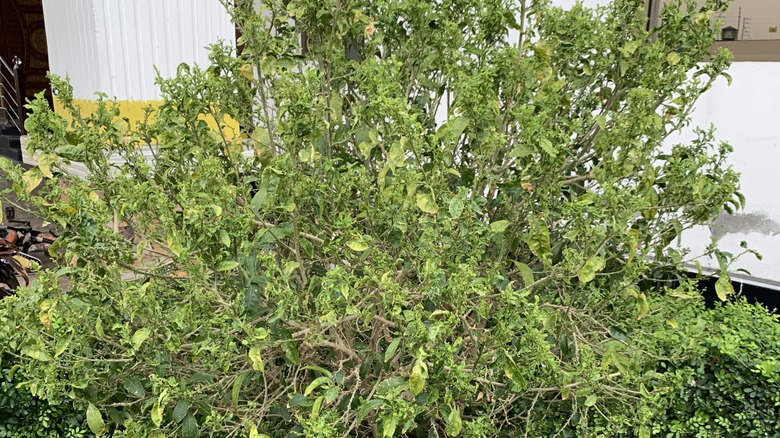
So, when your hibiscus finally starts greening up around early May (or June if you're further north) but you don't notice any new buds quickly enough, you may wonder whether something is wrong. Turns out, they don't start blooming until midsummer — usually. Depending on your location, you can expect new blooms by mid-July or August, with some shrubs peaking in September.
In fact, if you diligently snip off any faded flowers on your hibiscus plant or cut back the spent stems by ⅓ before they set seeds, you can encourage reblooms well into fall or at least until the first fall frost. With that said, however, flowering periods may differ across varieties as well as your overall care and maintenance.
When to expect your hibiscus to bloom, based on variety
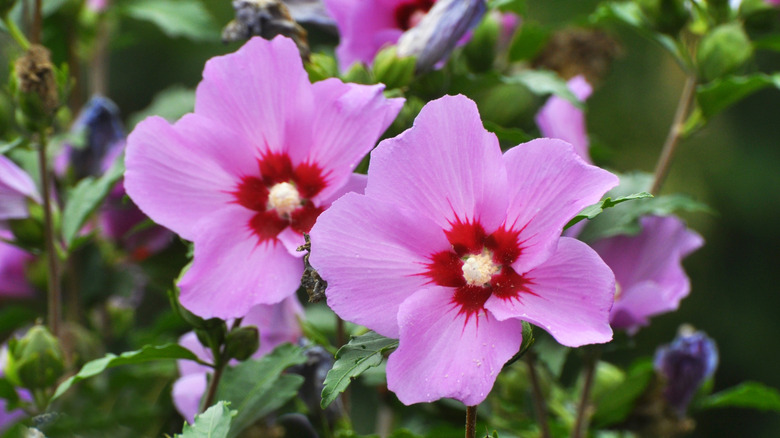
Hibiscus plants are broadly classified into three categories. First is hardy hibiscus or rose mallow, which further includes a plethora of native wildflowers like H. coccineus, H. moscheutos, H. mutabilis, and H. grandiflorus, and a bunch of hybrid cultivars. Also nicknamed the dinner plate hibiscus for their massive, funnel-shaped blooms, they're grown perennially in USDA hardiness zones 5 to 9 (though certain varieties can grow in zone 4). Since they're late to leaf out in spring compared to other perennials, they begin blooming only when summer is already halfway over, though the blooms typically last until frost.
Tropical or Chinese hibiscus (H. rosa-sinensis), which, outside of zones 9 to 11, is grown as an annual, comprises the second category. In the garden where the climate remains conducive, it blooms year-round. But containerized specimens, which are overwintered inside, may bloom in late spring, with the last flush terminating in late summer. Since they set buds on new stems, you must prune a hibiscus bush early in spring (where necessary) to avoid cutting them off and terminating flowers.
Apart from them, Rose of Sharon (H. syriacus) gets a separate category. Typically grown as a deciduous shrub in zones 5 to 9 , sometimes this hibiscus is pruned to look like a tree, it may begin blooming as early as June and, weather permitting, last through October. However, keep in mind that although Rose of Sharon plants are beautiful, they should never be planted in some U.S. states like Georgia, Kentucky, West Virginia, and Maryland, where they're considered invasive.
Examine growth conditions when blooms are delayed
If you don't see any new buds despite your shrubs posting healthy growth in spring, start paying attention to growth conditions. Outside temperatures must warm to about 65 to 75 degrees Fahrenheit before hibiscus plants produce new buds. But if they're exposed to sudden temperature drops or highs (above 85 degrees Fahrenheit), the buds may drop prematurely. Besides, they require a minimum of six hours of direct sunlight. If tree limbs or buildings are blocking light, flowering may be delayed. Not fulfilling their specific water demands, underwatering, or drought exposure also harms buds.
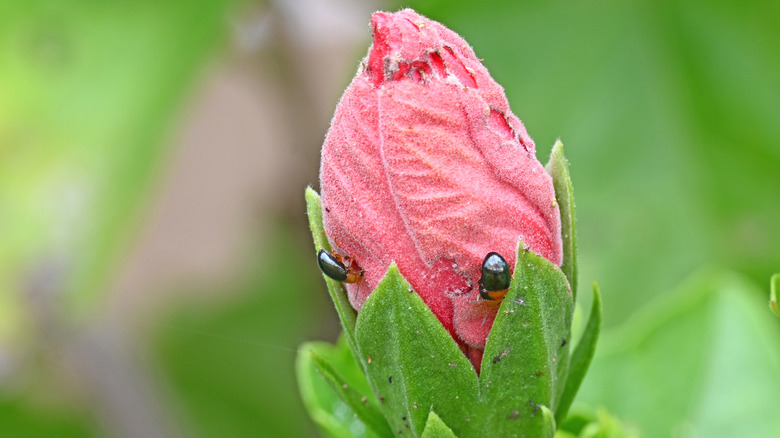
Flowering may also be postponed if pests are present. Hibiscus gall midge, along with some caterpillars, feed on new, developing buds, terminating flowers. Even garden thrips infest buds right before they're ready to unfurl, causing them to drop. Collect the infested buds (they appear yellow) and send them to the landfill after sealing in disposable bags to prevent further spreading. Deploy a bifenthrin-based spray, like Ortho's Rose and Flower Disease Concentrate, in accordance with the label, to protect future buds.
Other than that, take stock of planting time and maturity. If it's your first year of planting or if the shrub is still young, it may flower later than usual because it's dealing with transplantation shock or has yet to reach its maximum flowering potential. Failing to fertilize hibiscus at the right time of year, in spring and again in early summer when they're budding out, also defers flowering. If you keep all this in mind, your hibiscus plants should be blooming in no time.