

Not Gravel, Not Stone: This Eco-Friendly Patio Alternative Also Costs Less To Install
We may receive a commission on purchases made from links.
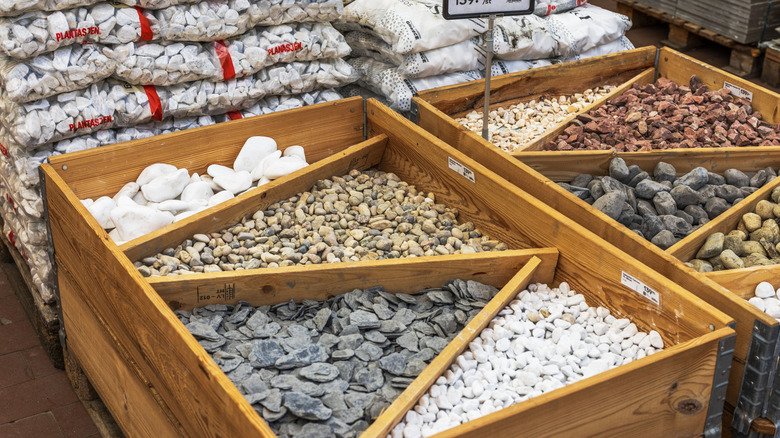
Are you thinking of ditching your patio pavers or concrete slabs in favor of eco-friendlier outdoor materials? Gravel and stone are great, but there's another, less common outdoor patio idea that can revamp your space: wood chips. Using wood chips to surface an outdoor living space is sustainable because their production uses minimal energy resulting in less carbon emissions — unlike the production of, say, bricks, or the harvesting and transportation of decorative gravel and crushed sea shells.
Wood chips are, probably quite obviously, made from trees, which are a renewable resource. Using this material for patio flooring is an excellent way to upcycle a timber industry waste into a functional yet irresistibly charming landscaping material. Moreover, wood chips are an ideal alternative for gardeners who aim to create healthy habitats on their property. This is because wood chips are biodegradable and even compostable. Untreated wood chips are also a good option for homeowners who are planning to later build a garden where their patio is now.
If you're low on cash but love the woodland aesthetic, choose wood chips over gravel or other common landscaping materials. You can buy it cheaply — or maybe even get it for free — if you live in a forestry area. (Note that you may have to pay for shipping.) If you or your neighbor is removing a large tree or two from the yard, chip the wood using a hired wood chipper. Otherwise, expect to pay around $4 to $5 per cubic foot. On Amazon, a 42-quart bag of Mighty109 Red Wood Chip Garden Mulch costs about $30. By comparison, pea gravel costs about $8 to $14 per cubic foot.
The advantages (and a few disadvantages) of wood chip patios
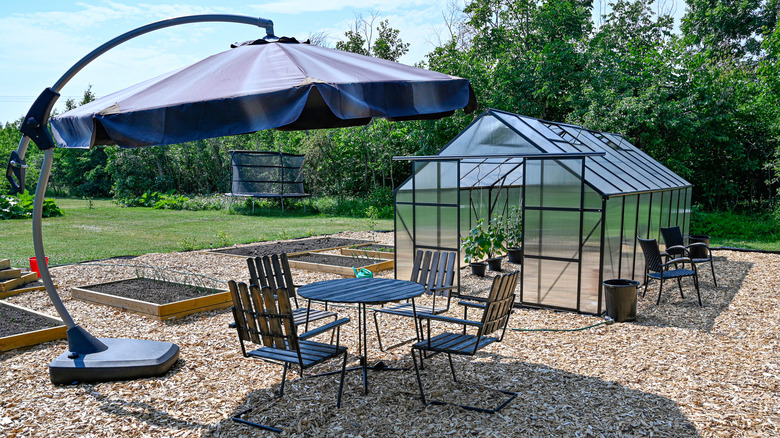
Wood chips beat out their competitors on aesthetics, too. Softwood trees, like fir and pine, create light to dark tan wood chips, while hardwood species, like black walnut, create deep dark brown wood chips. The chips from redwood trees are a gorgeous deep red. While the diverse colors of wood chips are vibrant when they're fresh, they fade to more neutral shades with weather exposure. Fortunately, you can remove the old wood chips and replace them with fresh material. Then you can repurpose wood chips that have started to get moldy in lasagne beds, use them as mulch, or compost them. Besides their good looks, wood chips also produce far less dust than gravel or stone, and you're sure to love how soft they feel underfoot.
However, just like with all other patio materials, wood chips aren't without their disadvantages. They may be easy to install (more on that process later), but they require quite a bit of maintenance. For one, wood chips compress over time. If, for example, you covered your patio area in a 3-inch-thick layer of wood chips, expect the layer to shrink by at least 25%. As the chips compress, you need to keep adding fresh material to replenish the lost volume — just as you need to when refreshing for color. Choosing hardwood chips over softwood chips solves this (and other problems) to some degree. Hardwood chips from species like oak, maple, walnut, and cherry are denser and take longer to decompose, reducing the need to restock the supply so often. They're the best option for patios that see heavy foot traffic or include a kids' play area.
How to DIY a wood chip patio in your backyard
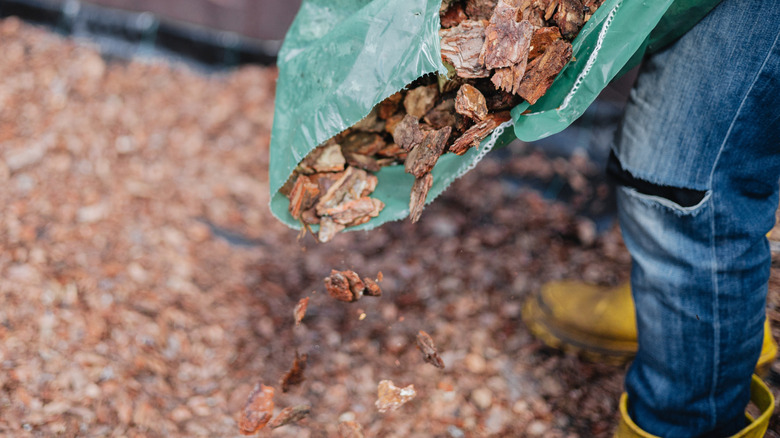
Creating a wood chip patio is an easy DIY project that doesn't require heavy machinery or hiring contractors. First, define your patio area using string or biodegradable spray paint. Then remove any turf and dig out the area — go at least 5 inches deep. Level the ground, giving it a slight slope away from your house to prevent pooling water. Add a layer of gravel or crushed stone for water drainage, then lay down some Lgjiaojiao Heavy-Duty Landscape Fabric. Top the underlayment with about 2 to 3 inches of wood chips — or more if you dug down deeper than 5 inches.
Wood chips may look and feel great in outdoor seating areas, but they're lighter than gravel and are more easily pushed around by strong winds and gambolling children or pets. Once your wood chip layer is in place, install a garden edging idea that makes for the perfect landscaping in your yard — half-round logs, upcycled bricks, or concrete pavers — to help keep the wood chips contained. A 6-pack of 20-foot-long Stirlingear Black Galvanized Metal Landscape Edging costs about $70.
Pooling water is a real issue with wood chip-covered patio areas. To be on the safe side, review your local municipal bylaws to ensure you're meeting construction requirements before you begin your project. Oklahoma, for example, doesn't regulate wood chip layers under 6 inches thick. If your backyard is prone to flooding, you'll need to address that issue before installing a wood chip patio. You may need to upgrade your existing drainage or install a new system to deal with water runoff first. In snowy or icy weather, damp wood chips may become a slip hazard.