

The Hosta Companion Flower That Looks Like Delicate Lace
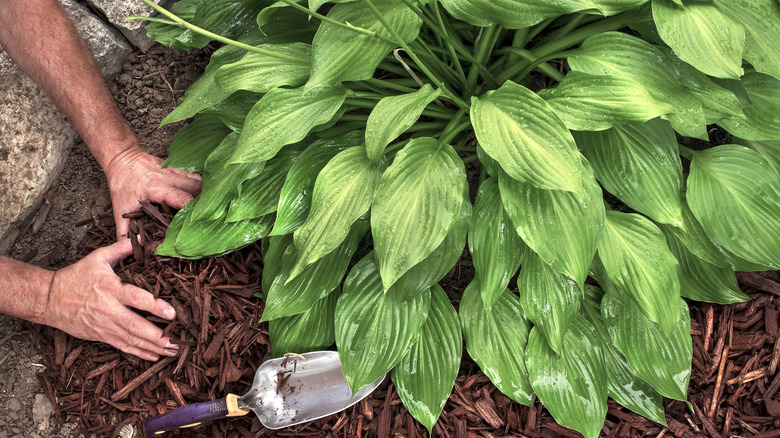
Hostas are a gardener's favorite for good reason. They are easy going, beginner-friendly plants that grow well in shade, need very little maintenance, and rarely struggle with pests or diseases. They do have one problem, if you can call it that — they're heavy on the foliage, not the flowers, which leaves planting beds feeling a little flat or unfinished. Thankfully, flowering plants like foamy bells (× Heucherella) will fix the issue fast. In fact, these coral bells (Heuchera) and foam flower (Tiarella) hybrid cultivars are one of the best companion plants to grow alongside your hostas for year-round color.
The leaves of foamy bells are deeply lobed, intricate, and heavily veined, giving them a lace-like vibe that contrasts well with bold, bulky hostas. Plus, they flower in abundance, boasting showy, nectar-filled blooms that attract lots of pollinators — like bees, butterflies, and hummingbirds — to gardens. These pretty plants only grow 12 to 18 inches tall and wide. However, the tall, thin flower stems rise up to 24 inches above the foliage.
These delicate-looking Zone 4 to 11 perennials bloom in spring and summer. They stay green year-round in mild climates. Foamy bells are truly one of those plants that pull double-duty in the garden. Just like hostas, they naturally repel diseases and pests. Plus, they are also fairly low-maintenance once established. Plant them in spring or early summer to give them enough time to get a sturdy root system in the ground before the cold winter climate sets in.
Grow and care for foamy bells alongside hostas in your garden
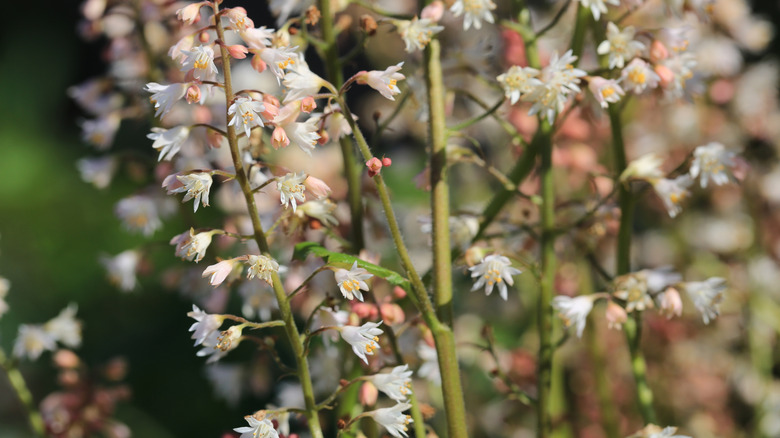
Foamy bells are mostly sterile, so if you want to grow them in your garden, you need to propagate them via division or choose the healthiest plants when buying them from a nursery. Once you have your seedlings or bare root plants, choose a partial- to full-shade spot near your hostas and dig a hole that's as deep as the nursery pot but about twice as wide. Drop your new plant into the hole and cover its root ball with soil. Water deeply. If you're planting multiple foamy bells, space them 1 to 2 feet apart. If you prefer, you can also grow foamy bells in containers with excellent drainage. Foamy bells develop root rot if grown in soggy or wet soil.
No matter where you plant these lacy, shade-loving perennials — in the ground or in containers — water them regularly till they establish themselves. Once they're set in place, they're fairly drought-tolerant, though they do have a shallow root system and need additional watering in dry periods. Foamy bells, like hostas, are not heavy feeders. A light dressing of a balanced, slow-release fertilizer at the start of spring is more than enough. Avoid nitrogen-rich formulas — which can dull your plant's foliage — and, as always, follow the manufacturer's application instructions. If you prefer organic options over chemical formulations, try one of these common household items that can be used as natural fertilizer: coffee grounds, eggshells, banana peels, loose leaf tea, or kitchen scraps.