

Not Epsom Salt: The Fantastic Tomato Fertilizer That Everyone Already Has
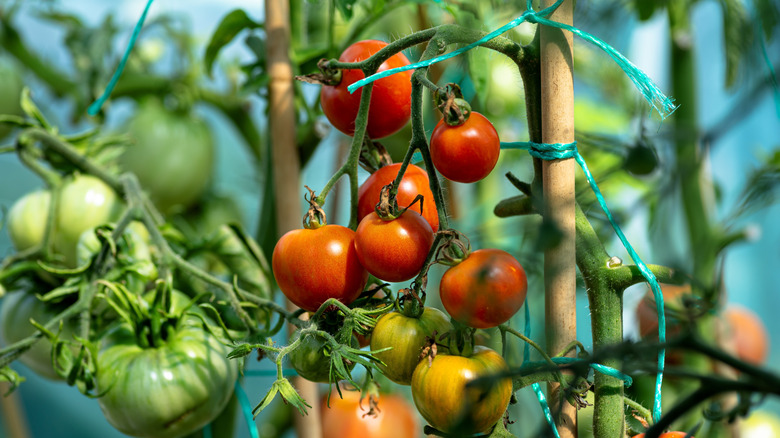
Gardeners on the quest to give their tomato plants a little boost are always looking for household ingredients that serve double duty. Using Epsom salt as a soil amendment is a good example of that. But of all the DIY tomato fertilizers circulating online, this may be one of the strangest yet. There is, however, some real science behind it. It turns out, hair (yes, hair) is rich in keratin — a tough structural protein that contains nitrogen. And the tomato growers in the room are already nodding their heads because they know nitrogen is one of the key nutrients tomatoes need for healthy growth.
Using hair to fertilize tomatoes is as easy as it is, admittedly, whacky. Hair usually ends up getting pulled out of hair brushes (both human and pet) and tossed straight into the trash, but to make this work, you need only place a small handful of finely cut hair into soil or the bottom of plant pots. This is probably best when transplanting. Now, of course, hair should be viewed as an experimental supplement rather than a miracle growth formula for your tomatoes. It isn't going to solve problems like poor-quality soil or let you skip a good fertilizer routine, but if you're looking for ways to give some household waste a new purpose, it costs nothing to try.
Hair may be most useful around heavy-feeding crops
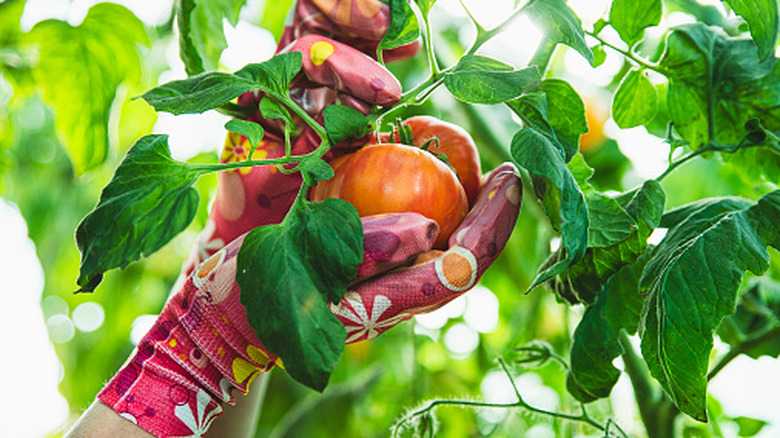
Hair makes for an appealing tomato fertilizer because it doesn't break down quickly in soil, so it functions more like a slow-release fertilizer than a fast one. It will release small amounts of nitrogen into the soil, improving it over time, which is part of the appeal, especially for a heavy-feeding crop like tomatoes. While other kitchen scraps can make fantastic tomato fertilizers, they often release their nutrients relatively fast once composted. Bananas, for example, take a few weeks to break down, whereas hair can take years.
Gardeners have been known to use it for other plants, too, like lettuce or even houseplants, but there are a few practical considerations to take into account. For one, hair should be finely cut and worked into the soil rather than left sitting on the surface in a clump where it can simply blow away or tangle up and make a mess. You may also want to stick to using clean hair, and not hair that is coated in styling products, as we can't be sure what the effects of that will be on soil over time. But if you're someone who is always finding pet hair on your furniture or you have a lot of hair yourself, saving a small amount of it for your garden may be a whole lot more productive use than throwing it straight in the trash.