

Not Coleus, Not Impatiens: The Purple Flower That Looks Great In Shade Gardens
When the mercury starts rising in the summer, how you view your shade garden changes pretty quickly. It can go from an afterthought to the most important part of your yard. You may spend more time in this cool retreat, and if you're looking for ways to fill gaps or expand your plantings, there's a purple flower you need to know about that looks amazing in shade gardens. Planting Douglas iris (Iris douglasiana) in hardiness Zones 7 to 9 is a great way to avoid the same old shade flowers. Instead of traditional shade garden plants like impatiens and coleus, you can add evergreen foliage, colorful flowers, drought tolerance, and deer resistance to your shade garden design with this iris species.
Although many irises tolerate sun or shade, most prefer full sun and bloom best when they have at least six hours of sunlight. But Douglas iris, a California native that grows naturally up the Oregon Coast, does well even when shade is dense. Blooming in a range of colors from purples, violets, and lavenders to blue and cream, the Douglas iris looks great even when it's not flowering. In fact, the sword-shaped leaves of this perennial are evergreen, so you get the added benefit of year-round texture, something that annuals for shade gardens don't offer.
How to grow and place Douglas iris
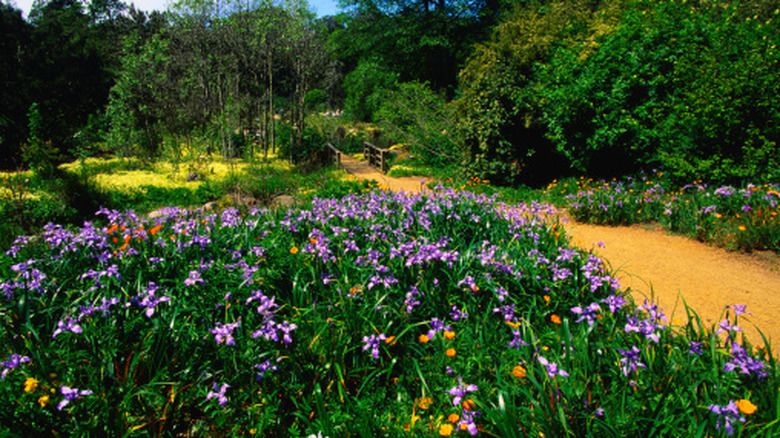
Outside of its native range along the western coast of the United States, Douglas iris can be cultivated in any outdoor landscape in its hardiness zones. It flourishes as a permanent planting, growing best in dappled shade. Although it isn't hardy north of Zone 7, you could try pushing the envelope in a Zone 6b garden if you have a warm, moist microclimate. In its native habitat, the Douglas iris can take more sun nearer the coastline, but as you go inland, it requires afternoon shade. The drought tolerance and deer resistance make it a good fit for naturalized plantings.
Douglas iris grows in thick clumps, getting up to 2 feet tall and 4 feet wide. It does well in a wide range of soils, but if you have heavy soil, avoid overwatering and match it with plants that have similar needs. They will block out weeds and when you space them about 4 feet apart, they fill in to make an effective ground cover. Until they get established, place them in your shade garden with other varieties of shade plants like bleeding hearts and ferns. Soon, you'll be dividing established clumps every few years in the fall and winter and replanting them to enjoy more spring blooms. For a beautiful garden that's easy to maintain, pair these with perennial companion plants for irises, such as hostas or coral bells.