

The Companion Flower For Dahlias That'll Give Off A Tropical Vibe
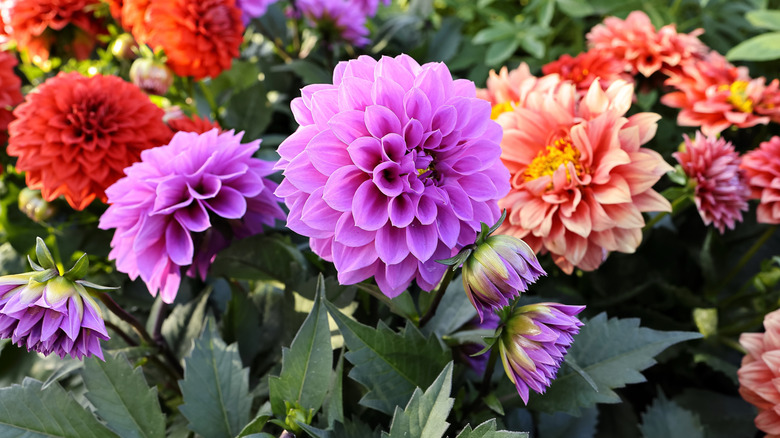
Just like roses, many gardeners create a dedicated patch full of dahlias (Dahlias spp.). And since they come in a wide-ranging array of sizes, colors, and forms, from frilly and cactus-petaled varieties to single and double flowers, dwarfs and giants, you can combine different varieties for a pretty flower bed. But if you're looking to diversify your plantings and introduce visual depth plus tropical touches to your summer and fall beds, consider complementing the dahlias in your garden with canna lilies (Canna x generalis).
Also known as garden canna, canna lilies are not truly lilies, though, thanks to their tropical origins, they appear exotic nonetheless. They're highly regarded for their large, bold foliage, which has the same paddle-shaped form as banana plants. Across cultivars, leaves are copper, burgundy, gold, green, purple, or a combination of multiple colors, which instill beds with unrivaled, statement-making, dramatic, textural contrast. As cannas are usually taller than dahlias, they're used as a tropical backdrop for top-heavy dahlias.
Another aspect where the dahlia-canna companionship shines is flowering. They both bloom in summer right through frost, though out of the two, cannas are more heat-tolerant. So when dahlias start to flag during the dog days of summer, cannas ensure you keep enjoying a continuous splash of color. This also helps bring more pollinators to your yard and garden, as they're both magnets for hummingbirds, butterflies, and bees.
Planting dahlias and cannas together in beds
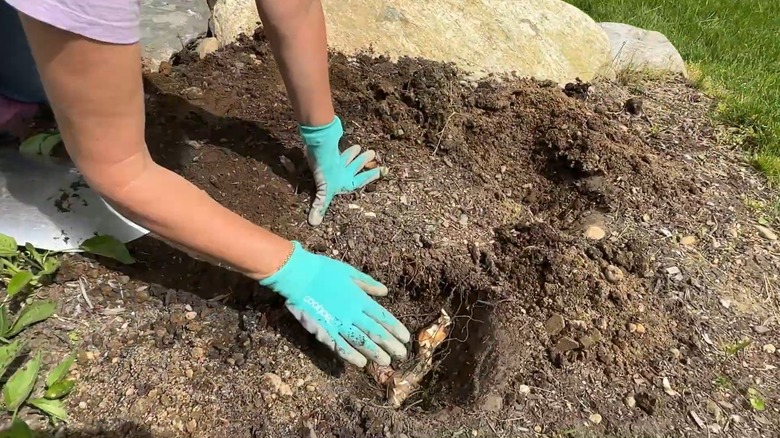
Invoking the feeling of the tropics in your garden is easy, as canna lilies and dahlias share similar growth conditions. They both demand full sun and require over six hours of direct sunlight daily. But where sunlight is too intense, like in the south, you may have to provide a shade cloth during the afternoon to make the flowers last longer. They also share a penchant for rich soils. After all, they need plenty of nutrients to support their prolific blooms. So, if your soil lacks organic matter or is nutrient-poor, you must amend the planting holes beforehand with well-balanced, aged compost. This will also enhance the soil quality, texture, and drainage – an important consideration as bulbs can rot in waterlogged or soggy soils, impairing plant performance and growth.
The best time to get the bulbs into the ground is right after the last spring frost, when the soil warms to 65 degrees Fahrenheit, to make the most of your growing season. But you can continue planting them in the ground as late as early summer (June in some places). Plant them about 4 inches deep. That way, you can enjoy the jungle-like feeling well into fall when their performance peaks, while the neighborly yards are awash in autumnal colors. Don't forget to leave spacing equivalent to their mature width between plantings, or the bed may become overcrowded. Being fast growers, cannas multiply aggressively and require frequent division.
Maintaining dahlias and cannas together
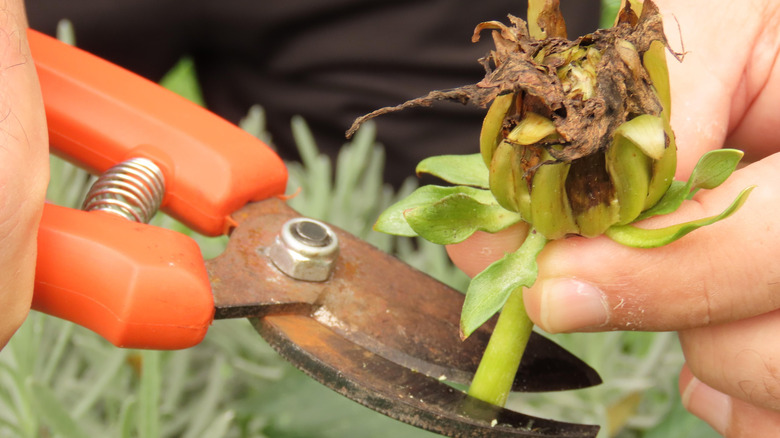
Dahlias are resource-hungry, and so are cannas. While this may make taking care of these garden divas simpler, you must ensure resources are available in sufficient quantities to prevent debilitating competition. This means keeping the beds well-watered so the soil doesn't dry out or become waterlogged. You must additionally feed them extra fertilizer monthly during the growing season. Look for NPK fertilizers high on phosphorus, like 5-10-5, that encourage flowering, rather than excessive leafy growth. You must also regularly snip off faded blooms for continual blooms and lay down organic baits to catch slugs and snails.
Besides, outside of their overlapping range of zones 8 through 10, they're unlikely to overwinter successfully in the ground, especially in areas experiencing heavy winter rains or sudden temperature drops. So, if you'd like to replicate the same design next year without buying fresh plants, lift out the bulbs after their foliage is frost-killed and overwinter them inside. Be sure to avoid these winter storage mistakes that may hurt your bulb's chance of success, such as keeping it in a moisture-wicking medium or at the wrong temperature.
Alternatively, grow them as annuals and choose foliage or flowers in warm, tropical colors, such as pairing 'Procyon' dahlia with 'Durban' canna. But if you're only looking to bring in bold impact through contrasting foliage, pair dahlias with purple-leaved cannas like 'Purpurea'. That being said, avoid planting Indian shot canna (C. indica) if you're in Florida, as it's at risk of turning invasive.