

Wood Accents Were Everywhere In The '80s: How To Give The Living Room Trend A Modern Upgrade

Even though a popular mental image of the 1980s is awash in purples, teals, and neon lights, wood was actually king when it came to ubiquitous home décor. Wood paneling on the walls of living rooms and dens stuck around from the 1950s, '60s, and on through the '70s. Along with the panels, it was also not uncommon to see other wood accents, such as matching wooden furniture sets, as people began to embrace nature in their interiors (e.g., floral prints were also big during this decade).
If you always had a soft spot for those sturdy elements, this may be your year. Design experts are noticing wood springing back into style, whether it's on walls, furniture pieces, or subtler details like cabinet hardware. But adding in some well-placed wood accents doesn't mean your home will be stuck in time like a stalled DeLorean: You can modernize the trend by using restraint, choosing real wood over veneer, and harmonizing it with your home's overall vibe.
Real wood accents in rich colors is one of the rustic home design trends you can't ignore in 2026, as character and storytelling replace the blank canvas of all-white interior design. And while the 1980s can serve as inspiration, designers want us to be thoughtful about how wood is incorporated today — it's not about adding wood back everywhere, and to every surface, but for the material to make its own statement while staying in tune with the rest of your modern-day home.
How 1980s homes loved (and lost) their wood accents
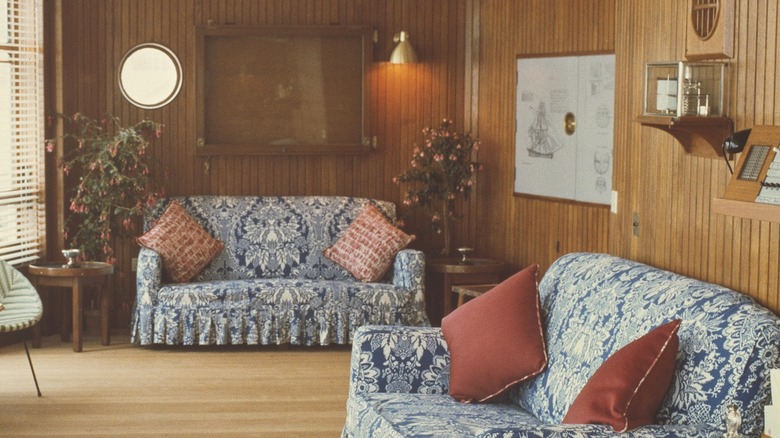
Panels covering the walls are the most recognizable sign of how wood (or at least the appearance of it) was popular in the 1980s. While homeowners who could afford it likely opted for actual wood, in your average '80s home, the top layer of this wood paneling was actually a veneer, meant to add the "look" of hardwood to a home. During this decade, you also might have seen those wood tones echoed throughout a space, such as the matching wooden frames of a living room's lounge chairs and coffee table.
While wooden furniture is a warm trend that never went out of style, paneling, specifically, has not fared as well over the years. Homeowners who begrudgingly inherited it in the 1990s often either removed the panels or covered them up. For example, materials like beadboard with dark wood veneer were so affordable at the time that they became over-used, sometimes slapped onto walls that lacked adequate light to balance the room.
The trends then shifted away — perhaps overcorrecting — to lighter walls without visible wood grain in the 2000s. But too much white comes with its own issues, and bringing back some of the charm of wood décor without risking overpowering a space (like with the beadboard) is not only possible but encouraged. It can help with the flatness that comes with smooth white walls and furnishings, and their tendency to be high-maintenance when it comes to cleaning.
How to modernize the '80s wood-paneling trend
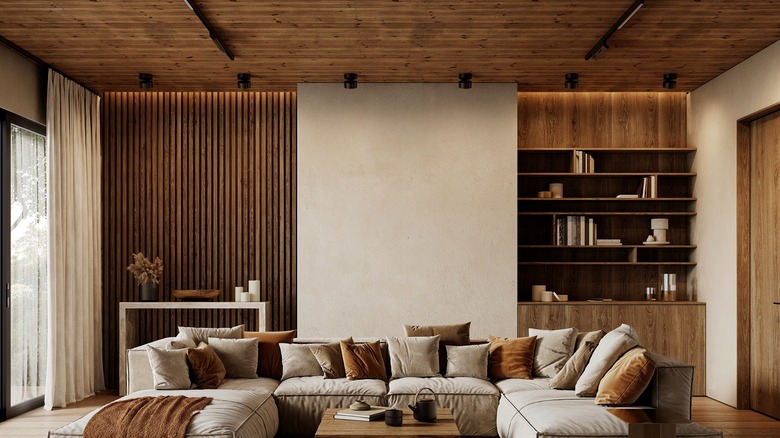
If you love wood accents, but want a more contemporary look in your space, the first design rule is not to get carried away with other 1980s-inspired décor. Stick to the wood and then add in maybe one other element of '80s style, like curved detailing or a splash of colorful tile, while anchoring the rest of the room in the present day.
If a heavy wood chair-and-table set feels too old-fashioned for your living or dining room, you can incorporate wood in smaller ways, like hanging wooden picture frames or replacing metal cabinet knobs with wood-toned ones. Yet another way to bring the '80s aesthetic into your living room in a modern way relies on contrast. For example, you could keep the wooden table or bookcase as a wood accent, but then pair it with softer material for your couch.
Also, upgrading from fake to real wood is a more chic and contemporary way to use wood-paneled accent walls, according to interior designer Blair Moore. "We're moving away from veneer and toward more solid, expressive woods where the grain, knots, and natural variation are left visible," Moore told House Beautiful. White oak and dark walnut are just a few of the options, whether you're planning a larger light wall or a moodier accent.
Consider the texture of the panels, as well, adding variation with a fluted design or clean-lined slats. An even more refreshing and unexpected take is adding wood to the ceiling, with tongue-and-groove paneling as one of the most popular options.