

Not Self-Watering Pots: The More Reliable Choice For Herbs
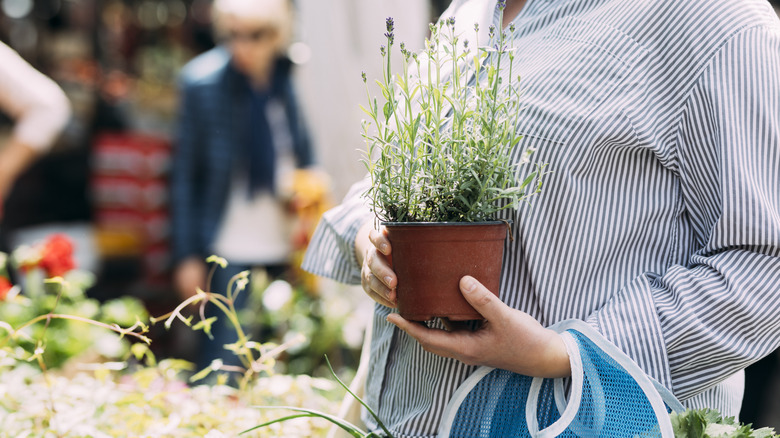
Picking the right pot for your herbs feels simple on paper, but when you're staring down the stacks of products lining the shelves, it's suddenly a bit more complicated. Many plant parents default to self-watering pots, thinking it's an easy way to keep your herbs watered. While these pots may be helpful for other plants, their built-in water reservoir actually increases the chances of dreaded root rot. Instead, try a tried-and-true option: terracotta pots.
At first glance, these clay pots may look too simple. They don't have the fancy look of glazed ceramic or the perks of self-watering pots, but that plain clay is actually what rates them among the best pots for plants, including your container herb garden. Their permeable nature makes it easy for air and moisture to move through the pot, allowing the plant to get the hydration it needs without getting bogged down and drowning the roots. Plus, terracotta's clay helps insulate the soil, getting rid of extra warmth in summer and keeping heat in during the winter. The clay of these budget-friendly pots are comprised of can also lend minerals to the soil, helping your herbs grow healthy and strong. Sure, there are a few drawbacks — terracotta dries out faster than its plastic or metal counterparts and may break when exposed to extreme cold when the soil inside is wet — but at the end of the day, it's clearly the most reliable choice for your herbs.
How to help your herbs thrive in terracotta pots
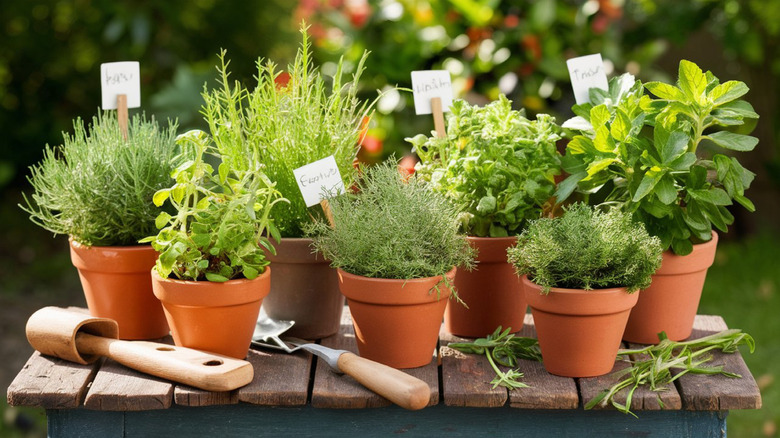
Finding the right pot size can feel like Goldilocks picking her porridge. Too small, the water evaporates before it reaches the roots. Too big, and the herb will get waterlogged. Helpful tip for a thriving herb garden: Look for pots that hold the root ball and have room for growth (aim for 8 inches or so deep). Using a new terracotta pot? Submerge it in a bucket of water for an hour first to keep the clay from soaking up the soil's water.
Are there any herbs that shouldn't go in terracotta pots? It depends. Some herbs, like mint, need to stay heavily hydrated to grow, and if you don't water frequently, the pot may drink up the hydration before the roots can. Basil also needs quite a bit of moisture, so you might find that you need to adjust your watering schedule after planting in this new container.
Speaking of water, one of the biggest mistakes people make when growing herbs is overwatering. While terracotta pots help avoid that, it's still important to make sure you're hydrating your herbs properly. The best way to tell is the finger test. Dig your finger into the top two inches of soil and notice the dampness. Hardier herbs need water when the soil is completely dry, while softer herbs prefer only the top inch dry. Really saturate the soil to make sure the roots get the water they need. Keep in mind that your herbs might even need a little extra water than in plastic containers, especially in summer. Because clay can retain heat, also be sure to move any outdoor terracotta pots into the shade on hot days and give your herbs an extra sip of water if needed.