

Everyone Used It In The '80s –– Now It's The Thrift Store Find We Want On Our Tables
We may receive a commission on purchases made from links.
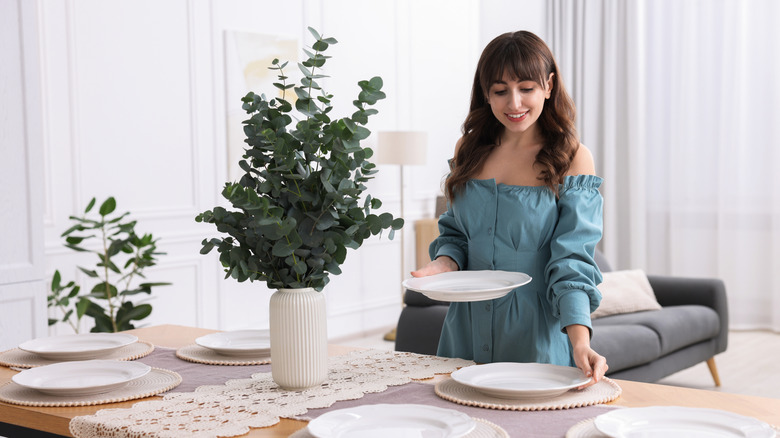
It can be heartwrenching to set your table for a dinner party or Sunday brunch, only to find that your setup looks a little, well, plain. While your first instinct may be to run to your nearest home decor outlet to find some interesting pieces to spice things up a little, that isn't your only option. Instead, why not consider using some thrifted lace tablecloths from the 1980s to bring life to the tables in your home?
While lace tablecloths have been used to decorate a dining table as far back as the 1700s, they experienced a dip in popularity during the mid-20th century due to an emphasis on sleek, minimal designs and practical materials. However, lace wasn't kept out of the home for long. By the 1980s, lace tablecloths had again become a staple of home decorating, this time because of the shift towards the more elaborate, bohemian styles that dominated the era. Tablecloths from that decade include everything from large, romantic floral patterns to sweeping, curved lines that even incorporate some additional colors, too. Because of this, it is possible to source lace tablecloths from the 1980s that suit a variety of different interior design styles, particularly those which emphasize floral and nature-inspired patterns such as a cottagecore aesthetic or farmhouse vibe. Lacey tablecloths from this era can be found at thrift stores or on various online sites such as eBay, Etsy, or possibly even Facebook marketplace. So, let's take a look at which kind should you thrift and how you can style it on your table. Then, we'll explore how to keep your retro tablecloth looking good for years to come.
Choosing and styling a 1980s lace tablecloth
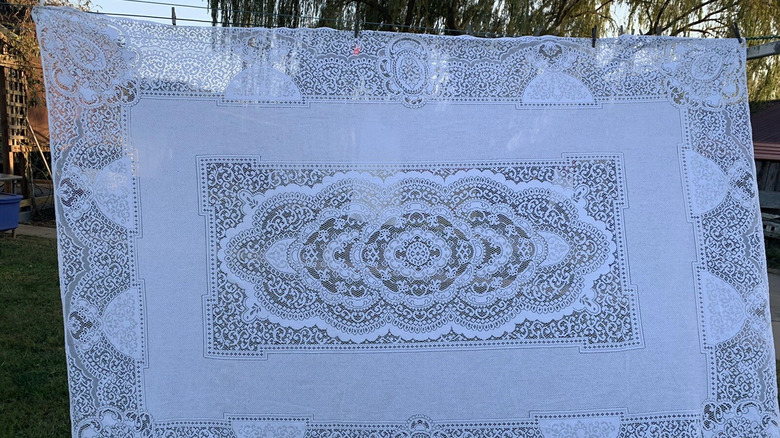
How you go about thrifting the right lace tablecloth from the 1980s for you will depend on the overall style you are going for with your decor. For example, if you like a minimalist design, you might not want to opt for tight, busy patterns. Instead, you could try looking for an '80s tablecloth done in an eyelet lace or Chantilly lace design. These tend to feature less busy patterns which won't overwhelm the table. On the other hand, if you love leaning into a fun, quirky cottagecore aesthetic, keep an eye out for '80s tablecloths with something more ornate such as an embroidered lace style. This kind of lace is perfect for giving your table a romantic afternoon tea vibe that is ideal for pairing with floral china or nature-inspired wallpaper. Crocheted lace is also a common '80s style, and is good for table designs where you want a little more depth and weight.
Whatever your style, it is important to think about color when choosing a lace tablecloth. While many come in white, vintage or retro ones may have faded to more of a yellowish shade over time. So, keep that in mind when thrifting a lace tablecloth to update your dining room, especially if you plan to pair the tablecloth with other white pieces such as dishes, candlesticks, or water jugs. But, if you find one that you love that has turned a yellowy color which doesn't look very appealing, don't give up! There may be a way to restore that '80s tablecloth to its original crisp white shade by learning to wash it correctly.
Cleaning and maintaining a retro lace tablecloth
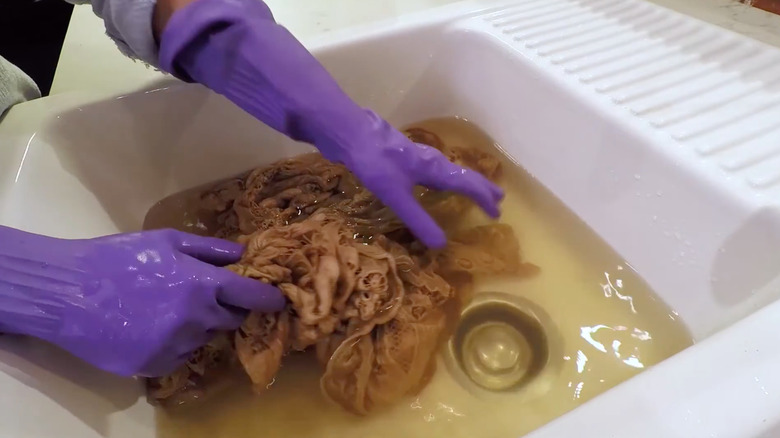
If you would like to clean your thrifted lace to revive its white color or remove stains, it is important to first figure out what material it is made of. Try checking tags, asking the vendor, or searching for similar items made by the same manufacturer on Google or eBay. Lace is generally made from cotton, linen, silk, or a synthetic material like polyester. If your lace is made of cotton or linen, it will likely hold up to some gentle hand washing. To do this, first mend any holes or tears. Then, wash by hand in a sink or bathtub with some gentle detergent and warm or hot water. If your lace has any other colors in it, make sure to try out a section to see if it will bleed in the hot water. If it does, switch to tepid or cold water instead. Once the water runs clear, take care not to twist the fabric but press it gently to remove excess water and lay it on a clothing rack to dry. If your tablecloth is made with any polyester, it is best to hand wash in cold water in order to extend the life of the fabric.
To maintain your thrifted tablecloth over time, make sure to follow these steps whenever you wash it. If food or drink does get spilled on the tablecloth, washing it can remove or lighten the stains. However, sometimes it is best to let the stain be rather than run the risk of damaging the fabric. After all, these tablecloths were made for dinner parties!