

Not Hostas, Not Ferns: Grow This Lush Vine For Striking Foliage In Partially Shaded Garden Beds
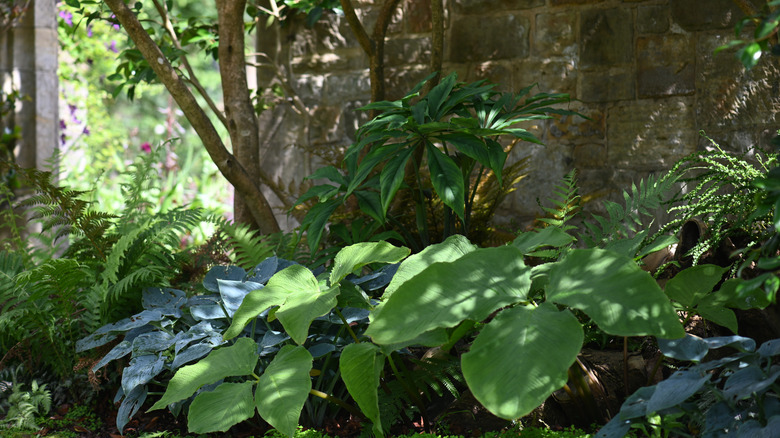
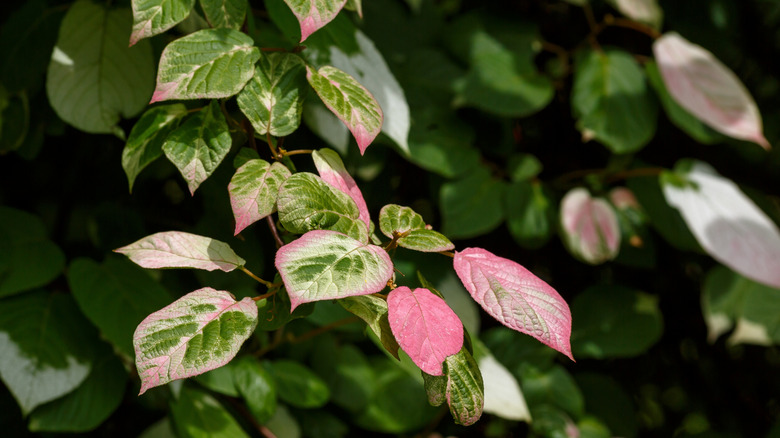
Hostas and ferns are popular choices for shady gardens, being that they are dependable and graceful. Sometimes, though, a garden bed needs a little more drama, something that sparks those "wait, what is that?" moments viewers covet. That is where Arctic kiwi (Actinidia kolomikta) can help. It is an ornamental woody vine, best known for its color-changing leaves, which start lush green and then develop striking white and blush-pink in spring and early summer.
Keep in mind that Arctic kiwi is a dioecious plant. This means it has separate male and female plants, and if you are growing it just for the foliage, choose male plants. Male Arctic kiwi plants have far showier variegation than female ones. If, however, you also want its fruits, you will need to grow both male and female plants together.
When looking for plants you can grow in the shade of a covered patio where space is limited, this might not be an ideal choice. Arctic kiwi grows about 15 to 20 feet tall and 6 to 10 feet wide. However, it can grow even bigger if the growing conditions are ideal.
It is also worth noting that while the Arctic kiwi vine can grow in shade, heavy shade can dull some of the bright variegation. Arctic kiwi vine is only hardy in USDA plant hardiness zones 4 to 8. If you live outside these zones, you might want to consider other plants to grow in partial shade that transform your yard and garden.
Growing the Arctic kiwi vine in your partially shaded garden
There are two ways you can start an Arctic kiwi vine: seeds and cuttings. Planting semi-ripe cuttings in late summer is often the preferred method, as seeds, often planted in spring or fall, take about 2 to 3 months to germinate. Plus, they also need a stratification period of about 3 months to break dormancy. But no matter how you propagate it in your partially shaded garden, the soil needs to be well-drained, fertile, and slightly acidic to neutral, with a pH of about 5.5 to 7. If you want, you can also grow an Arctic kiwi vine in containers. Just make sure you use a 15 to 20-gallon pot or container with good drainage.
The vine grows quickly and can become relatively dense, making it especially well-suited for many cover-style uses, including trellises, garden walls, privacy screens, and fences. The Arctic kiwi vine is available in different cultivars, too. Two notable examples include: 'Red Beauty' female kiwi layer and 'Arctic Beauty' male kiwi layer. Each brings slightly different foliage features, so you can choose the one whose leaves best match your garden design. The tips of 'Arctic Beauty's' green foliage change to more expansive and deeper white and pink, while 'Red Beauty' is flushed with light white to rosy red.
As for watering and fertilizing, keep the soil moist, but without making it soggy, and feed the Arctic kiwi vine with a slow-release, balanced fertilizer early in the spring. Make sure to follow all the label instructions when fertilizing and avoid excessive fertilizer, as it can also make the color of its foliage dull. Early spring and winter are also good times to prune the Arctic kiwi vine, as the plant is dormant during this time. Just remember the three D rule to properly prune your plants.