

Fill Your Shaded Garden With Lavender And White Flowers With A Beautiful Perennial
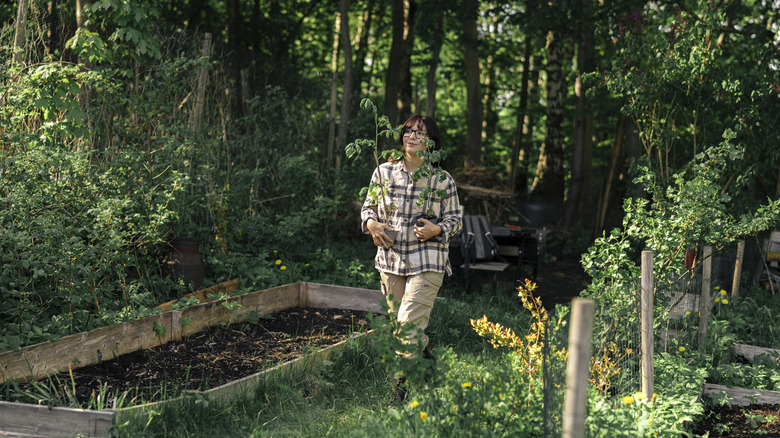
When you're thinking about how to transform your outdoor space into a landscape dream-turned-reality, you may think that those shady spots of your garden are destined to be left bare. Fortunately, with the right research and steps, you can easily grow a gorgeous, healthy shade garden that adds vibrancy to the darker areas of your yard. The key to successfully curating a garden that doesn't just survive in the shade but thrives is choosing the right plants — and this stunning perennial with white and lavender flowers is the perfect place to start.
The Japanese wood poppy (Glaucidium palmatum) is a perennial flower that's native to Japan. It blooms throughout the spring, showcasing flowers similar to a poppy in appearance — hence its name, despite not sharing a genus with actual poppies. It also happens to be a shade-loving plant, which means that you can grow it in the shade of a covered patio or in a shaded garden bed in your yard. With the right care and attention, Japanese wood poppies can be long-lived perennials, offering life and color to your shade garden year after year. They're also considered easy to grow, which makes them an easy plant to grow for beginner gardeners looking to try their hand at filling a shaded garden.
Of course, learning the basics of this eye-catching white and lavender flower is only the start. For healthy growth and the ability to enjoy Japanese wood poppies as perennials, you'll also want to brush up on the proper care.
How to grow Japanese wood poppy in a shade garden
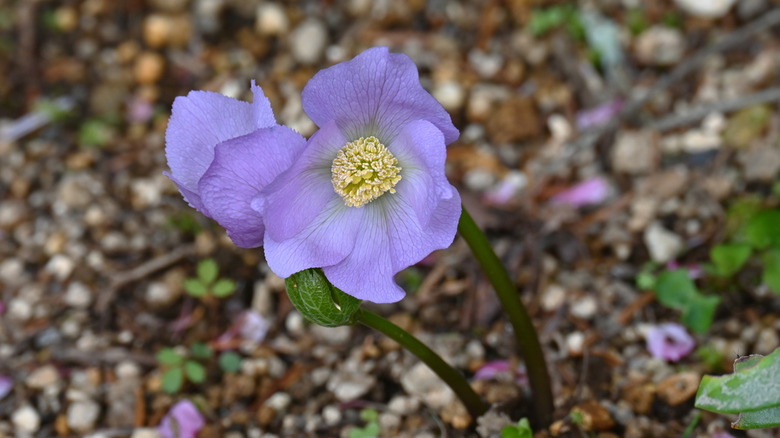
The Japanese wood poppy makes picking the right location easy, as it tolerates both partial and full shade. As a result, this flower may grow best in the north-facing spots in your yard. You can often grow Japanese wood poppies along north-facing structures, on covered patios or porches, and around other, taller plants that may create shade.
When growing any plant as a perennial, it's also important to familiarize yourself with its USDA growing zones. These are the areas where the plant readily survives and returns each year, although extra precautions may still need to be taken during the winter, such as planning for wind coverage to keep these delicate flowers safe. Japanese wood poppies are hardy in zones 6 through 9.
Outside of ensuring the right sunlight and climate for these flowers, overall, they're pretty low-maintenance. They hold up well against diseases and can be grown by seed or through division. Just keep in mind that they can grow large, potentially reaching up to 20 inches both in height and width.