

Forget Hostas: Here's An Annual Flower That Adds Color To Shaded Landscapes
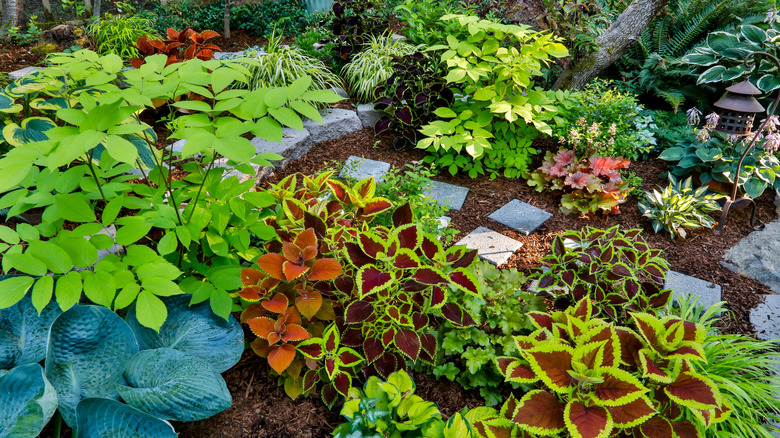
If you're looking to add some color to the shaded areas in your yard, few plants are as popular as hostas. Hostas offer vibrant, eye-catching foliage that thrives in heavier shade. However, that doesn't mean that they're your only option. In fact, you can curate an entire shaded landscape full of colorful plants without ever touching hosta thanks to this genus of show-stopping tropical flora: caladiums.
Caladiums are technically perennials. However, these plants have an extremely limited hardiness zone, with hardiness only in USDA growing zones 9 and 10. As a result, when they are grown outside rather than as a houseplant, they're often treated as annuals. Regardless of terminology, however, they can make a great addition to your shaded landscapes. The main visual appeal of these plants is their foliage, which includes heart-shaped leaves in a range of colors. However, they also produce small flowers that may not steal the show like the leaves themselves do but still add to the overall garden presence of this plant.
If caladiums sound like the right hosta alternative for you, you may want to brush up on how to care for these plants for a healthy, thriving shade garden. On the bright side, these plants are both low-maintenance and easy to grow, which makes them a great choice for beginning gardeners looking for an easier plant to take on, especially with caladium's shade preferences.
How to grow caladiums for a colorful shaded landscape
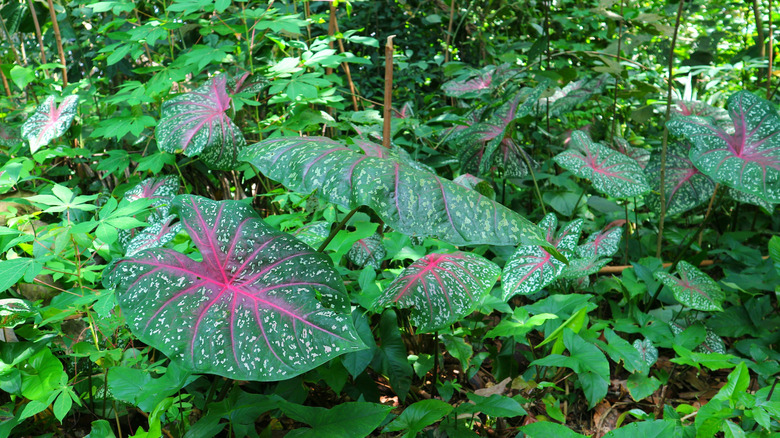
When you're growing caladiums as an annual flower in your garden, you're saved from much of the hassle that comes with helping them last into the next season. However, if you would like to enjoy your caladiums again next summer, you can try overwintering caladiums indoors. Otherwise, you'll want to focus on providing them with the right environment to thrive and show off their bright colors in your current shaded flower bed.
Caladiums can handle various levels of shade. This includes both partial and full shade. As a result, you can use these plants to add color in areas where other sun-loving flowers fail to thrive. If you're looking to bring life to a north-facing shaded spot, caladiums could be a good choice. However, because they also tolerate partial shade, you could incorporate these plants in east-facing shaded locations where they receive sunlight in the morning and shade during the peak of afternoon. This gives you flexibility in designing your landscaping, helping you choose the perfect spot to incorporate colorful caladiums where they can steal the show and boost visual appeal.
Aside from ensuring your caladiums receive the right amount of shade, water is also important. Although they require well-draining soil to prevent waterlogging, they do prefer consistently moist soil and don't tolerate drought. They do, however, tolerate common backyard visitors like deer and rabbits, which can be helpful if your shade garden is prone to inviting grazers.