

Say Goodbye To Carpenter Bees Using A Fresh-Smelling Plant They Can't Stand
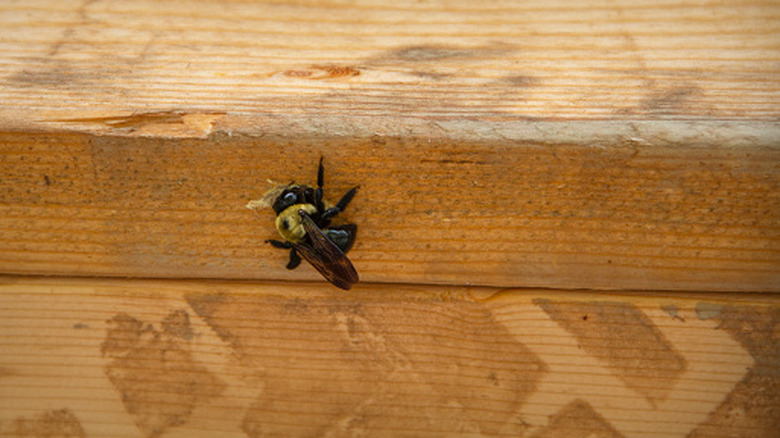
Inviting pollinators into your yard is a good thing when it comes to creating a thriving, vibrant landscape. There is one you should keep away from any exposed wood on your property, though: carpenter bees. They are valuable pollinators, but they can destroy wood to create their nests. You can easily repel them, however, and all you have to do is plant some lemon balm (Melissa officinalis).
Unlike the peaceful, fuzzy bumblebees they're often mistaken for, carpenter bees sport shiny, hairless abdomens . And while they are hesitant to sting people, they still pose a big threat ... to your property. These bees create perfectly round holes in exposed wood to create nesting tunnels for their eggs. Multiple tunnels bored over time heighten the risk of seriously damaging your wood structures, like decks, porches, and even your home's eaves.
Your first instinct might be to grab a can of bug repellant and start spraying, but it's not worth killing these important pollinators. All you really need to do is encourage them to move on from your yard. This is easy with the help of lemon balm, which repels carpenter bees. By strategically planting some of this charming citrus-scented herb around your yard, you get a delicious-smelling patio, a great plant for your pollinator-friendly garden, and an effective, eco-friendly way to defend your backyard. Do note, however, that honey bees like lemon balm; while they don't damage wood, they may linger near the plant. And though this scent can deter carpenter bees from an area to begin with, it likely won't keep them away from established nests.
How the fresh scent of lemon balm deters carpenter bees
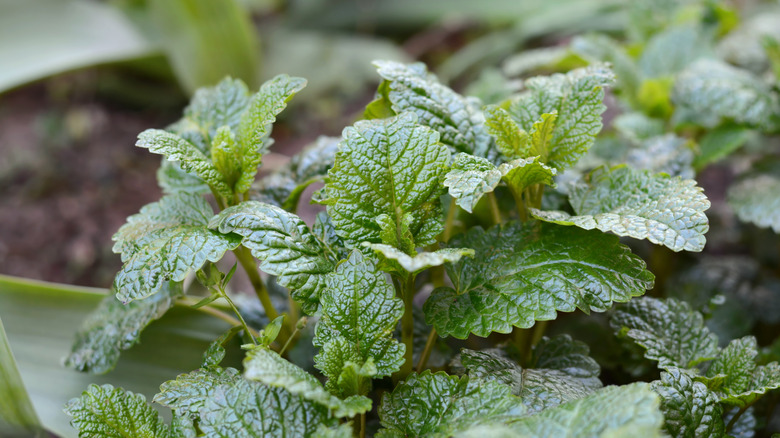
Why exactly does this simple herb work so well as a natural repellent? It all comes down to the insect's highly sensitive olfactory system. Carpenter bees rely heavily on their sense of smell to communicate, navigate, and find food and nesting sites. While humans love the fresh, citrusy aroma of lemon balm, the potent scent of its essential oils is overwhelming to carpenter bees' olfactory system, masking important scents, like that of the wood the bees are actively searching for. So, when carpenter bees encounter the smell of lemon balm, they get disoriented and want to move away from the area to find a spot that's less fragrant.
If you're wondering how to grow and care for lemon balm, it's easy to put it to work, as the perennial thrives in USDA hardiness zones 3 to 7. Plant your lemon balm in a spot that receives partial shade to full sun, and that has soil with great drainage. Then, place the containers near your patio, deck, fence, shed, or any other vulnerable wood structures.
The one downside to this DIY repellant is that lemon balm doesn't bloom all year long; only from about June to August. So, to keep carpenter bees away outside those months, consider pairing your lemon balm with other methods, like sealing off any unfinished wood with paint or even hanging some chimes nearby, as carpenter bees don't like loud nesting areas. Still, by cultivating the fragrant lemon balm herb, you can defend your woodwork and enjoy a beautiful, pest-free outdoor oasis all season long.