

You'd Be Thrilled To Find This Outdoor Furniture While Thrifting: Everyone Wanted It In The '30s
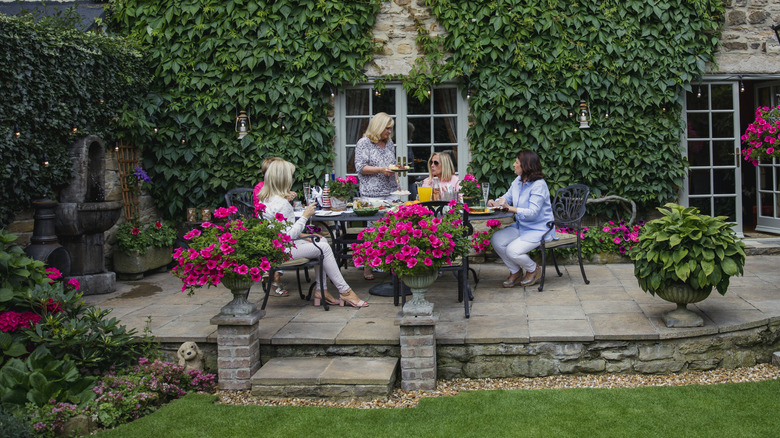
Outdoor furniture styles don't last forever, and there are a number of outdated trends you need to let go of. However, one that's originally from the 1800s — and was later revived in the 1930s with the art deco movement — has come full circle and is sought-after again today. It is cast or wrought iron, and if you're lucky, you might find it while thrifting.
Originally, both cast and wrought iron furniture were high-quality items, hand-crafted for wealthy families. Historians believe some pieces were made to a standard that has never been equaled since. John Salterini, Jean Royère, and Gilbert Poillerat were the top designers from the revival period. Pieces by these luminaries may be difficult to find and generally fetch astronomical prices. That said, items that need a bit of care and a new coat of paint are popular with designers who are happy to spend time and effort restoring them to their former glory.
The best source of bargains is likely to be thrift stores or estate sales, where it's possible to make savings on store prices. Wrought iron furniture can be found on eBay, but without getting hands-on, it's difficult to check authenticity (more on this in a moment). Cast iron seems to be uncommon, possibly because the extraordinary weight and brittle nature make shipping a challenge.
What to look for when shopping for antique wrought iron outdoor furniture
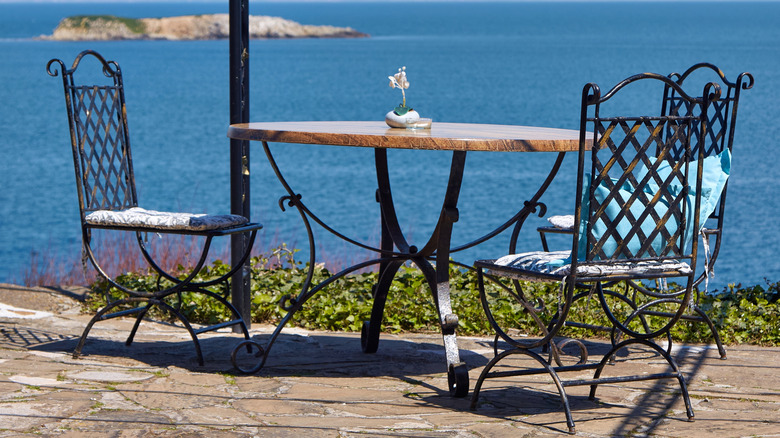
Before you shop, it's worth learning a little about the differences between wrought iron and cast-iron furniture. As mentioned, weight is a major factor. You might also identify cast iron by its slightly textured surface from the mold. Wrought iron is heated in a forge and then hammered into shape, which can give it an almost wood-like grain structure. Today, reproductions are almost always made from steel, not iron, although it can be difficult to tell the two apart. Sometimes, however, a perfectly smooth surface on modern pieces will give the game away.
Steel copies at least have some heft, and they will more likely be less expensive than cast or true wrought iron pieces. However, another thing to be wary of is cheap aluminum copies. On the one hand, they aren't prone to rusting like the real thing. However, they'll feel like a toy by comparison, with nowhere near the weight, strength, or durability. When you go thrifting, take a magnet. It will stick to cast or wrought iron and steel, but not to aluminum.
If the cast or wrought iron you find is cracked or bent, you'll probably want to pass on it. Both faults are difficult to repair. Don't worry if it's rusty, though: There are simple hacks to make this kind of furniture new again, and once the rust is cleaned off, you can paint it to match the setting. You should then be enjoying your thrifted outdoor furniture for many years to come.