

Gravel May Be More Reliable Than Wood Mulch In Your Yard. Here's Why
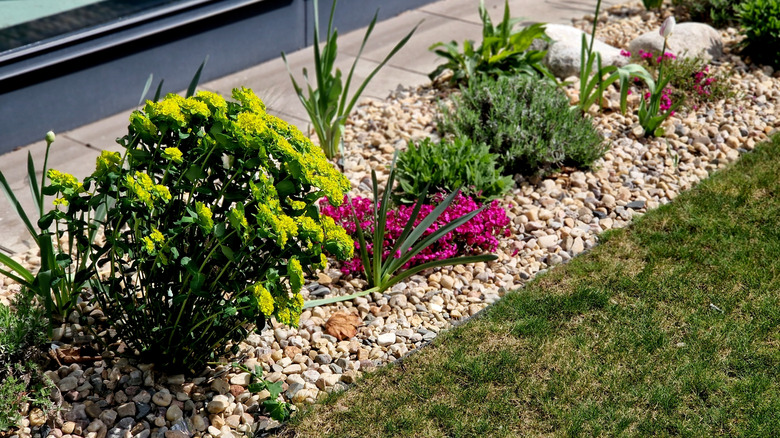
The sight and smell of wood mulch is pretty much synonymous with gardening, and for good reason. It's extremely versatile, appropriate in a range of different climates, and nourishes plants while protecting them from the elements. Despite these strengths, however, there are situations in which wood mulch isn't the best choice and may even end up worsening the state of your garden. If your property sees a lot of erosion from wind or rain, if you live in a hot environment, or if you're simply looking for a more durable, less demanding mulch material, gravel is the way to go.
Gravel mulch, which refers to a mix of sand and some sort of crushed rocks or pebbles, is probably most notable for its ability to withstand a number of extreme conditions. Thanks to its weight, gravel is unlikely to get blown away by high winds. Its composition is also very loose, so water can flow through it easily without disruption. This stability means that gravel mulch is especially effective when spread in areas of your yard that see lots of erosion, such as under gutters or along sloped edges. In extreme cases, you can also use gravel mulch to create a dry creek bed, a smart solution that prevents your yard from overflowing with storm water.
Gravel mulch is more durable than wood mulch
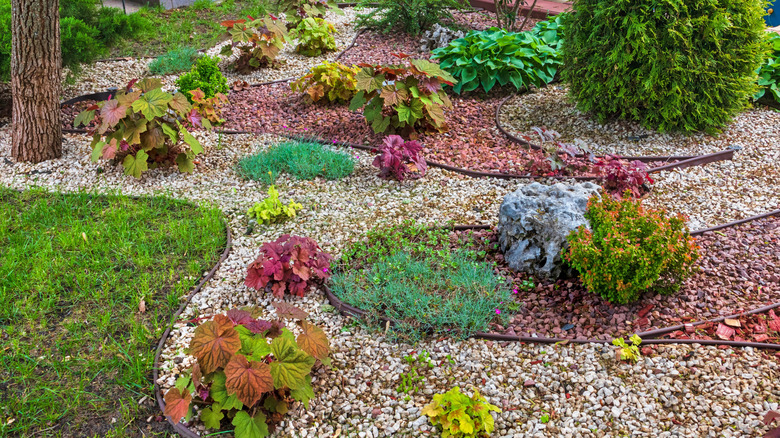
Depending on where you live, the fireproof nature of gravel mulch may factor into your decision to invest in it. Organic mulches, including those made of wood, are flammable, so if you're in an area where wildfires are common, gravel mulch may save your property from future damage. Fortunately, this is the perfect material for cultivating plants that grow in the hot, dry climates where wildfires tend to occur. For example, thyme, yarrow, and a number of other low-maintenance perennials can thrive in a sunny rock garden complete with gravel mulch.
While the extra labor needed to properly install gravel mulch initially makes it more expensive than the wood variety, you'll likely make that money back in a few years since you won't have to replace it. (You can also skip the initial cost of a weed barrier by using herbs in your gravel garden beds instead.) Gravel's longevity also means that you can devote less time tending to it, which means more time tending to your flowers. Additionally, it's pest-resistant and can withstand lots of wear and tear, making it ideal for high-traffic areas of your garden.
Gravel mulch does have its downsides, though. Since it doesn't provide any nutrients and can weigh down soil, it's not suitable for growing more needy plants. It also tends to attract weeds, though that's avoidable with proper maintenance. So, if you're looking for a mulch that's easy to deal with and that can support a high-temperature, erosion-prone property, gravel is a reliable choice.