

Everyone Had It In The '70s & '80s, Now It's A Rare Tray We Want In Our Homes
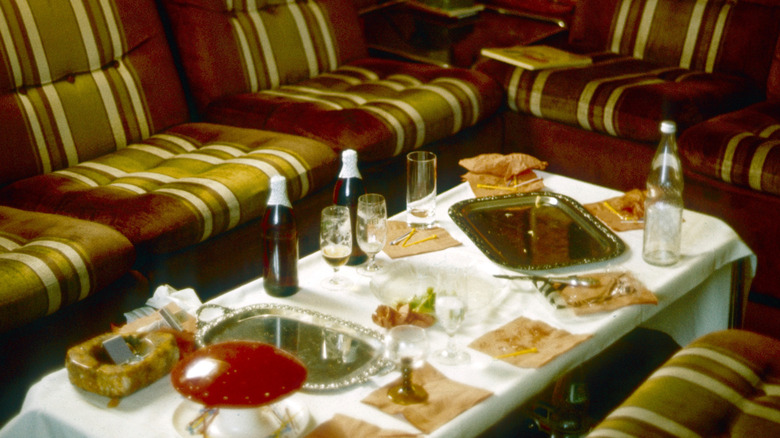
Whether you're looking for home decor ideas to bring back the '70s and '80s or hoping to discover a unique mid-century collectible, you'll likely be drawn to an unusual brand of tray manufactured from 1948 until almost the end of the 20th century. Couroc of Monterey trays hit their sales peak in the 1970s, so they were popular barware in a cocktail party culture that was going strong in that decade but beginning to wane in the 1980s. Because of the unique material they're made of, their one-of-a-kind decorative designs inlaid by artisans, and the cachet of having been sold in upscale department stores make Couroc trays an exciting thrift-store or online find. After all, it's hard to resist nostalgic '70s decor items with the slogan: "Any tray can serve a drink. Only Couroc can start a conversation."
Trays were among several items the Couroc company made in Monterey, California, from a material called phenolic resin, which was used for many of the same reasons some manufacturers use phenolic resin for kitchen countertops: its resistance to heat, alcohol, cigarette burns, hot water, acids, and more. It's also a highly durable material, though the delicate inlays mean the trays weren't made for the dishwasher. The trays came in various shapes and sizes and were decorated with whimsical inlays depicting landmarks, mushrooms, sea life, plants, animals, and more. The company's roadrunner design was especially popular.
Consider vintage Courac trays for a blast from the '70s and '80s
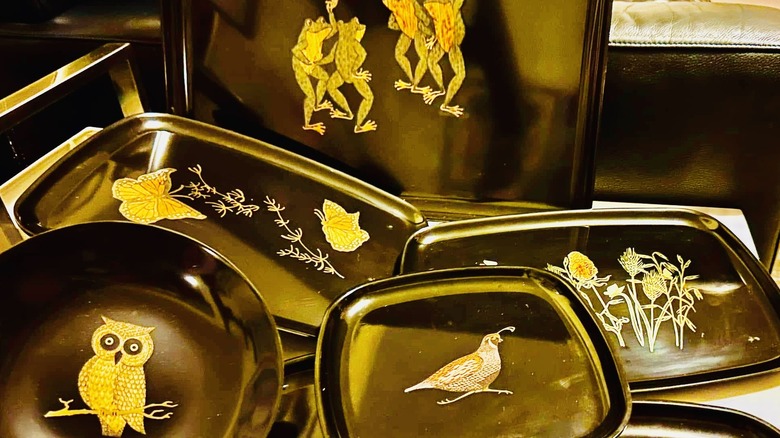
Various natural materials like seashells, plants, crystals, and even seaweed also got the inlay treatment, with many items sourced in the Monterey area. While the black, matte, phenolic resin trays were mass-produced, artisans created the decorative inlays by hand, so even when the same basic design was used, each piece is one of a kind. Toward the end of its run, Couroc made trays themed for corporate awards, employee recognition, and incentives.
Guthrie Courvoisier, who previously garnered the rights to sell Walt Disney animation cells in his art gallery, and his artist wife Moira Wallace were the forces behind the Courac company and oversaw an artisan workforce who applied the designs. Both died well before the company closed its doors in 1998.
As with any vintage find, various factors affect the value of Courac trays. Although the Courac artisans did not always sign their trays, Danish Modern San Diego notes that pieces signed by SFB Morse, Moira Wallace, and Pat are especially collectible. Labels also help in identifying genuine Couroc trays; a "Couroc of Monterey" gold foil label appeared on early pieces. Later trays carried a rectangular label (which eventually had rounded corners) with green lettering for earlier pieces. The condition of the collectible trays, of course, factors into value. Though relatively scratch-resistant, phenolic resin can get scratched; undamaged trays buffed to a polished look are in the ideal condition.