

Save Extra Seeds From Spoiling With An Easy Solution That's Practically Free
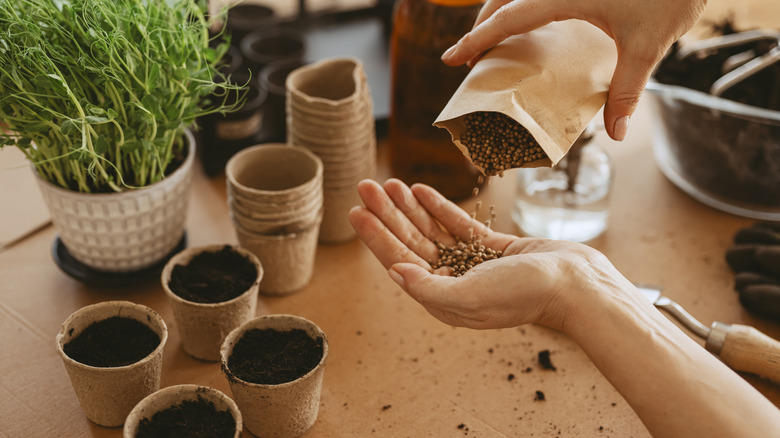
An effective way to stretch your gardening budget is to store garden seeds to keep them fresh for as long as possible so you don't have to buy new ones. Storing seeds is not a difficult process, but success depends on several factors, including maintaining low moisture and humidity in your seed storage. Too much of either will cause seeds to degrade. That's where silica gel packets can help! These small packets of silicon dioxide beads are desiccants that can keep seeds at the right level of dryness for storage and subsequent planting. If you collect the packets that come in shoes, electronics, and medication bottles, using them for seeds is one of the most creative ways to repurpose silica gel packets around the house. Deploying them in your seed storage costs nothing if you start saving those packets, or you can purchase them online.
Failing to dry seeds is one of the seed storage mistakes everyone makes and doesn't realize it. Desiccants like silica gel packets absorb excess moisture that can cause seeds to rot and attract harmful microorganisms, as well as help seeds dry evenly. Garden seeds typically have a shelf life of two to five years depending on the type, but even a 1% decrease in moisture increases seed longevity twofold, according to the Center for Plant Conservation. If you want to store seeds long-term, this is certainly a solution worth trying.
Use silica gel packets to keep stored seeds dry
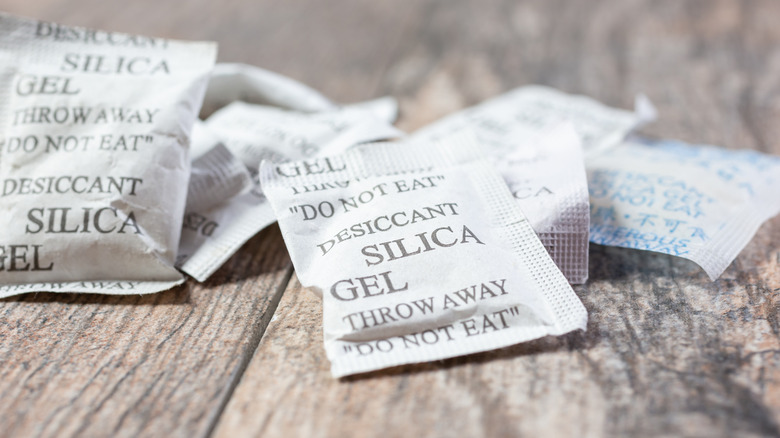
To use silica gel packets in seed storage, start by air-drying your seeds in a spot where all seeds will receive airflow, such as on a mesh screen or coffee filter. Let them dry for up to a week and then test for dryness. You're looking for a clean break when you try to snap them apart.
Once you're satisfied your seeds are dry enough for storage, place them in small paper envelopes or bags with a packet of silica gel. For extra dryness assurance, place filled envelopes in airtight containers, such as lidded jars. Store in a dark area that maintains a temperature of 35 to 40 degrees Fahrenheit and no more than 40% relative humidity. Your refrigerator is an option, but to avoid humidity issues, make sure any seeds in the fridge are in containers with a good enough seal.
If you're a novice seed-saver, it's not a bad idea to monitor and even test seeds during storage. Seeds can get too dry, which likely means they won't germinate. It's hard to gauge dryness but easy to test germination with the simple paper towel trick that makes testing seeds for viability a breeze — placing seeds on a wet paper towel to see if they germinate. If not, you may be going overboard with drying your seeds.