

How To Grow Pepper Plants Upside Down (And Why You'd Want To)
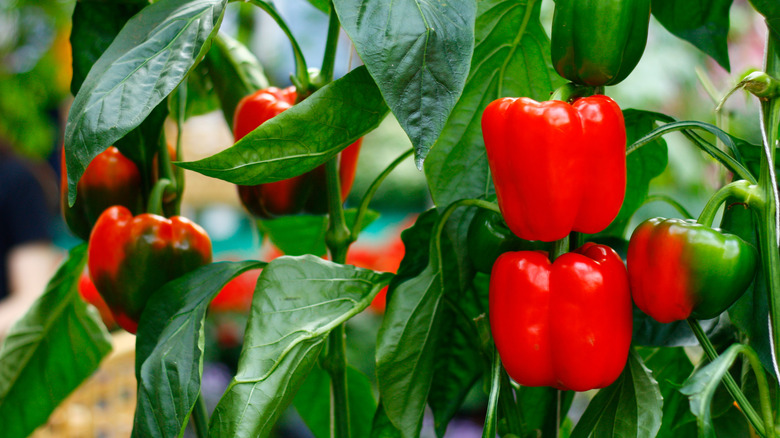
I'm a gardening expert with over two decades of experience growing my own food without chemicals. I've grown everything from large sweet bell peppers to tiny super hot chili peppers, and I've grown them in raised beds, in the greenhouse, in grow bags, and even hydroponically. Although I'd seen lots of good results with growing peppers upside down on social media, it just seemed like a gimmick. However, a couple of years ago, when I had an extremely good success rate with germinating seeds, I had some spare plants, so I thought I should give it a go. It actually worked really well.
The pepper plant grows through a hole in the bottom of a bucket that you pack with soil, with the roots inside and the stem and leaves hanging free below. You hang the bucket from a sturdy hook to keep it out of the way of pests. The pepper quickly adapts, with the stem and leaves curving upward and reorienting toward the sunlight. It's a great way to maximize your food crop from a limited space and to make use of hanging space or vertical space that normally gets wasted. Plus, you have fewer problems with soil-borne pathogens and pests like slugs that would normally devour the pepper leaves. I got a surprisingly good harvest from this method of growing pepper plants in containers, although not quite as large as I get from my greenhouse or polytunnel, where the peppers are planted in bare earth so the plants have access to more nutrients and more soil. If you're growing in limited space or you have problems with fungal or bacterial plant diseases in the soil, growing your peppers upside down is a fantastic alternative.
How to set up an upside down pepper plant
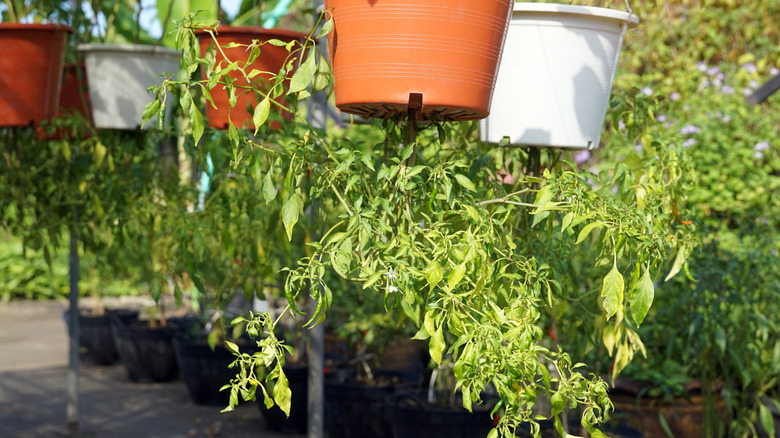
First, I strongly recommend that you go with a compact pepper plant or small-fruited variety, because trying to grow a larger variety like 'Bell Boy' in a bucket upside down puts the plant, which is already stressed and growing against its nature, at risk of snapping stems. Stick with a small pepper, like 'Mini Belle' or 'Tangerine Dream'. Get a large, sturdy bucket. Be sure that the bucket's handle can withstand the full weight of a fruit-laden pepper plant and compost, because that's surprisingly heavy. You also need to choose a heavy-duty hook and fittings that can bear the weight, too.
Drill one moderately sized hole in the center of the bucket bottom, large enough for a fully grown pepper stem to grow through. Add a few extra small holes for drainage. Smooth the middle hole so that there are no sharp or ragged plastic edges that could tear the stem. Grab your young pepper plant and thread the roots and stem through the hole into the empty bucket. Then take a coffee filter and make a cut from one edge to the center. Place the coffee filter around the stem of the pepper plant, like a collar, so that it fills the central hole to prevent too much soil falling out. Suspend the bucket so that the pepper plant doesn't get crushed. It's a good idea at this point to hang it in its final position. Once it's adequately suspended, fill the bucket with high-quality potting compost and firm it gently. Make sure the spot you pick gets full sun for most of the day and that the plant isn't going to be in the way once it gets big and bulks out.
The pros and cons of growing your peppers upside down
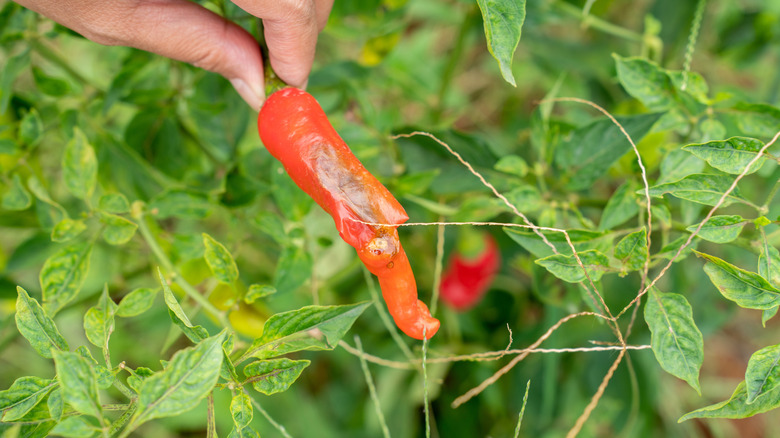
Pepper plants are prone to any number of fungal and bacterial diseases. Phytophthora blight and bacterial leaf spot are two of the most common that can take down an entire pepper crop surprisingly quickly. Both of these can be spread by rain or irrigation water splashing down into infected soil, picking up bacteria or spores, and bouncing back up to hit the lower leaves and fruits. If you're growing your peppers upside down, this can't happen, especially if you use high-quality potting mix that is free of disease.
There are also a huge number of destructive pests that eat peppers, like cutworms that live in the soil of your yard. They shelter during the day in your bed and come out at night to chew through tender stems. These pests can't so easily reach pepper plants that are hanging from a hook. The odd persistent caterpillar or other pest may still make its way onto your plant, but in general, the problem should be greatly reduced. As long as you've got a good-quality weed-free potting mix, you shouldn't get too many weeds either, and those that do appear will be easy to pick out of the bucket top without affecting the pepper planted upside down.
You do have to remember, however, that containerized plants, particularly those hanging in the air, lose moisture and dry out faster than those planted in bare earth or raised beds. They're also more susceptible to cold as their roots aren't as insulated. Containerized pepper plants will also need more nutrition support — these plants are heavy feeders anyway, and there is only a finite amount of soil and therefore nutrients that you can squeeze into a bucket.