

Skip Mulch & Gravel: This Unusual Kitchen Scrap Makes A Great Weed Barrier

Keeping back weeds in your garden is a constant fight. No matter what you use, it feels like a few pesky weeds always break through. Thankfully, instead of investing in yet another attempt to fight back these weeds, you can use scraps from your kitchen — namely, oyster shells — to create a unique weed barrier that also provides other benefits for your garden.
Things like mulch can look pretty, but it breaks down quickly and can sometimes harbor pests, diseases, and excess moisture. Gravel, on the other hand, may last a long time, but it can heat up your soil and doesn't actually do much to improve the area around your plants beyond blocking weeds. Plus, both can be pretty costly. Using oyster shells from your kitchen adds nutrients to your soil, increases the amount of time you can go between replacements, and can keep away pests rather than drawing them. Plus, it looks nice.
To get the best protection from weeds, you want an oyster shell layer about two inches thick. This makes it dense enough to block out light for any weeds trying to pop up. While you can use oyster shells on top of any part of your garden, lettuce, spinach, kale, cabbage, broccoli, and lavender all do particularly well with this addition.
Additional benefits of using oyster shells for garden mulch
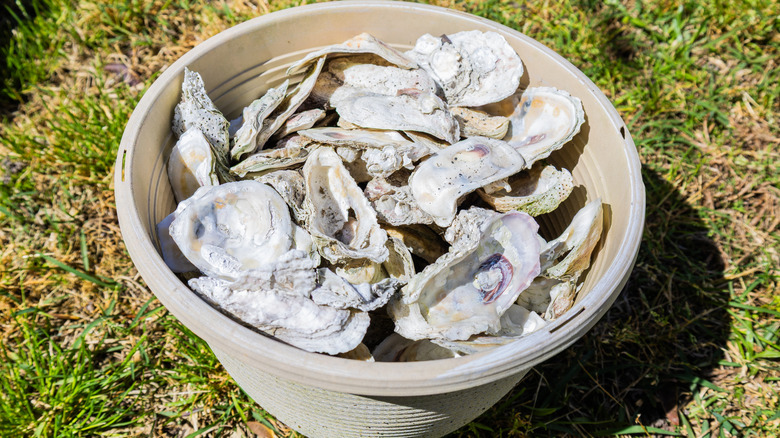
Oyster shells don't just block weeds — they also give back to your soil. You can add this bivalve shell to your garden for a nutritional boost, allowing you to feed your plants and keep weeds away simultaneously. Specifically, they add calcium to the soil, which helps with root growth. Since roots are important for nutrient uptake, mulching with shells can also help your plants grow their roots and be more resistant to disease. The finer your oyster shells are ground up, the faster they break down, and the quicker they release nutrients. Since the method to shatter them is imprecise, you're going to have some smaller chunks that will break down sooner and larger pieces to act as more of a weed barrier.
Another perk of using oyster shells is that they can be a landscape alternative to mulch if you suffer from allergies, so you don't feel quite as bad after going outside to care for your plants. These shells, especially if they're roughly chopped, can also help ward off pests like slugs and snails as the sharp edges deter them. Plus, oyster shells contain chitin, which can be used to prevent fungal diseases and deter nematodes.
How to get oyster shells properly prepped for your garden
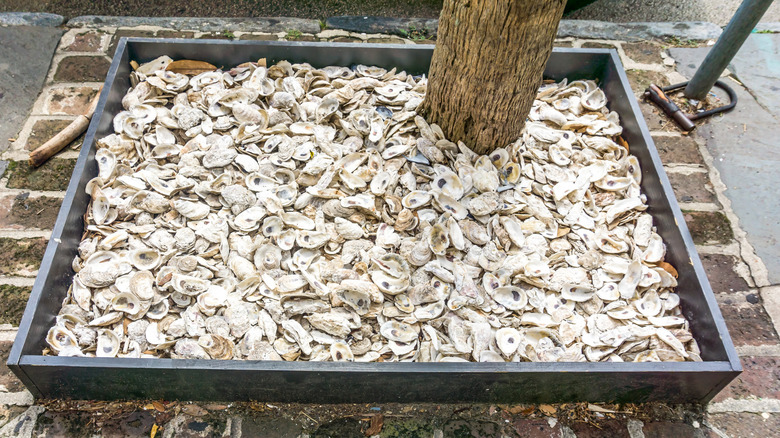
Of course, not everyone regularly eats oysters, especially in the shell, at home. So it may take a long time to get enough shells to create a solid weed barrier. Unfortunately, this beachy mulch alternative is a beautiful but stinky problem, since it can easily start to smell bad after a while. The best solution is to boil the shells in hot water for at least a day. Then, once you let them dry, you can store them without the smell until you collect enough. The boiling method also helps remove any salt still on the shell. The general recommendation is that you will need roughly 5 pounds of crushed shells per 100 square feet. Thankfully, 12 small oyster shells can get you close to a pound.
Once you have enough, you need to turn them into a weed barrier. You can leave the shells whole, but for them to stay in place better, it may be a good idea to break them down somewhat. Because they are so hard, you can't simply blend them. Start by baking them for about 30 minutes at 300 degrees until they are brittle. Then, cover them with a towel and use a hammer to smash them. You can also attempt to use a blender or food processor once they're baked and smashed into more manageable pieces, but there's a high chance it will be damaged, especially after repeated use.