

Not Black-Eyed Susans: The Elegant, Blooming Plant Pollinators Can't Resist
The low maintenance, sunny charm of black-eyed Susans makes them a classic garden resident across the United States. Plus, pollinators love the blooms. We're not saying get rid of them altogether. However, if you take pride in having the most unique collection of flowering plants in your neighborhood, you may want to downplay these iconic black and yellow flowers in favor of something with a lot more drama — and a lot of nectar. The next time you stop by the plant nursery to prepare for the planting season, keep an eye out for angel's fishing rod (Dierama pulcherrimum). Also known as wand flower or fairy's fishing rod, these tall, arching plants are the perfect statement plant for any style of garden. Planting a patch of them can help turn your property into a pollinator's paradise, too.
Like most other plants with colorful flowers, angel's fishing rod attracts pollinating insects, particularly bees and butterflies. It produces a flurry of pink-purple, bell-shaped flowers from May to August, which dangle from long stems like bobbers on a fishing rod — hence the plant's common name. Bees particularly love purple, while butterflies are attracted to pink and purple; this flowering corm produces blooms in both hues! Plant it alongside Russian sage (Salvia yangii) or ornamental grasses to make your yard a bird and pollinator paradise. New Zealand wind grass (Anemanthele lessoniana), for example, makes a lovely partner for this South African native in the iris family due to both species' grassy foliage. As a bonus, the flowers are a favorite snack for hummingbirds, while deer and rabbits are unlikely to eat it.
Angel's fishing rod is a low-maintenance beauty
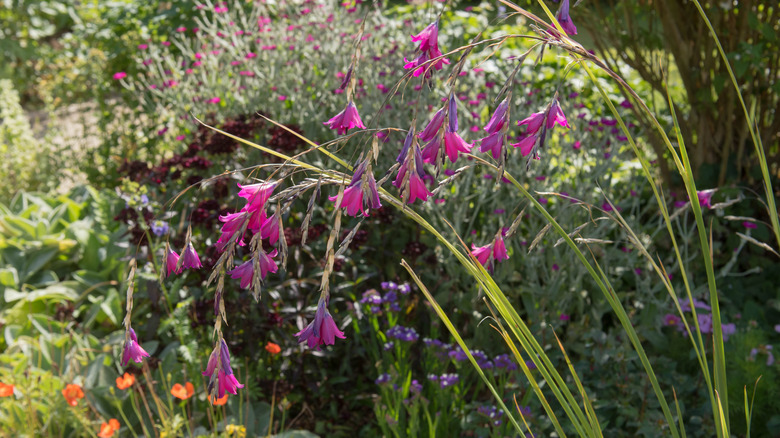
Despite its delicate appearance, angel's fishing rod is a tough plant — it ranks high among the low-maintenance flowers that give a garden a high-end look without the work. This iris relative thrives in sunny gardens in USDA Plant Hardiness Zones 7 to 10, and it tolerates most soil conditions. Once established, angel's fishing rod rarely needs watering unless facing extreme heat; just ensure that it's situated in well-draining soil somewhere it won't need to be moved. It does not like to be disturbed once it's settled into a spot. Regardless of where you plant your angel's fishing rod, once it's in place you can allow it to grow free. Part of the appeal of this plant is its long, graceful stems and leaves. It doesn't need pruning, but you can remove browning leaves and deadhead fading blooms to keep the plant looking lively if you prefer.
Before deciding where to plant your new batch of this perennial, keep in mind that angel's fishing rod can grow quite large if well-maintained — up to 5 feet tall and wide. It's a great option for adding bulk to slopes or as a walkway statement plant, where the waterfall of beautiful pink and white flowers will drape down to greet everyone that passes by them. Plant tall varieties in the back of a cottage garden bed, while dwarf cultivars look lovely in rock gardens. Angel's fishing rod is also suitable for container gardening, especially in cooler areas where you can overwinter it indoors. Be sure to buy the right planters by selecting the best option for your garden and this species. Bulbs and corms, like Dierama pulcherrimum, prefer pots that are 14 to 20 inches wide with lots of drainage holes.