

The Hosta Companion Flower That Resists Deer And Rabbits
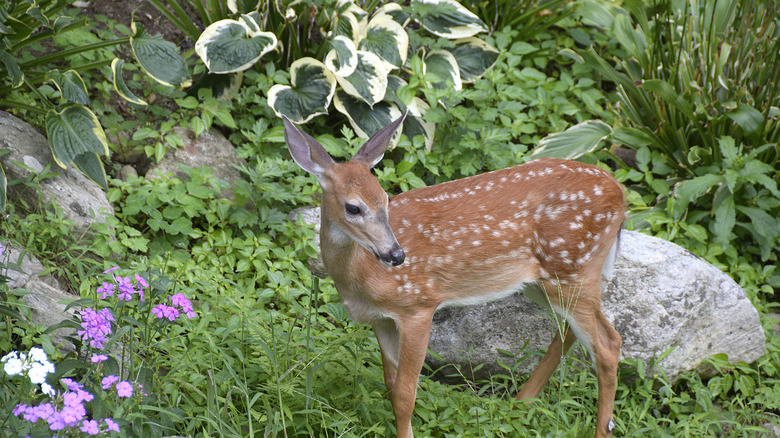
If you're anything like us, you're a big fan of all kinds of wildlife, especially when they stroll through your yard being their adorable, frolic-y selves. But when you've put in loads of time and hard work to get your garden looking just right, you probably don't like it when they treat it like an all-you-can-eat buffet. For hungry deer and rabbits, hostas are a juicy delicacy they love to snack on, making it an ongoing balancing act between enjoying these cute wild animals and protecting your plants. We're here to tell you that you can have the best of both worlds.
Enter astilbe — the show-stopping hosta companion that deer and rabbits rarely touch. Although no plant is immune to being eaten by hungry herbivores, surrounding your hosta patch with less-tasty astilbe may help it survive the growing season unscathed. Astilbe is a perennial that prefers shady spots in a garden, where it will flaunt its feathery plumes of pink, white, or red blooms and bright green fern-like foliage.
The airy flower spikes of astilbe add height to low-growing hostas, while the plant's dainty foliage contrasts dramatically with hosta's bold leaves. It's more than just a colorful neighbor; astilbe exudes a lush, cottage garden aesthetic without inviting hungry pests. Why it makes for an ideal hosta companion isn't just based on looks alone. The species in both genera share similar growing conditions, including moist soil and a preference for shade over sun. If you already know how often to water a hosta plant so it stays healthy and thriving, you'll do just fine growing astilbe.
Why astilbe and hostas make the perfect pairing
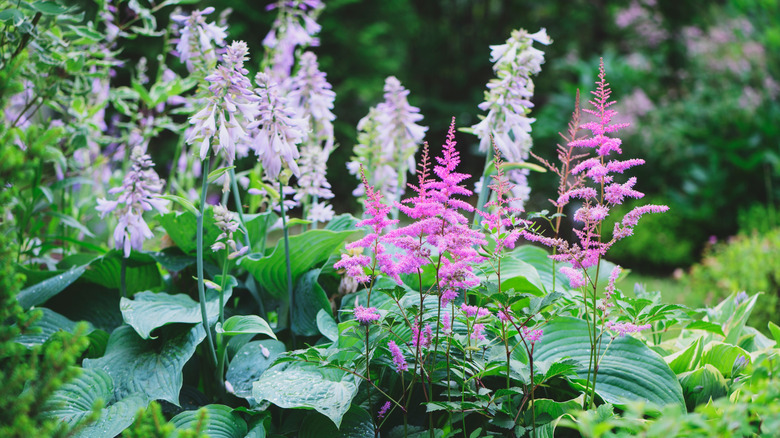
Wildlife seems to make a beeline for the plants you adore, and attractive hostas are commonly on the menu. When you discover your plants have been stripped of their oversized foliage, you experience firsthand the heartbreak that rabbits and deer can cause — despite their cuteness. Thankfully, preventing deer from eating all of your hostas doesn't mean you have to stop planting them. Planting a barrier of astilbes around these lush perennials may deter wildlife and, bonus, will add lots of pretty color to your garden bed in late spring to late summer.
Rutgers University rates astilbe as a B — Seldom Severely Damaged — on its scale of deer-resistant landscape plants, while hostas get a D (Frequently Severely Damaged). Deer and rabbits generally avoid astilbe because they don't find its foliage and flowers very tasty, making them more likely to leave them alone. The Rutgers' D rating may sound ominous to hosta lovers, but it's actually useful knowledge. The scale tells you that planting astilbe around hostas may help to make the entire patch less appealing to wildlife.
While what really makes these two perennials a formidable team goes beyond their growing preferences, this still matters. As mentioned, both plants pretty much need the same inputs and conditions. Hostas and astilbe thrive in USDA Plant Hardiness Zones 3 through 9 and are super low-maintenance, which is great news for gardeners who don't want any fuss. It gives you the bandwidth for more beautiful purple deer-resistant flowers to add to your garden, like hellebore, lavender, lungwort, and hardy geranium.