

Naturally Deter Pigeons By Growing This Fresh-Smelling Herb
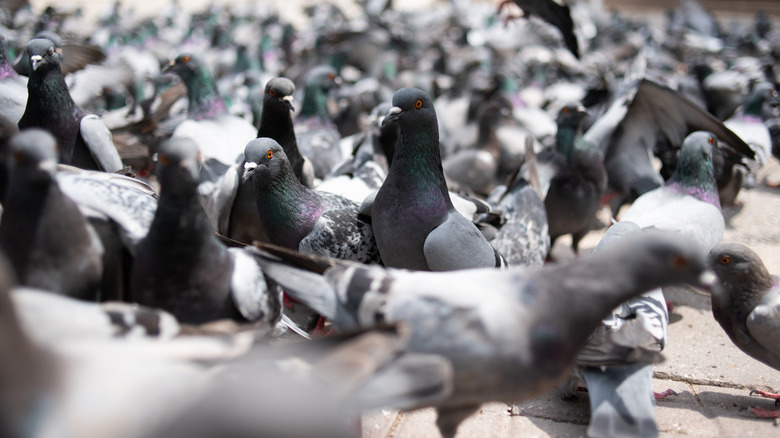
Most gardeners want to attract birds to their yard, both to promote a healthy ecosystem and to enjoy the view of their feathered friends feeding, nesting, and bathing. Unfortunately, some birds are unwanted guests — like pigeons. If you see this bird in your yard, you have a problem on your hands, as their droppings and nests can cause a lot of damage. Luckily, some easy DIY tricks can provide an easy and effective solution. Not only can you keep pigeons out of your yard with common pantry items such as vinegar, but you can also deter them with plants like basil (Ocimum basilicum).
Professional pest control experts suggest growing pungent plants to keep pigeons away, especially in the garden. Plants that have a strong, peppery aroma, like the fresh smell of basil, are particularly unattractive to pigeons, and they can mask the odors of other plants that they might otherwise try to devour.
Where to grow basil to deter pigeons from nesting in your yard
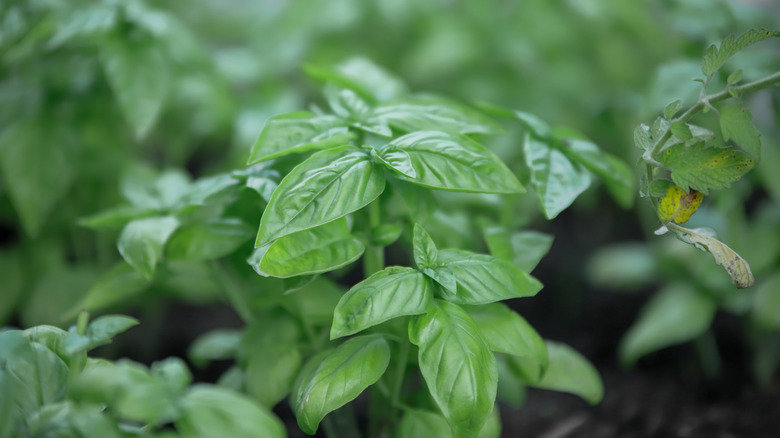
When placing basil in your yard to deter pigeons, you will want to pay particular attention to problem areas. While it's true that pigeon droppings can clog gutters and create problems on your patio, it's much more important to prevent them from nesting nearby.
To do this, you can add basil to your garden beds near your house, by your doorways, or on window sills. Pigeons nest on ledges in these areas, but the strong scent of basil will make them uncomfortable, causing them to move on. If you have pigeons nesting in your gutters, you may need to combine the use of basil with other preventative measures, such as pigeon netting for the gutters – after you've removed the old debris, of course.
You can also plant basil alongside other aromatic plants, like mint or lavender, to help prevent pigeons from settling around your home. And pigeons aren't the only animals that don't like the fresh aroma of basil plants growing in the garden. In fact, a basil barrier is your garden's best natural defense against bugs. This means that, by growing this herb in your garden, window boxes, or near entryways, you can kill two birds with one stone ... so to speak.