

What To Do If You Find A Black Walnut Tree In Your Yard
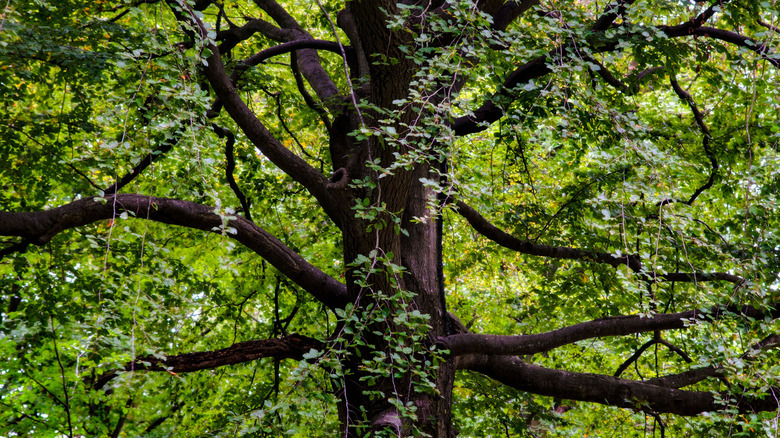
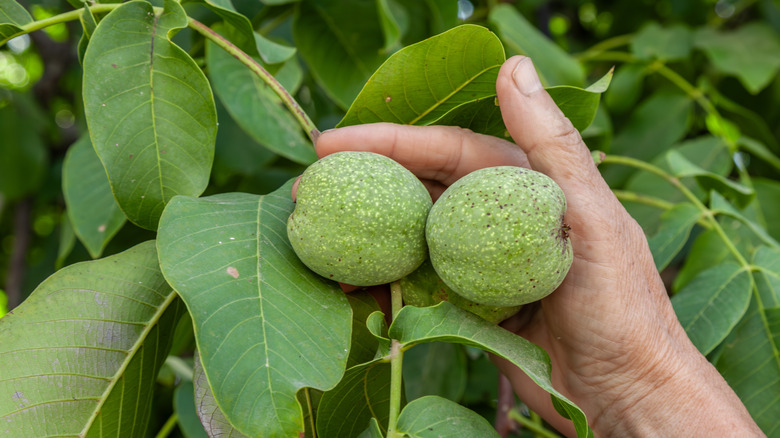
If you've moved into a new home and are still getting to know the backyard trees (or a forgetful squirrel gifted you with a new sapling), there's a chance one of them is a black walnut (Juglans nigra) tree. Although black walnuts are native and not dangerous to the larger ecosystem like tree-of-heaven (Ailanthus altissima), the invasive tree often confused for its lookalike, their reputation as a difficult garden tree precedes them, and you might be nervous once you spot their long and slender compound leaves. The big, bright green hulls that encase edible black walnuts are cumbersome and messy, and the trees contain a chemical that stunts the growth of certain plants. All of this doesn't mean getting rid of your black walnut is the only option, though. If you want a towering ornamental tree providing shade and a crop of walnuts, you can keep the tree but modify the way you garden around it.
Black walnut trees thrive in USDA Hardiness Zones 4 through 9, where they grow to great heights and can cast a large, cooling canopy despite some drawbacks. The main reason people remove them is their effect on many other desirable plants. A chemical called juglone is highly concentrated in the tree, especially in the roots and the hulls that fall from its branches, and can inhibit the growth of tomatoes, blueberries, peonies, azaleas, and other sensitive plants. Because the effect can extend as far as 80 feet from the trunk, available space and gardening goals are often the biggest factors in deciding whether to keep or remove the tree.
How to garden around black walnut trees
Going against the grain and keeping the black walnut tree will not only provide shade and bring a bountiful nut harvest to your yard, but it will also help preserve a species whose range has been reduced by logging. If you've heard that nothing will grow beneath a black walnut tree, that gardening myth is only partially correct. Since it's native to a wide swath of the eastern and midwestern United States, many other native plants don't mind growing under and around it. For color and to attract pollinators, look to wildflowers like bee balm (Monarda didyma) and flowering perennials including irises, hostas, and daylilies (Hemerocallis), all of which are known to tolerate juglone. When it comes to the veggies garden, beans, squashes, carrots, and parsnips are generally considered safe to grow under or near the tree.
Some other keys to gardening when there's a black walnut tree in the yard are being proactive about yard cleanup and making sure your garden soil is healthy. The hulls and fallen leaves contain juglone and can spread beyond the tree's canopy, so you should clear them before the chemical has a chance to build up. And if your soil isn't well aerated, juglone sticks around longer. Add soil amendments such as compost to encourage microbial activity that helps break down organic matter. Raised beds can also help you control what's in the soil and help more sensitive plants thrive. You can tell when a plant may be suffering because of juglone when its leaves quickly turn yellow and start to wilt, even while that plant's water needs are being met.
Removing a black walnut tree takes patience
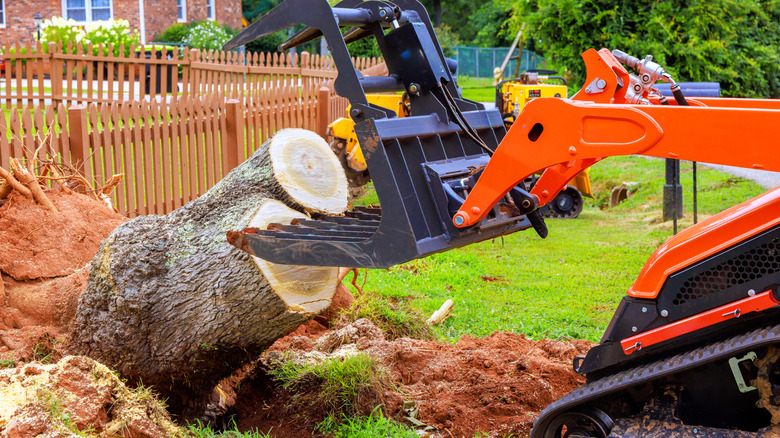
Many people opt to remove black walnut trees, especially if they have limited garden space and want to grow crops or ornamental plants that happen to be sensitive to the juglone the trees produce. Some also dislike the staining that results from the nut hulls, making black walnut one of the messiest trees to grow in your yard. If possible, it's easiest to have the tree removed during the colder months when it goes dormant, and to be patient when planning a garden afterward. The juglone lingers in the soil and it can still harm plants on the site from several months to a year or two afterward. Planting a small amount of a very sensitive crop, like tomatoes, can tell you whether the soil is still affected based on how well they grow.
One misconception about removing black walnut trees is that since their wood is prized by carpenters, the removal might be lucrative for a homeowner who sells it. Forestry experts caution that what you make from selling the wood most likely won't offset the cost of having an arborist do the removal. However, as long as you're not looking to make a fortune and can put in the extra work, artisan woodworkers may buy portions of the wood to craft furniture. Another option is to contact smaller logging companies with portable sawmills, which may be more interested in processing a backyard tree than a large commercial mill.