

Skip The Flowers And Herbs: There's A Fruit Tree Pollinators Love
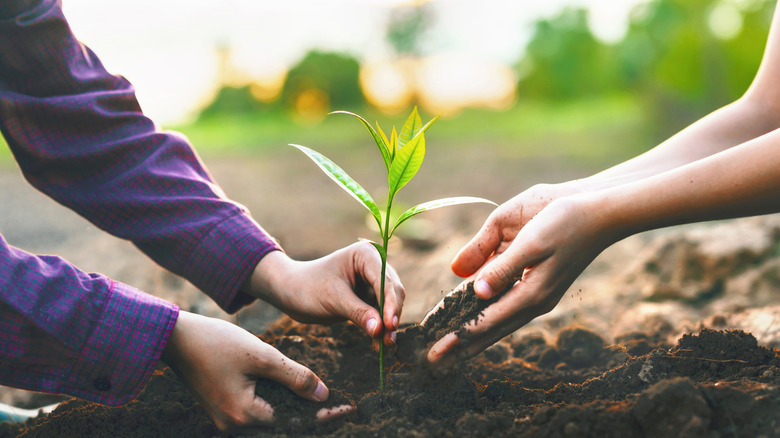
When you think about how to start your own pollinator garden, where does your mind drift to? For some people, the idea of cultivating a pollinator retreat comes with the thought of delicate blooms and flowering herbs. However, while there are many eye-catching flowers that attract pollinators to your yard, you aren't limited to smaller plants. Instead, there's a fruit tree you can add that many pollinators are drawn to. And the best part? You can enjoy its fruit as well.
Also known as the date plum or eastern persimmon, the American persimmon (Diospyros virginiana) is a large tree native to the United States that can easily reach heights of up to 80 feet. It produces small, colorful flowers in late spring and early summer that attract bees, butterflies, and moths. While fruit production can take several years and typically requires both male and female trees, American persimmons produce edible fruit. As a result, this stunning tree pulls double-duty in your yard, providing both pollinator appeal as well as functional value. It can even be considered multi-purpose if you consider the shade this large, wide tree offers.
Although the American persimmon tree is low-maintenance, growing any tree can be a time commitment that requires patience and proper care. Before adding this tree to your yard to attract more butterflies and other colorful pollinators, make sure you're familiar with its care requirements.
How to grow an American persimmon for pollinators
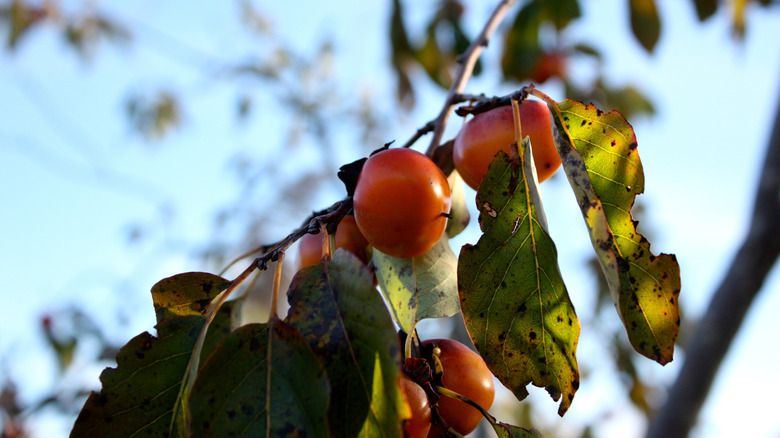
When planting an American persimmon tree, keep in mind that it can take years for fruit production to reach its full potential. As a result, it may take a few years before the tree becomes a prominent feature in your landscape. In the meanwhile, it's important to properly care for your tree. American persimmons grown in poor conditions may struggle to reach their full size, sometimes appearing more shrub-like than tree-like. Because of this, picking the perfect location for your American persimmon is essential.
American persimmons do best when they're offered fertile soil, although they can tolerate poor soil. It can take a lot of energy to grow to 80 feet tall and produce flowers and fruit, so providing your tree with nutrient-dense soil often helps set it up for success. When growing American persimmons to support pollinators, healthy growth can help encourage abundant flowering. You also want to consider drainage and pH. They tolerate a variety of soil types, from sand to clay, but they do prefer more acidic soil. A slightly acidic to neutral pH, around 6.0 to 7.0, generally provides a suitable growing environment.
The last step to consider is sunlight. Fortunately, American persimmons aren't fickle. They can grow both in full sun or partial shade. However, full sun often is the most preferred spot, helping this pollinator-friendly fruit tree thrive.