

Ditch Retaining Walls And Meet The Living Solution That Prevents Erosion In A Sloped Yard
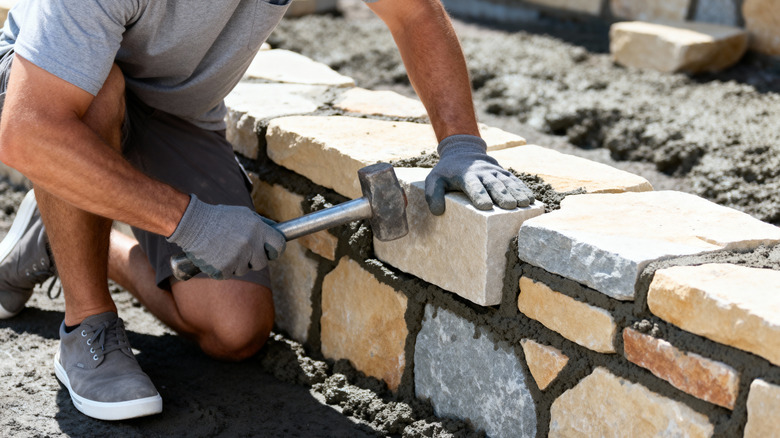
Although sloped backyards can present challenges, there are some stunning design ideas that can transform them into a personal haven. One of the issues that has to be dealt with is water runoff and the erosion this often causes. A common solution is to use retaining walls, but building them of sufficient size and strength can be time-consuming, os often expensive, and requires considerable skill. The alternative is a living solution. To be specific, trees.
If you have a small yard and a modest slope, there are plenty of plants that could be ideal for combating the level of erosion you're likely to experience. If the space is more extensive and the area is subject to regular rainfall, you'll want something that can not only suck up all that water but also spread roots deep into the ground to stabilize it. That's exactly what some trees can do. According to the US Environmental Protection Agency (EPA), their leaf canopy also helps reduce the impact of rainfall on the ground, and they improve evaporation.
On top of that, trees provide a much-needed habitat for a wide variety of insects, birds, and animals — not to mention the fact that they're simply beautiful to look at. Of course, there is a degree of patience required. While saplings will start taking up excess water immediately, it is likely to be at least a couple of years before the roots are fully established and binding the soil thoroughly.
What kind of trees should you plant to prevent erosion in a sloped yard?
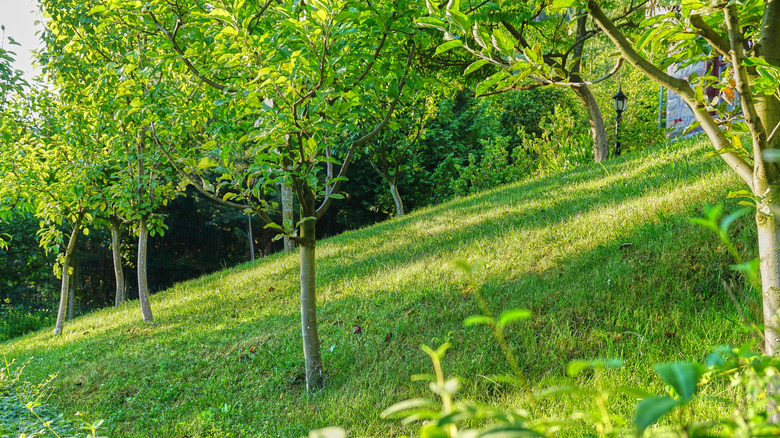
Crabapples are a popular choice, with a wide variety available that grow anywhere from 6 to 25 feet tall. Many are known for their attractive blossom and bitter or sour fruits often used in jam-making (although the seeds and core should be avoided, as they are toxic). In fact, pretty much all fruit trees can be used to combat excess rainfall and soil erosion, and after a few years, they will also provide you with tasty produce.
The willow is another beautiful (and thirsty) tree that will absorb excess water. They can establish themselves rapidly and have extensive root systems that help bind a slope together. Their dense, arching foliage also reduces the amount of rainwater that soaks the soil, so runoff is limited. A mature willow can consume as much as 200 gallons of water each day.
While many trees can help prevent erosion on sloping yards, there are a few things to consider. Those with shallow roots might actually get washed out. Some, like certain acacias, are invasive and could become difficult to control. Others, such as sumac, have foliage or fruit that is poisonous. So it's important to research each species, especially non-native, ornamental options, before deciding which to plant.