

Not Landscape Fabric: There's An Easy To Use Alternative That'll Keep Your Garden Weed-Free
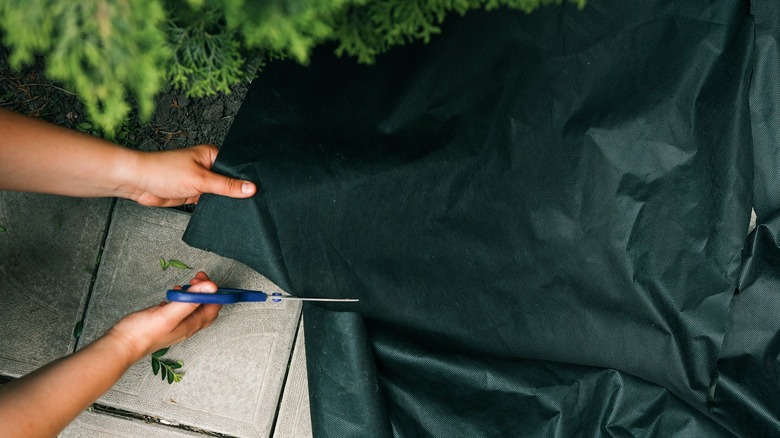
Weeds are the nemesis of any gardener. Not only do they steal valuable resources like water and nutrients from your desired plants, but pulling them by hand can be painstaking work. One weed-control solution you may have heard of is landscape fabric. While this approach does a decent job of keeping weeds at bay, there are a few downsides to using landscape fabric that will have you second-guessing your investment.
For starters, installing weed-barrier fabric, whether spun or woven, polyester, or plastic, can be a time-consuming process. Using such material may also prevent earthworms and other grubs from moving freely in the soil; it may even negatively affect plants in the long run by obstructing organic material from co-mingling in the dirt. The good news? There's another way: Straw works as a weed-blocking alternative that can also help your soil retain moisture.
There are many ways you should be using straw in your yard and garden. But before you do, it's important to note that straw and hay are not the same thing. While they may look similar, straw is made from dried grain stock, while hay is made from dried grasses. Hay may contain a much larger amount of weed seeds, so keep it far from the garden and opt for straw instead.
How to use straw as a weed barrier in the garden
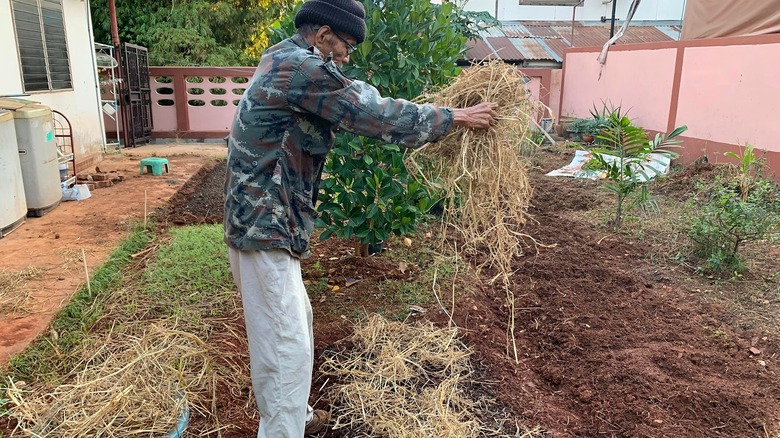
Straw mulch can do more than keep your garden properly hydrated while you travel (by reducing evaporation); it can also effectively block weeds when applied in a thick enough layer. To use straw as a weed barrier, first remove any existing weeds. Then, spread a layer of straw throughout the garden, about 6 inches thick. After application, it's a good idea to give the new mulch layer a thorough watering to help set it in place and prevent the wind from carrying it away.
The straw mulch will suppress weeds by blocking sunlight and preventing unwanted weed seeds from germinating. Like any other type of mulch, you'll want to keep your straw about 1 to 2 inches away from the stems of your garden plants to prevent rot caused by trapped moisture.
Straw will break down over time, so you'll need to replenish it as you see fit, generally every six months to one year, depending on your climate. The good news is that as it decomposes, the straw can improve your soil health, potentially leading to stronger, healthier plants in the future.