

The Companion Flower For Hydrangeas That Matches Perfectly

When trying to find the perfect plants for your shaded garden beds, something you'll want to keep in mind is companion planting. Choosing varieties of plants that naturally grow well together helps your yard look its best, keeps your plants all healthy, and ensures you end up with an eye-catching space. If you've decided to center those shaded areas around the timeless beauty of hydrangeas (Hydrangea macrophylla), no matter which gorgeous hydrangea varieties you've chosen, there are plenty of fantastic companion plants to choose from. At the top of that list should be one low-growing bloom that'll help fill your garden with color: the wishbone flower.
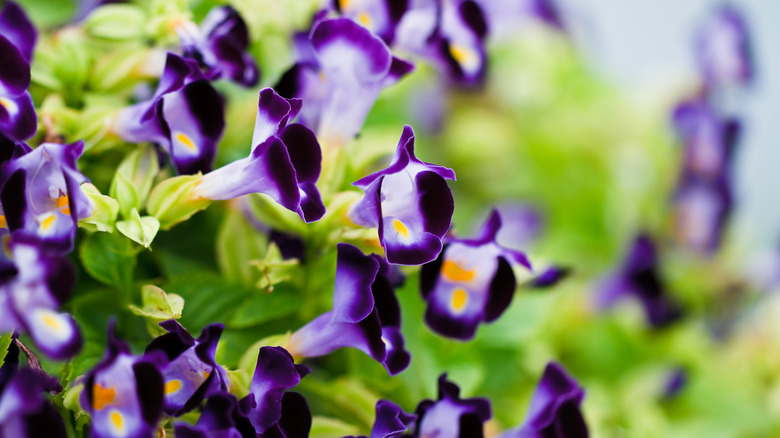
The wishbone flower (Torenia fournieri) is an annual, trumpet-shaped bloom that provides show-stopping dual-tone color from very early summer through the first frost. One of many great gardening tips for successful hydrangea blooms is smart companion planting, and by planting the charming wishbone flower around the base of your hydrangeas, you'll create a garden that's overflowing with texture and vibrant color, making your shade garden beds beautiful, healthy, and interesting.
Hydrangeas are known for having shallow roots, which makes it easier for them to dry out in the heat. By planting a low-growing companion flower, you effectively create a beautiful living mulch for the area (and your prized hydrangeas). Its foliage shades the earth, holding onto critical soil moisture that'll stop your hydrangeas from wilting. And visually, wishbone flowers bloom in lovely shades of blue, pink, violet, or white. They can also have a yellow center, which all pairs well with hydrangea's iconic pastel to bold globes that will tower directly above them.
How to grow wishbone flowers alongside your hydrangeas
While the wishbone plant and hydrangeas have overlapping preferences, do note their differing lifespans and how each functions in your specific climate. Most hydrangea varieties are hardy perennials in USDA Zones 5 through 11. However, the wishbone is almost exclusively grown as an annual regardless of the zone.
Despite their difference in longevity, hydrangeas and wishbone flowers otherwise prefer the same environmental conditions in the garden. Both of these plants absolutely thrive in partial to full shade. Otherwise, harsh sun and heat can damage their delicate leaves and blooms. They both also require persistently moist and well-draining soil in order to look their very best.
The height of the hydrangeas and low-lying growth of the wishbone flower makes for a visually interesting contrast in a shady garden bed. It's a rewarding experience to grow and care for wishbone flowers, and ultimately, this lush layering is a clever and impactful way to maximize your garden's aesthetics and health. This dynamic pairing ensures your shaded spots will remain an exciting, vibrant retreat all season long.