

Forget Florida Palms: The Winter-Hardy, Tropical Tree That Can Handle Freezing Temperatures
If you live somewhere with colder winters, it can seem like having the tropical palm tree garden of your dreams is impossible. Fortunately, there are various different types of palm trees, including this unique pick that's native to South America and hardy even in freezing temperatures.
Also known as the jelly palm, the pindo palm (Butia odorata) is one of the more durable palm species, handling a variety of challenging conditions with ease. This includes those cold temperatures that may cause other palm trees to fail. While it is considered a smaller tree variety, it can still reach heights up to 20 feet tall. It can also serve multiple purposes in your yard. On the surface, it's an attractive tree with silver feathered leaves that provides a tropical aesthetic to your yard. However, it can also be incorporated when starting a pollinator garden due to the bee-attracting flowers it produces, and its fruit is edible for humans. If you're looking to curate a certain appearance for your outdoor space that cold weather won't spoil, the pindo palm may be the perfect place to start.
How to grow pindo palms
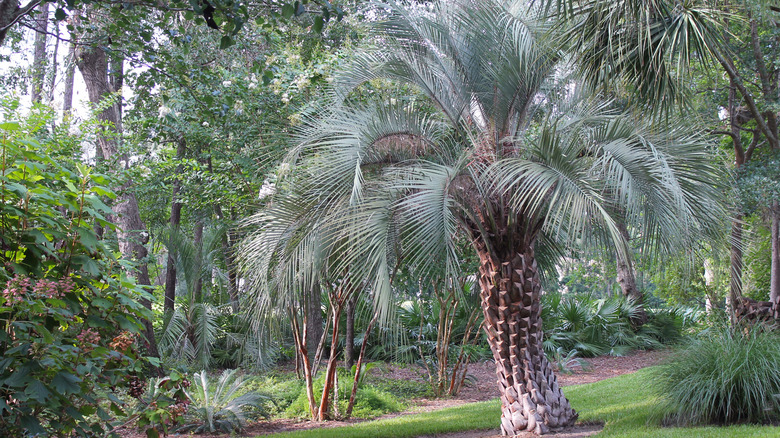
One of the best ways to understand pindo palms and their ability to handle freezing temperatures is to take a closer look at their USDA growing zones. Pindo palms are winter hardy in zones 8 through 10, which includes much of the southern and western United States. As a result, they're hardy in temperatures as low as 10 degrees Fahrenheit. However, with the proper care and protection, this tree could also survive in USDA 7b, instead being hardy down to temperature as low as 5 degrees. You'll just need to brush up on the proper ways to prepare your tropical plants for winter, such as insulating your palm to prevent heat loss using mulch or straw. This tolerance for colder weather is why they're considered a winter-hardy tropical tree, as well as a popular choice if you want your yard to feel like a summer time at the beach even when the weather outside insists otherwise.
Keeping your pindo palm healthy during the rest of the year is another good way to help it survive the winter. Pindo palms grow best when they're offered nutrient-dense soil and full sun conditions, with at least six hours of sunlight each day. They are considered drought resistant, and thus they can handle the occasional dry spell. Because of this, however, it does not do well in wet soil, so you'll need to avoid overwatering or soil with poor drainage.