

Think Twice Before Using This DIY Fertilizer On Your Succulents
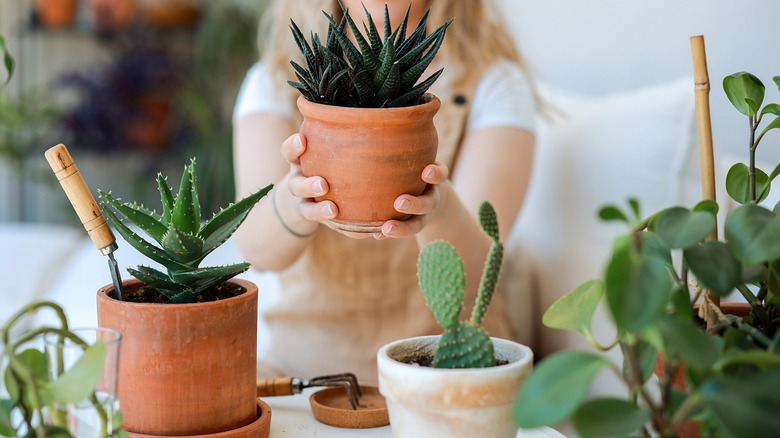
We've all heard of coffee grounds and banana peels and what they can do for soil health, but it turns out, leftover rice water is another one of those homemade plant hacks that sounds too good to be true. Using the cloudy liquid that gets left behind after rinsing or cooking rice is said to work as a natural fertilizer because it contains starches, minerals, and nutrients; but while many pantry staples can be turned into DIY fertilizers, that doesn't automatically mean they should be.
Specific to rice water, the reason why this advice can create a bit of confusion is because it's not clear-cut. For one, there are certain house plants that do love rice water. The sort of plants that will thrive with an excess of nutrient-dense water, like rice water, are typically houseplants that already want to be kept in consistently moist soil — plants such as peace lilies and pothos or vegetable plants like tomatoes and eggplant.
However, on the other side of the advice coin are succulents. These arid-living plants thrive in soil that drains quickly, and they struggle when excess moisture sits around the roots for too long. Generally speaking, most gardeners are wary of introducing additional organic material into succulent pots because the idea is to keep their growing environment quite lean and well-draining.
Why gardeners can't seem to agree on rice water
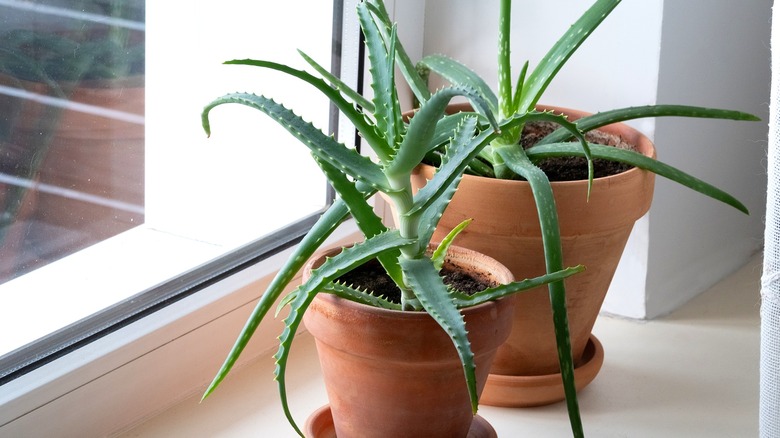
Unlike your thirstier, tropical houseplants, succulents evolved to survive in dry desert conditions where they would encounter infrequent watering. So their roots are actually really sensitive to being overwatered, something you'll know if you've ever accidentally overwatered a succulent of your own and watched it turn to mush. Adding rice water on top could be far too much moisture for their potting mix, most especially for indoor succulents with less airflow.
When it comes to caring for succulents (both inside and outside), understanding the needs of the specific plant is a lot more useful than following a trendy one-size-fits-all gardening hack. Because part of the issue here is that when we say "succulent," we aren't talking about a single type of plant — this term covers thousands of species that all adapted to different environments. So an aloe vera plant, for instance, growing on a sunny windowsill may respond differently to rice water than an echeveria growing in a gritty cactus mix.
While rice water is certainly a nice-sounding way to recycle kitchen waste, and provide trace nutrients to plants, it may be better to test it on a single plant first. Monitor how the plant responds before applying it across your entire greenery collection.