

Tips For Spotting Vintage Stanley Tools At Thrift Stores

When it comes to finding treasures at thrift stores, sometimes you just have to roll up your sleeves and dig through shelf after shelf of old junk. It takes more than hard work to find tools that are always worth buying at the thrift store, especially if you don't want to end up wasting your time and money. This is just as true with most antiques as it is with vintage Stanley tools, but in this case, telling a real score from worthless clutter comes down to a few small marks. Knowing what to look for on the body of the tool is what makes it possible to nab an old Stanley cabinet maker's plane from the 1800s or a rare chisel from the iconic U.S. brand that's worth hundreds of dollars. Thankfully, they're the kind of tool that shows up at estate auctions, garage sales, antique shops, and flea markets.
Many of Stanley's old block planes and hand woodworking tools are still very much usable. Often, they've been stashed away in the bottom of an old trunk in a long-disused abandoned workshop, waiting for a new, appreciative owner. These vintage tools sell for a wide range of prices. If you're buying the tools to resell on the secondhand market, knowing how to spot the vintage Stanley tools that are worth money is vital. (If you just want some neat pieces of practical history for your workshop, then it's less important.) The Stanley hardware company, which manufactured bolts, was started in Connecticut in 1843, and their products have changed significantly over the years. The most important marks to look for include the word Stanley, Defiance, and Handyman, and the Sweetheart — SW-in-a-heart — stamp. Of these marks, the last in the list indicates you have a real gem on your hands.
Learn how to read the marks on vintage Stanley tools
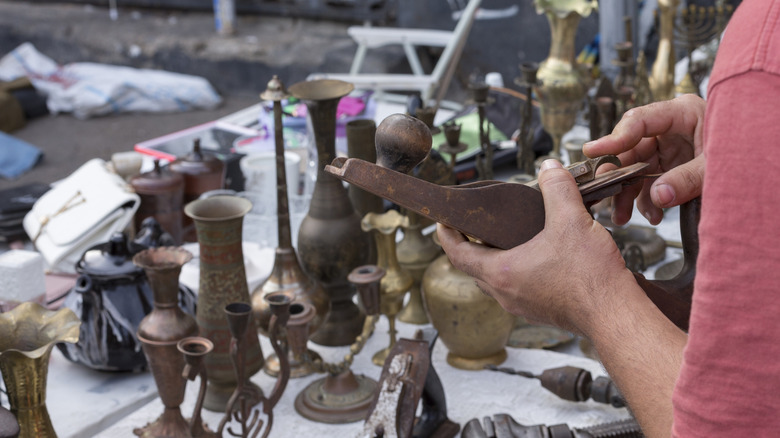
Most of the marks on these lesser-known Stanley tools and accessories that can come in handy around your home double as a date stamp. They help you narrow down when each tool was made. Tools with the Sweetheart (SW) logo are particularly prized by collectors for their quality; these Stanley tools were made before World War II. There are three Sweetheart stamp variants, each with STANLEY on top and S.W. in a heart below it. The first reads NEW BRITAIN, CONN. U.S.A. under the heart and dates to around 1920. The second style, used from about 1921 to 1922, says MADE IN U.S.A. The final 1923 to 1932 version matches the second, but the heart falls in line with the STANLEY banner.
Stanley tools made between 1910 and 1918 or 1920 don't feature any marks, but you can still identify some of these early tools as being made by the brand — look for a V trademark on the blade. On Stanley plane irons, this identifying stamp can be tiny, so examine the tool very carefully before putting it back on the shelf. You don't want to miss out on a rare early find. The Defiance and Handyman marks tell a different story. Stanley acquired the Defiance name in 1880, but didn't market it widely until 1929, when it introduced a full line of tools under that name. The Defiance brand, which was aimed at home enthusiasts and DIYers, ran until 1953, after which time it was renamed Handyman.
What vintage Stanley tools are worth, and what to do if you find one
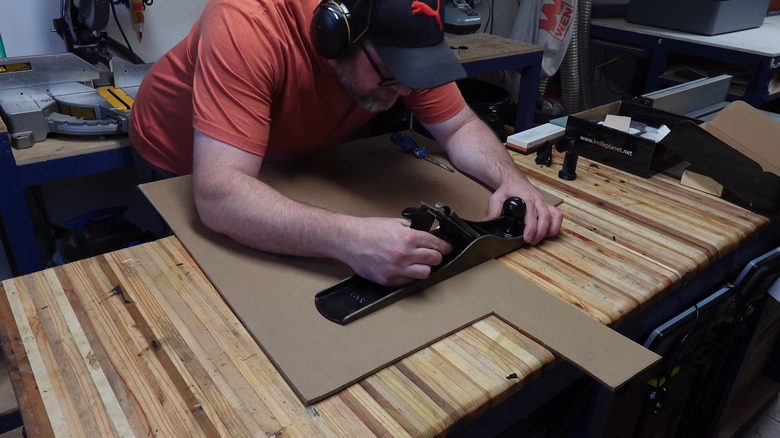
Now that you have an idea of how to tell if your vintage tools are worth good money, you're probably wondering exactly how much. If it's in good condition, a Stanley No. 1 bench plane goes for about $1,000 to $1,900. It's the most popular — and therefore most collectible — plane the company ever made. Most of the high-value Stanley tools are planes, but complete sets of tools fetch good prices, too. For example, a complete set of Stanley hollows and rounds with a #5 nosing tool and cutters sold for $650 at Meeker's Mechanical Nature Antiques. Don't underestimate the value of other tools like screwdrivers or levels, either. You can find No. 40 Stanley Everlasting chisels on eBay for over $100.
Your first instinct may be to clean up your find, but since collectors prefer the tools with their original finish and parts, cleaning it may harm the tool's value on the resale market. Instead, enter the model number into a Google search or try to find the book "Antique & Collectible Stanley Tools: Guide to Identity & Value" by John Walter. It's considered one of the best resources on these tools, but it's not cheap. See if your local library stocks a copy to save some money. Once you know what you've got, reach out to dealers like AntiqBuyer.com or Jim Bode Tools to see if they'll purchase it from you, or you can try to sell it yourself on eBay. Of course, you can also always keep it for your own DIY tool collection. If you plan to use it, you can restore it — it will no longer be valuable to serious collectors.